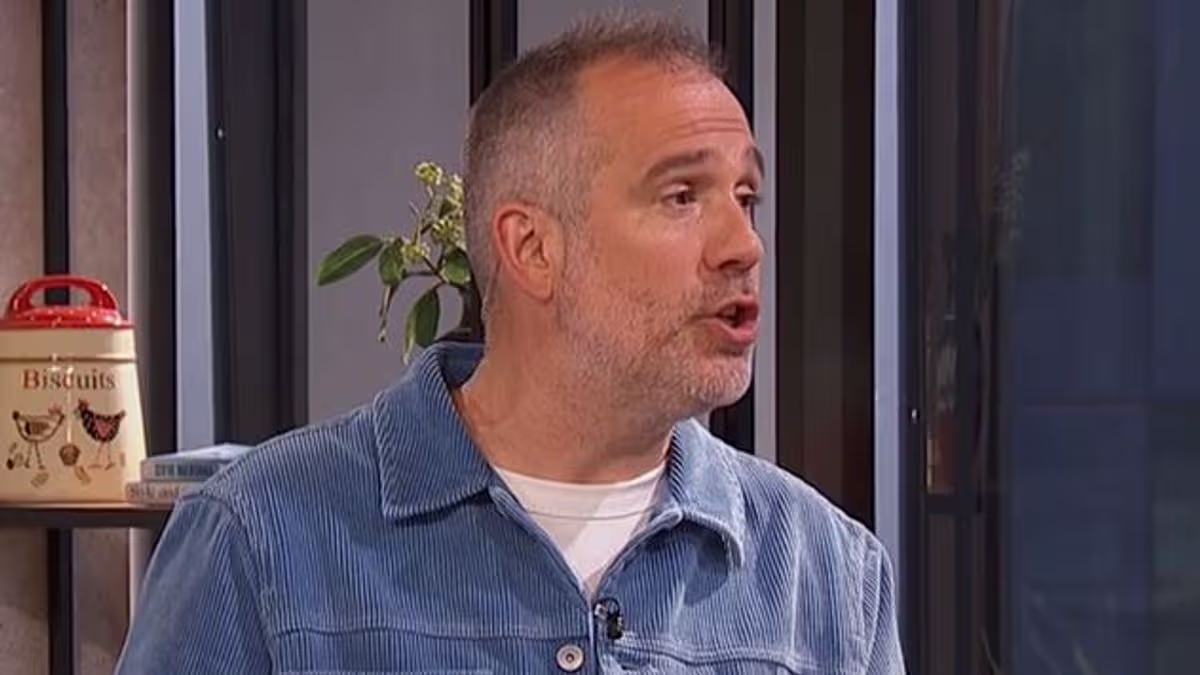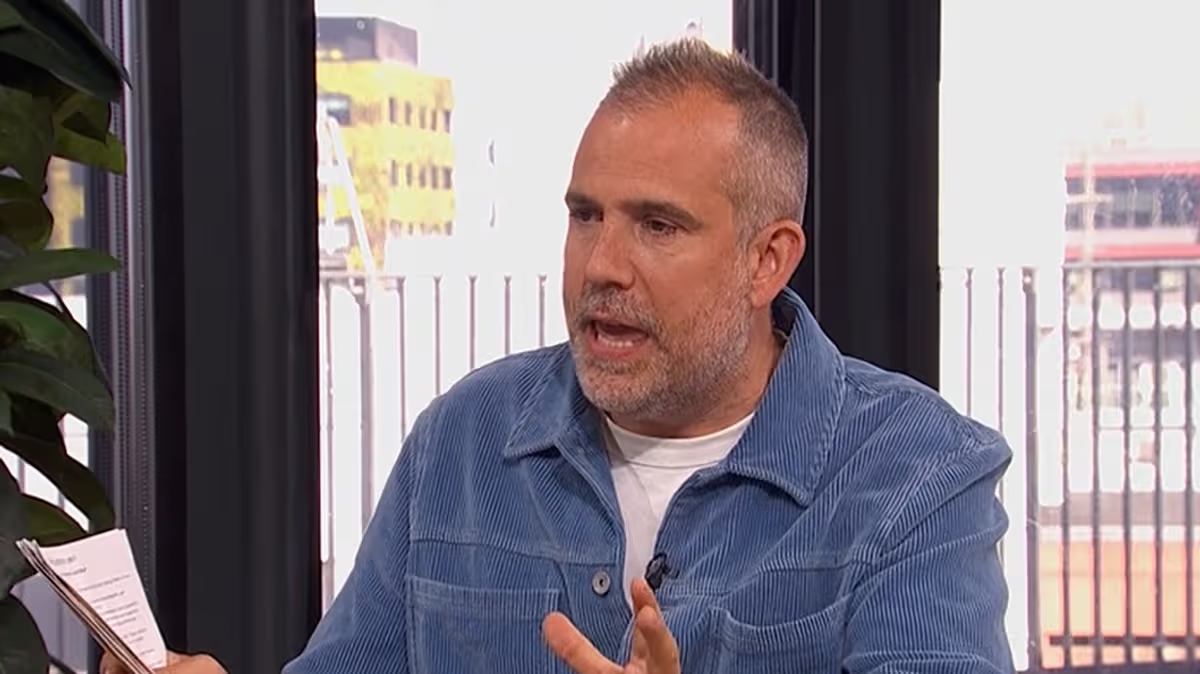
Omeprazole is one of the most widely prescribed drugs for treating acid reflux, indigestion and heartburn14:45, 10 Jun 2026A practitioner has outlined the 'two problems' that could arise from taking proton pump inhibitors (PPI), such as omeprazole, over an extended period. Specialist Simon Mills highlighted the potential issues on an episode of Diary of a CEO, which he says might develop with prolonged use of the commonly-prescribed medication, typically given to people suffering from acid reflux, heartburn and indigestion.Simon Mills is a herbal practitioner with nearly five decades of clinical experience treating patients. He graduated from Cambridge with a degree in medical sciences and has served as a special adviser to the UK House of Lords.He currently works as an Adviser and Author at Herbal Reality. He is a former Herbal Strategist for Pukka Herbs and current self-care lead for the College of Medicine. He focuses on evidence-based herbal medicine and self-care.Speaking to host Steven Bartlett, Simon described omeprazole as "the most widely prescribed drug in this country, and I believe in the US also." He mentioned gastro-oesophageal reflux disease (GORD) as a condition "which is made better by omeprazole".GORD is caused by stomach acid leaking back into the oesophagus, triggering burning sensations and potential damage. Simon added: "And what omeprazole does is shut down the acid production in the stomach. So you don't get as much damage from reflux."When we're getting acid reflux, actually, it's not because you got too much acid. is because you're refluxing it. It's going back up into the oesophagus. But omeprazole will put an end to that."What are the 'two problems' with omeprazole that Simon claims?Simon claims: "There are two problems with that. First is that the list of problems occurring from long-term omeprazole use is beginning to grow and is serious... All sorts of things are beginning to be downstream problems associated with long-term omeprazole use."According to the NHS, taking omeprazole over an extended period (typically more than a year) is broadly considered safe under medical supervision, though it can increase the likelihood of certain side effects. These can include bone fractures, a lack of vital nutrients such as vitamin B12 and magnesium, and infections like C. difficile, a strain of bacteria known to trigger diarrhoea.Doctors typically prescribe it for between four and eight weeks to treat heartburn or reflux, and regular check-ups are recommended for those on long-term use. The NHS warns: "The chance of getting serious side effects can be higher if you take omeprazole for a long time (a year or more)."The health service notes that omeprazole can occasionally trigger serious side effects, though most of them are rare. Possible serious side effects of omeprazole include:The second concern Simon raises is about stopping omeprazole. He said: "But the other thing is that once you're on it, it's really difficult to come off it, and you get a famous rebound effect."He explained: "So you come off omeprazole, and wow, you get much more trouble. So the only thing to do is take more omeprazole, and people find it really hard to come off it. So you have to do a lot of hard work to wean people off and do it in sorts of different ways."When you stop taking omeprazole, as directed by your doctor, your body can experience a condition known as rebound acid hypersecretion. This means that for roughly two to four weeks, your stomach may produce more acid than normal, causing symptoms such as heartburn and indigestion to feel considerably worse. This occurs because your body is attempting to compensate for the reduced acid levels while you were on the medication.The NHS says: "Research has found that some people who have been taking PPIs for more than two months find that their body is producing more acid (referred to as rebound acid) to compensate for the acid-reducing effects of these medications. This can mean that your symptoms can worsen again when trying to stop taking the PPI medication. If this happens to you, it should only be for up to two weeks after stopping the PPI."Researchers behind a 2024 study examining 'rebound acid hypersecretion' following the withdrawal of long-term proton pump inhibitor treatment stated: "One of the adverse effects of the long-term use of PPI is rebound acid hypersecretion (RAHS), which can occur after the withdrawal of PPI therapy due to a compensatory increase in gastric acid production."Article continues belowShould you have any queries or worries, consult your GP. For further details, head to the NHS website. Always read the packet or leaflet included with your medication.
Omeprazole may cause 'two problems' for some users with acid reflux
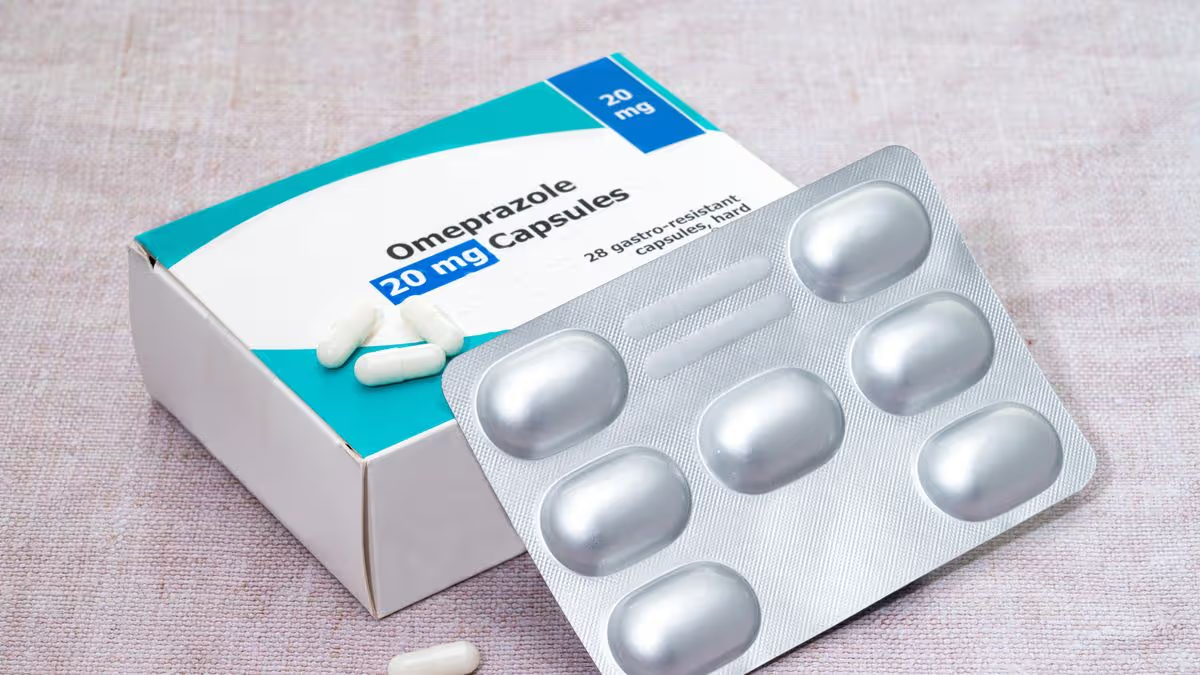
Omeprazole is one of the most widely prescribed drugs for treating acid reflux, indigestion and heartburn
759 words~3 min read