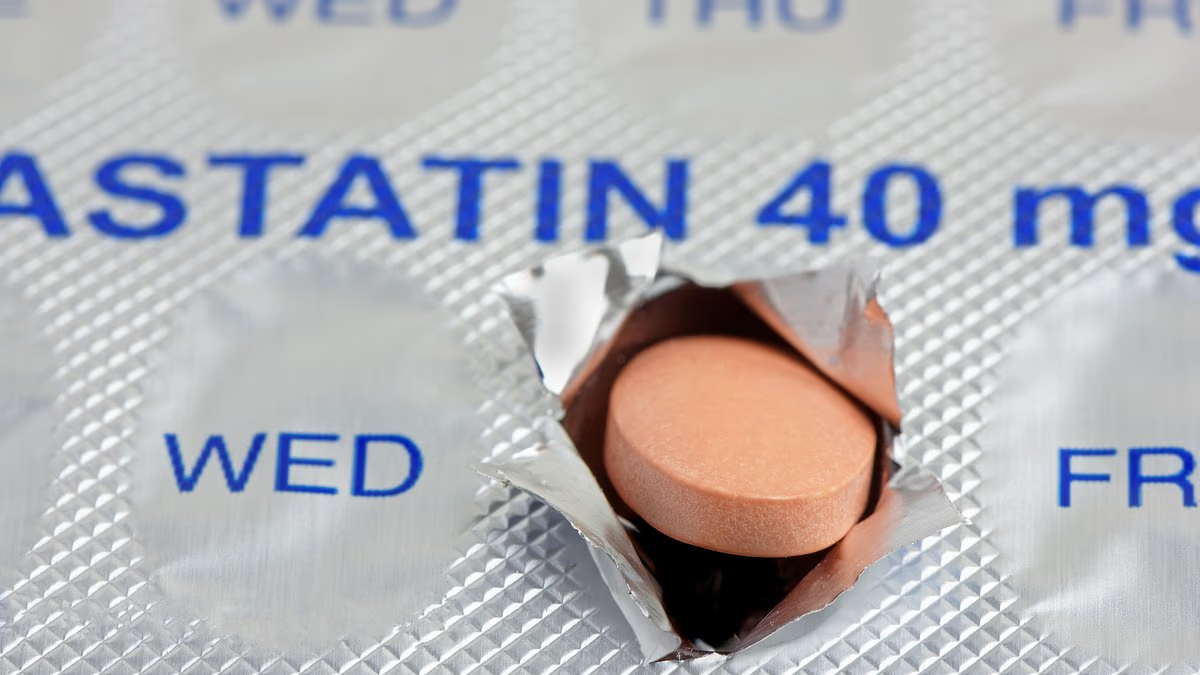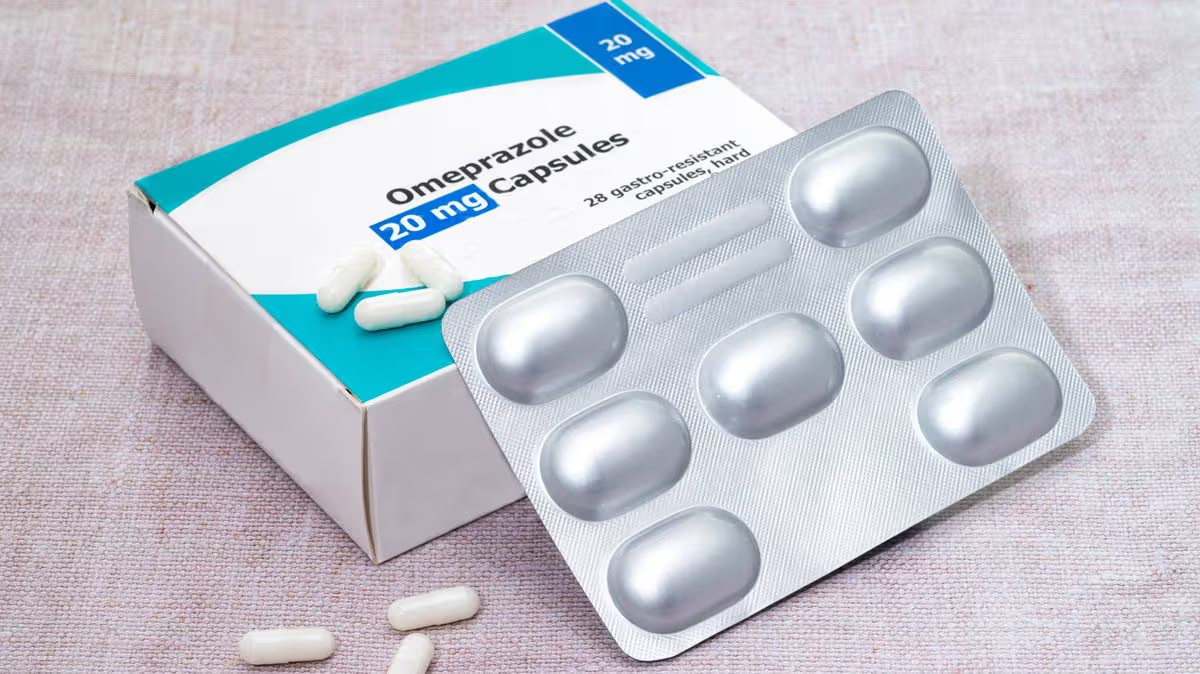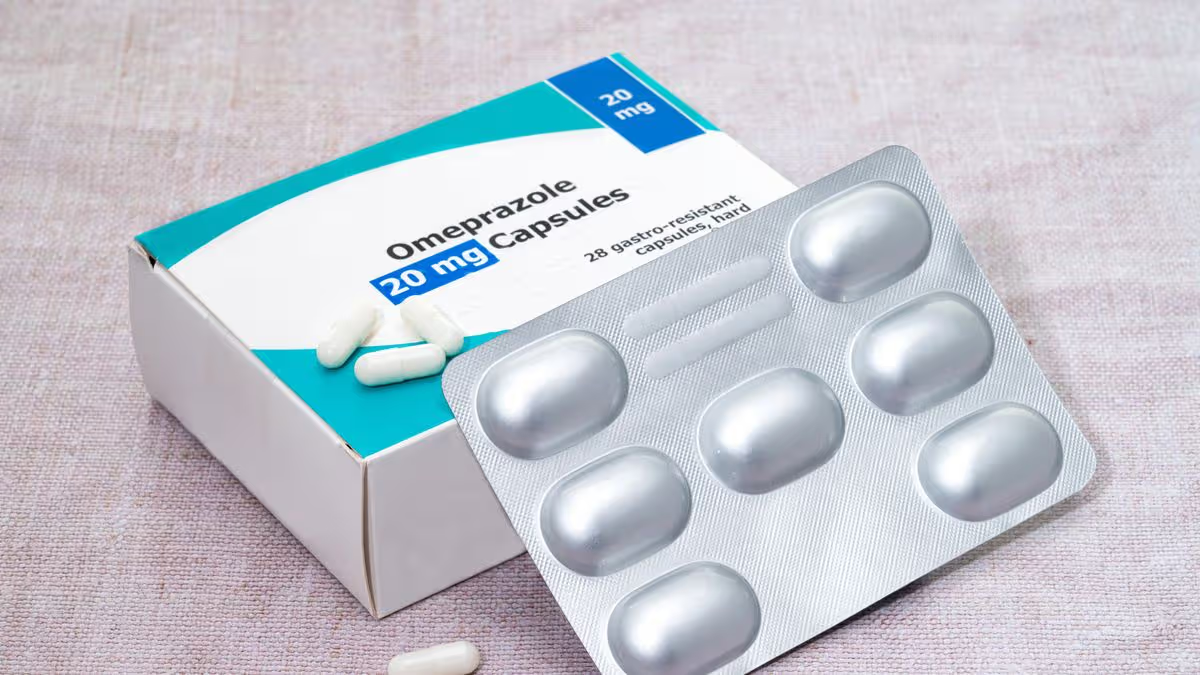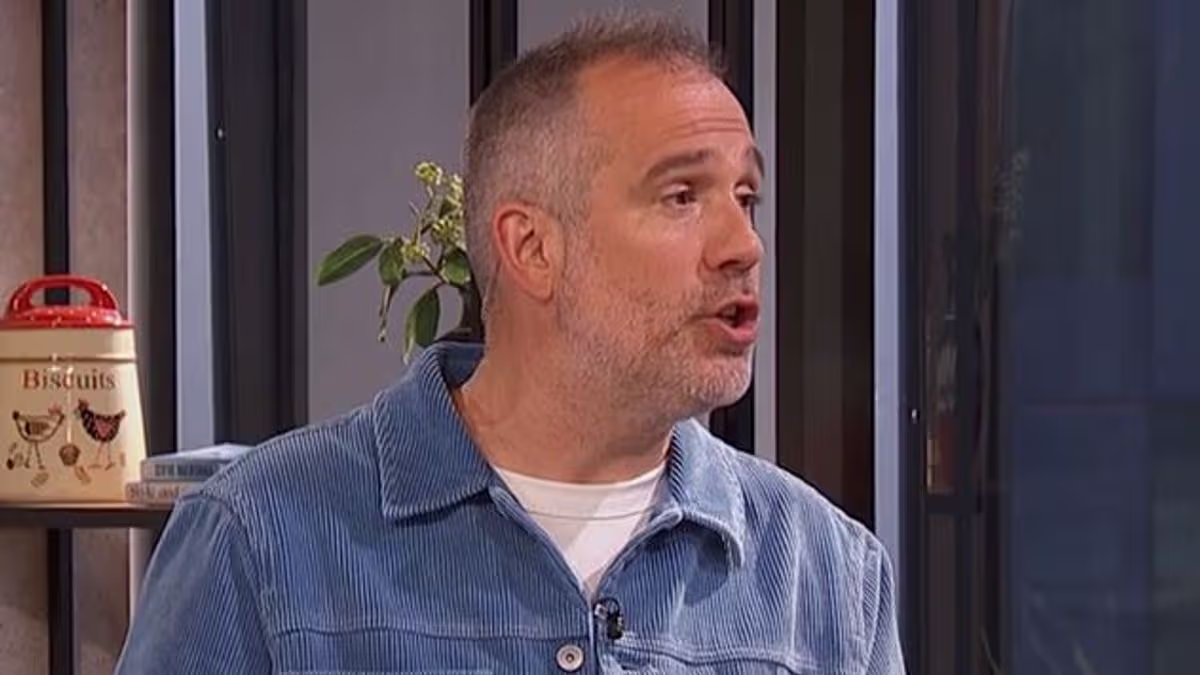
Proton pump inhibitors (PPIs) such as Omeprazole and Lansoprazole are used to treat heartburn and acid reflux — and as many as one in seven Brits take them13:37, 28 May 2026Updated 13:45, 28 May 2026A BBC expert has shared vital advice for those taking proton pump inhibitors (PPIs). Some studies suggest as many as one in seven Brits are currently on PPIs, which are prescribed to reduce stomach acid production.Omeprazole and Lansoprazole are among the most widely used, though Esomeprazole, Pantoprazole, and Rabeprazole are also commonly taken. Dr Alexander van Tulleken, better known as Dr Xand, appeared on BBC Morning Live to shed light on the subject.Given how widespread their use has become, there are understandable questions surrounding their safety for the general public. When host Helen Skelton asked whether 'acid reflux medication' was safe to take, Dr Xand responded: "Heartburn's the symptom, acid reflux is the sort of diagnosis, if you like. So, heartburn, that feeling of rising, burning sensation in your chest, comes from acid from your stomach getting into your food pipe."There is a thick layer of mucus that protects your stomach from very strong acid in your stomach, which is used to clean your food, and at the top of the stomach going up into your food pipe, which is the lower esophageal sphincter.Content cannot be displayed without consent"That's a tight ring of muscle that keeps it all closed, keeps everything going in one direction. It stops any backwash. But, if that sphincter isn't working, if acid does get back up your food pipe, then your food pipe is not protected from the acid the way that your stomach is, and you can get a feeling of burning. The acid is kind of literally burning your food pipe, and it can put you at a higher risk of cancer, and it can cause problems in your food pipe, and of course, it can be very, very symptomatic."And we know that lots of viewers have got in touch about PPIs asking, you know, is this medication a worry? Should I be on it in the long term? And it's a terrible thing to worry about a medication that you're taking for a long time, because you need it to control your symptoms, but you think, 'is this good for me? Is it doing me any harm?'"So, I feel for them. There are some other symptoms, as well: cough, a hoarse voice, bad breath, hiccups occasionally, bloating, feeling a bit nauseous, feeling a bit sick, particularly if you're lying down or bending over after a meal. That's what we're talking about."But let's come back to that worry because it is uncomfortable, yes there may be longer-term complications. If you've got it, you take medication to get rid of it. The big headline for me here, the No.1 thing I want people to remember is these medications are extremely safe. They are blockbuster drugs, they are taken all over the world by billions of people. They have been studied very very carefully."There are very recent trials looking at these medications, and what they have found is there is a very, very small increased risk of gut infections, we're talking about a .4 of a per cent increased risk."So, not nothing for a large number of people, but outweighed by the fact that they stop you getting dangerous bleeds, they they reduce your risk of cancer, and for all the other things that we were sort of worried about over the years that, 'oh maybe these will be causing problems' - really, the data says they are very, very safe drugs."What if I want to stop taking them?Many people assume that coming off PPIs is as straightforward as stopping them straight away. However, Dr Xand cautioned against this approach. While certain PPIs are available to purchase over the counter, many are provided by GPs via prescription.Article continues belowIt's crucial to follow the instructions on labels when purchasing PPIs from a pharmacy, or heed the guidance from your GP. For instance, the NHS cautions people against taking Omeprazole for more than a fortnight if you've bought it without a prescription. You're also advised to consult a GP if your symptoms worsen or fail to improve.It's equally important to bear in mind that PPI dosages differ from one medication to another. If you wish to stop taking them but you're on a prescription, it's essential you speak to your GP beforehand.Dr Xand explained: "The additional point is if you stop them suddenly, your stomach has been suppressed from making acid and it kind of rebounds. I'm going to make loads of acid now, and that'll make your symptoms much worse. So, you want to talk to your doctor before stopping taking them."
Doctor gives 'increased risk' update to Omeprazole and Lansoprazole users
Proton pump inhibitors (PPIs) such as Omeprazole and Lansoprazole are used to treat heartburn and acid reflux — and as many as one in seven Brits take them
790 words~4 min read