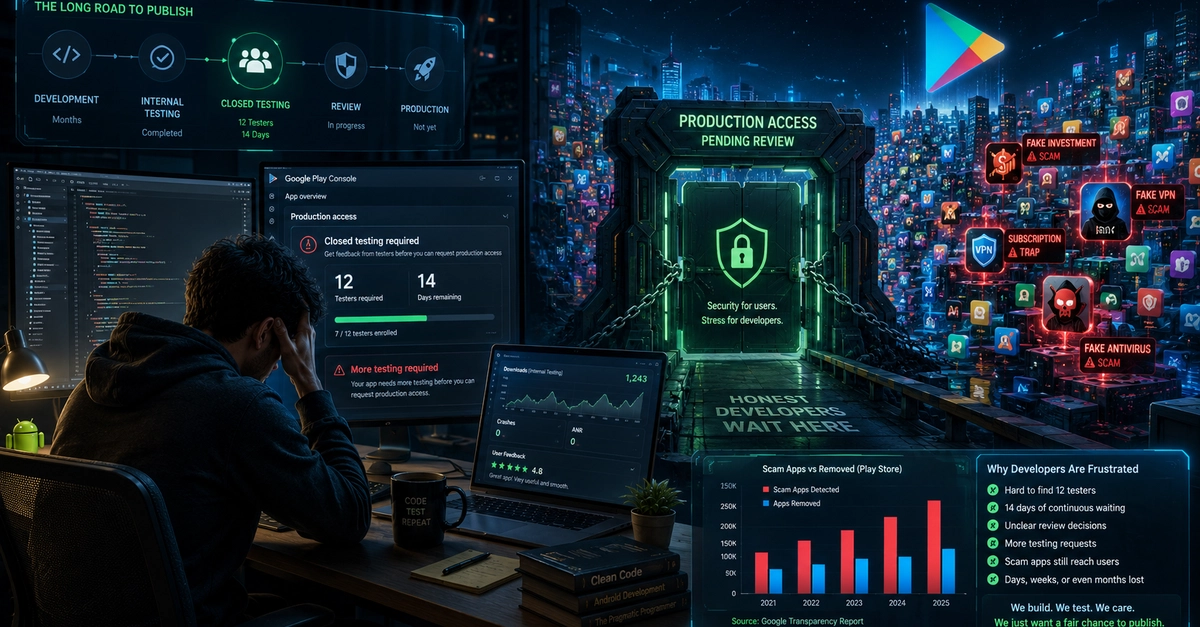
You’ve spent weeks, maybe months, tracking down bugs, optimizing your user interface, and wrestling with backend security rules. You compile your native release build or run your final production compilations, thinking the hardest part of the journey is officially behind you. Then you open the Google Play Console, and you’re hit with the ultimate indie developer roadblock: the mandatory 12-tester and 14-day closed testing requirement.
Many independent creators view this process as a simple download checklist. You might think, "I'll just find 12 people to download the app, leave it on their phones for two weeks, and wait it out." However, treating the testing phase as a static metric is the fastest way to get rejected during the final production access review.
So, what is Google actually tracking in the background during these two weeks? Let’s take a deep dive into the core algorithmic requirement that determines your success: Continuous Engagement.
Google Play policies are not designed as a simple box-checking exercise. The underlying goal of the algorithm is to verify if your application is genuinely functional, stable, and being tested by an organic user base before it reaches millions of production users.