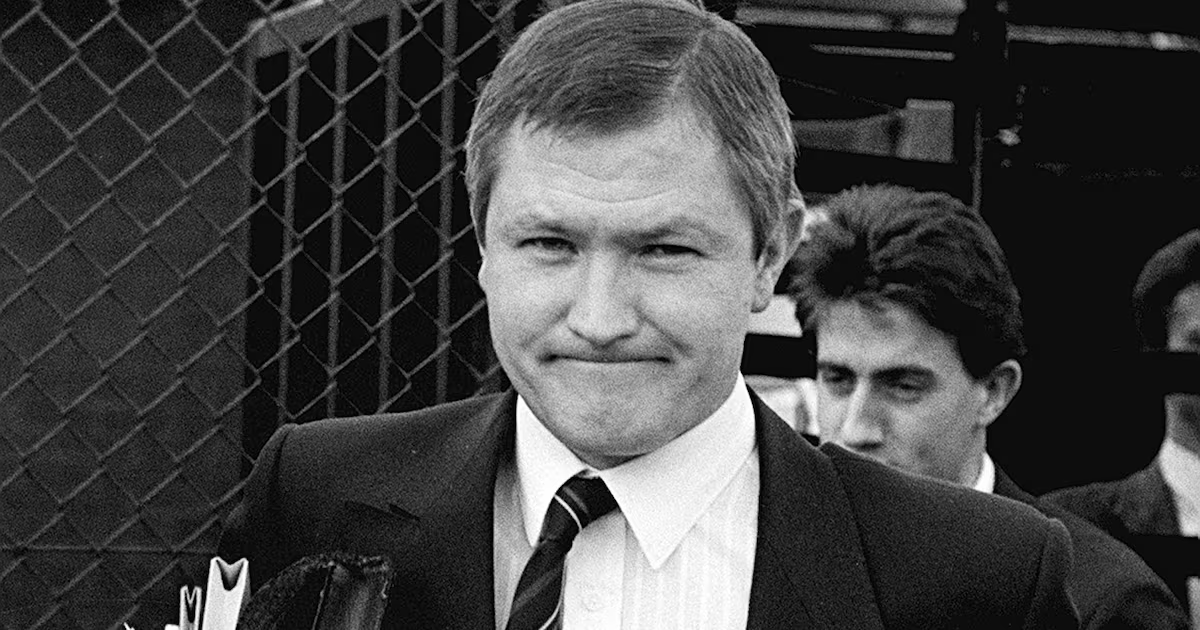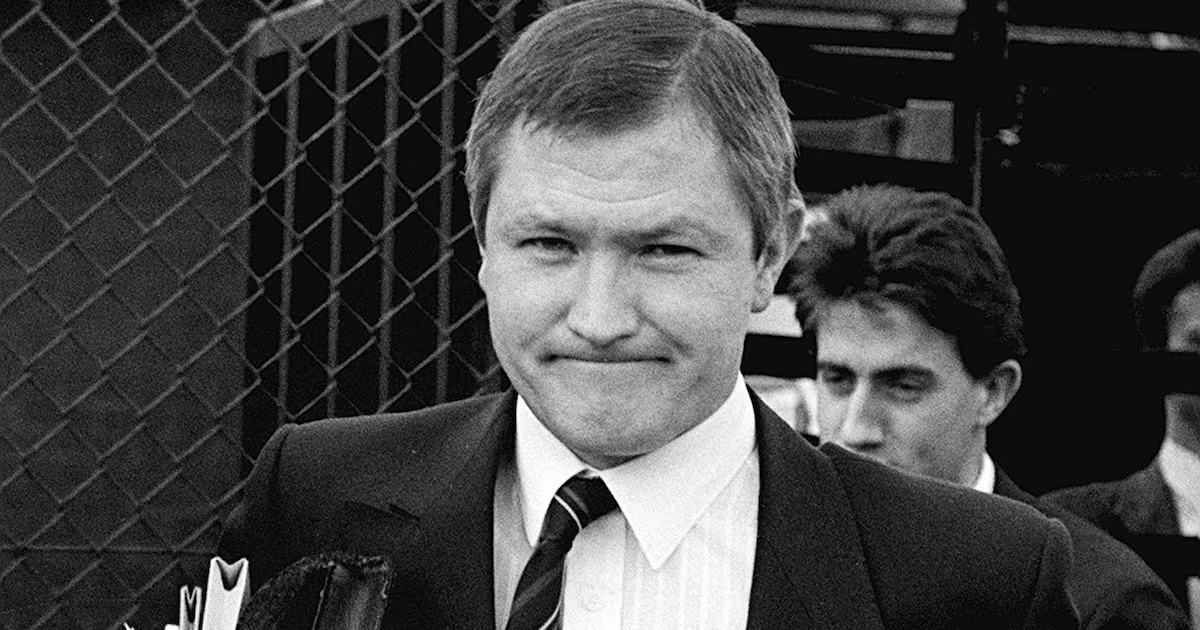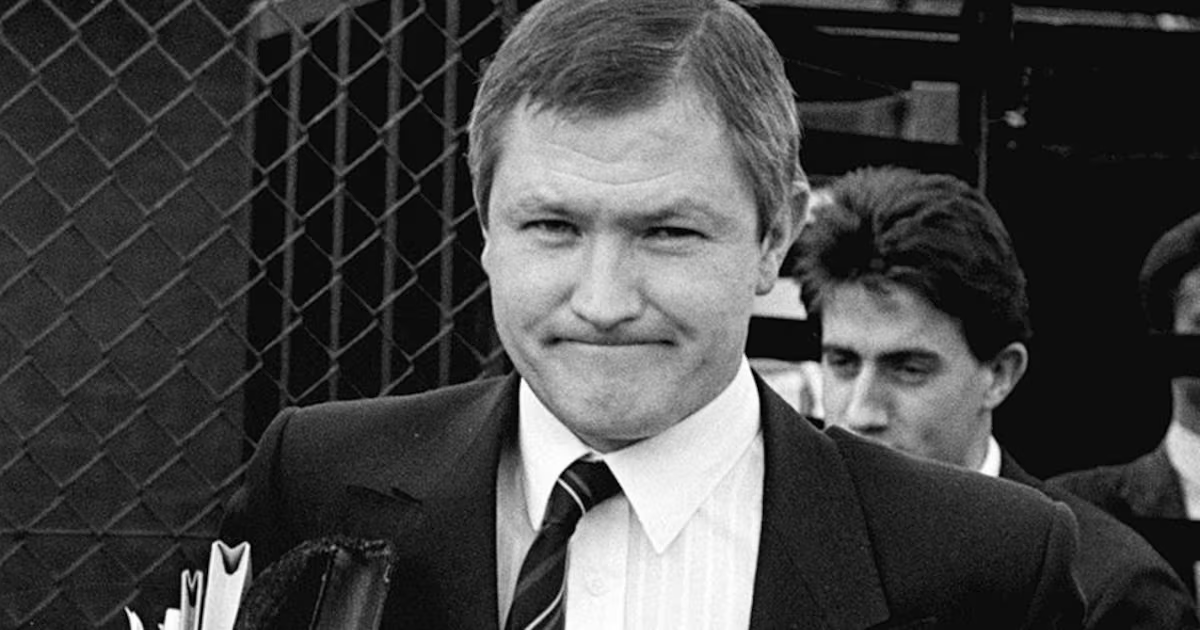
The murder of solicitor Pat Finucane was “catastrophic for the rule of law” in Northern Ireland, a tribunal in Belfast has heard.The Patrick Finucane Inquiry is an independent public inquiry investigating the circumstances of the murder by loyalist paramilitaries of Finucane on February 12th, 1989 at his home in Belfast. It was established by the Secretary of State for Northern Ireland Hilary Benn two years ago and began its initial public hearing on Wednesday under the chairmanship of Sir Gary Hickinbottom.Speaking on behalf of the Finucane family, their barrister Danny Friedman KC said the murder took place during “one of the darkest times for the rule of law in modern UK history”.“Patrick Finucane and Peter Madden (legal partner) held a mirror to the establishment using the standards of the rule of law and of embryonic human rights,” he told the inquiry. “This defence of democracy would help open the path to the constitutional settlement that Northern Ireland depends on to this day.”Those who organised and carried out the murder included British agents, Friedman continued. “They were surrogates and assets of the Ministry of Defence and the Special Branch of the RUC [Royal Ulster Constabulary] or both.”Geraldine Finucane said the first day of the public inquiry into her husband's death as 'monumental'. Photo: Charles McQuillan/Getty He named those responsible as Brian Nelson, who profiled Finucane as a target, William Stobie, who supplied the guns, and Ken Barrett who was part of the assassination team. All of them were members of the Ulster Defence Association (UDA) which was then a legal organisation. Finucane’s murder was “not an isolated innocent – it was part of a widespread and systemic practice which successive governments allowed to exist”, Friedman stated. [ Family of murdered solicitor Pat Finucane believe inquiry can deliver ‘whole truth’Opens in new window ]From the 1970s until 1992, the UDA remained a lawful organisation though the security forces and the British government knew it was a “paramilitary body that was murdering people”. Friedman quoted Sir Desmond de Silva who carried out a review of the case in 2015 and who described it as a “wilful and abject failure of a legal framework, monitoring or serious censure”. The security forces regarded Finucane as a “thorn in the side of the establishment”, Friedman continued. There had been previous threats to kill him which were not relayed to him, in 1981, 1985 and November 1988. [ 13,633 days since my husband was shot dead in front of me. 13,633 days seeking the truthOpens in new window ]Friedman said Finucane was never a member of the Provisional IRA and the rumour was circulated by the then Tory junior minster Douglas Hogg and by the security forces that he was a member because of the people he represented. Since then, the family have been subject to “relentless attempts to defeat the ends of justice”, Friedman concluded. The Patrick Finucane Inquiry is an independent public inquiry investigating the circumstances of the murder by loyalist paramilitaries in 1989. Photo: PA Three former members of the Royal Ulster Constabulary (RUC) Criminal Investigation Division (CID) have agreed to give evidence to the tribunal – Alan Simpson, Johnston Brown and Trevor McIlwrath. Simpson was the lead investigator into the Finucane murder. “Each of these men have waited years to be able to give evidence in a forum to get to the truth as to how their investigations were frustrated,” their counsel Clair Dobbins KC said. Counsel for the tribunal Matthew Hill said the amount of information publicly known about Finucane’s murder was “only the tip of the iceberg” in what was available.The tribunal has contacted British government and security forces and has received initial statements from them. [ Independent inquiry into murder of Belfast solicitor Pat Finucane formally establishedOpens in new window ]“This work is time and labour intensive. There are no shortcuts and the challenge is increased by material being held on different sites and different formats and where systems have changed over the years which means the material cannot be easily searched or transferred,” Hill said. “It is a painstaking process, but it is essential that it is done accurately and well.” De Silva’s review, published in 2015, identified a million documents “and since then more evidence has accrued”. Hill said the time spent looking at the new material will be time well spent and will allow for greater rigour. The timetable for the inquiry will be dictated by the level of co-operation that it gets, he added.He recommended the tribunal chairman should take what is already in the public domain as a starting point. He hoped such a hearing could take place in September. Hickinbottom said the tribunal will take a “trauma-based approach” to proceedings. He could not set a date for the conclusion of the inquiry and would resist pressure for a finishing date. On Wednesday morning, before the opening of the tribunal, Finucane’s widow, Geraldine Finucane, hailed the first day of a long-campaigned for public inquiry into his death as “monumental”.Flanked by her sons Michael and John, and daughter Katherine, as well as Finucane’s brothers Martin and Dermot, she said no one wanted to miss the long-awaited day.Speaking to media outside Bradford Court, she said: “We have waited 37-and-a-half years for this day and not one of us wanted to miss it.“We fought long and hard to get to the truth, and to get to justice, and that’s what we’re hoping that this inquiry will provide us with.“We’re hoping that all those questions that have never been fully answered will be answered during the inquiry and it will be thorough, and it will satisfy us, and then we will have closure.” – Additional reporting PA
Murder of solicitor Pat Finucane was ‘catastrophic for rule of law’ in North, tribunal hears
Public inquiry demanded by Belfast family has finally gotten under way two years after it was announced
948 words~4 min read