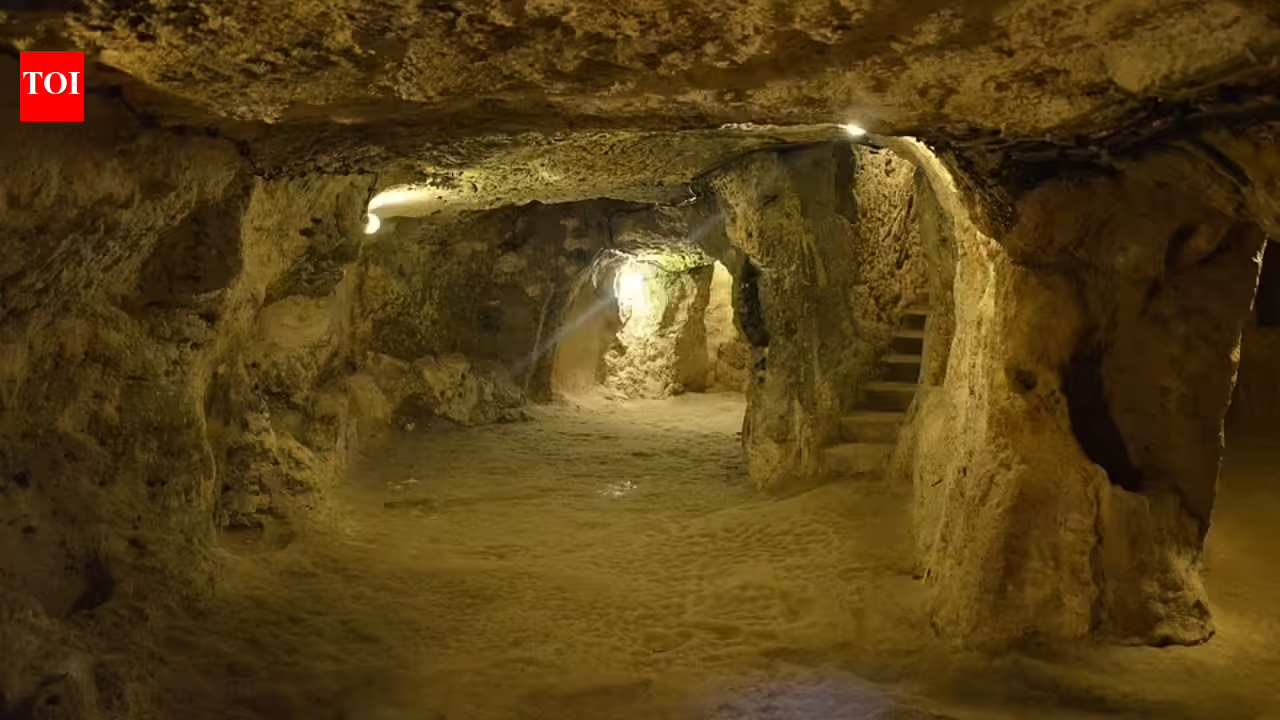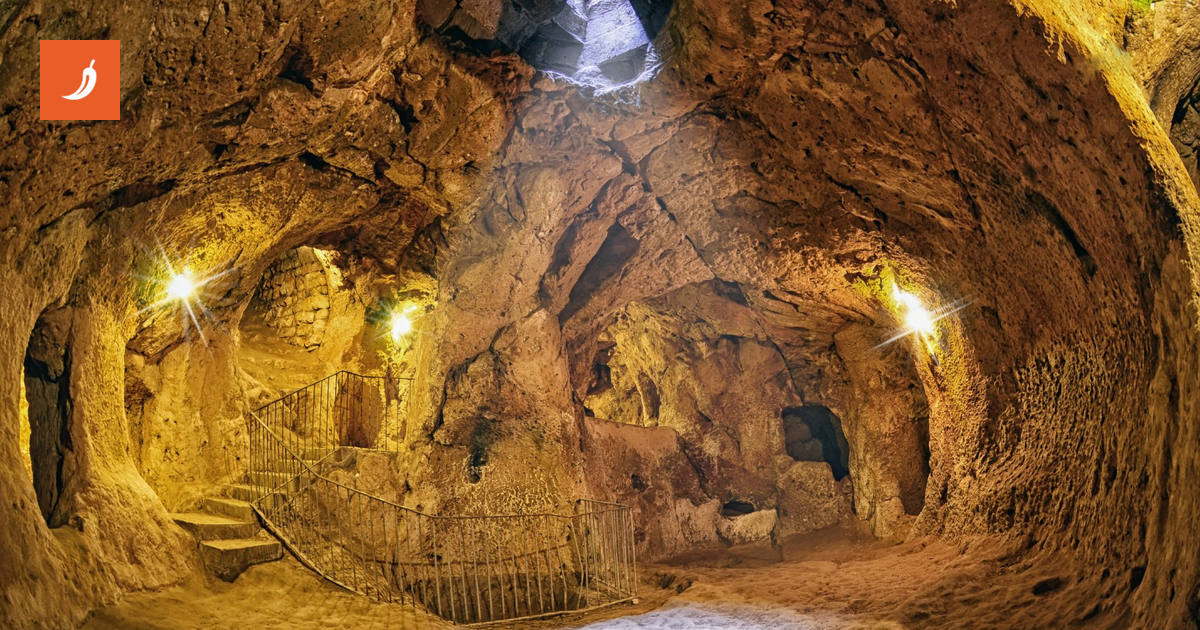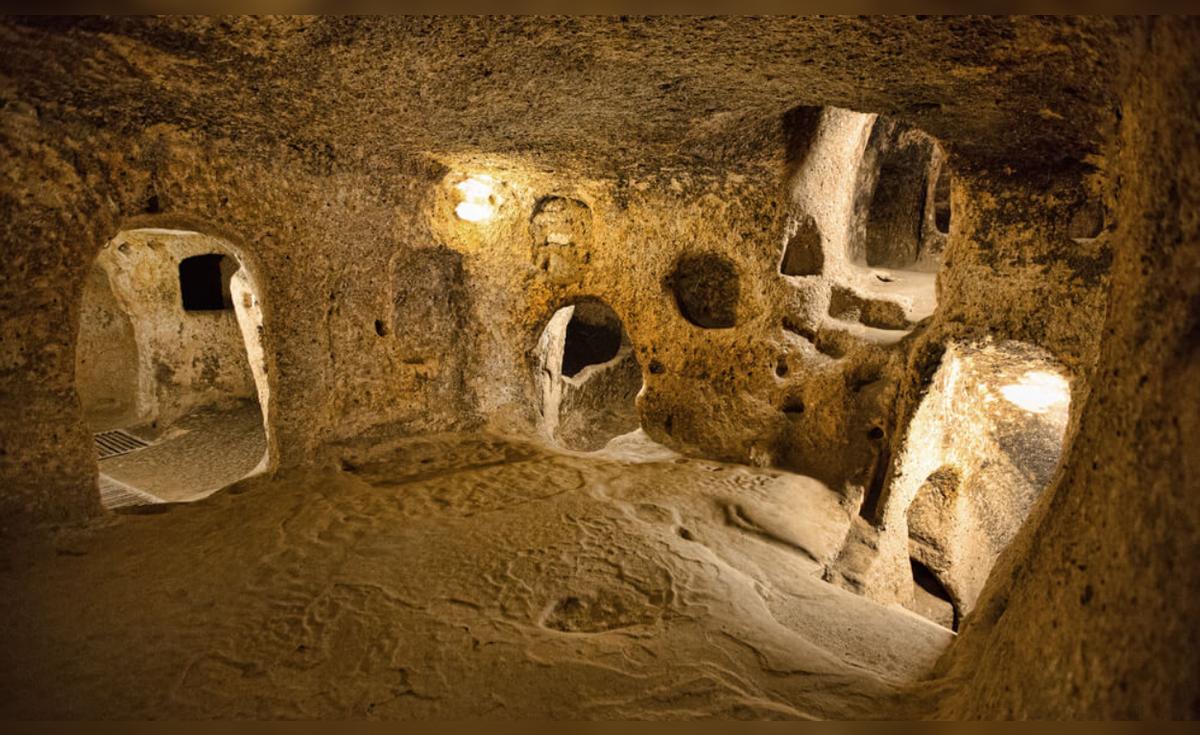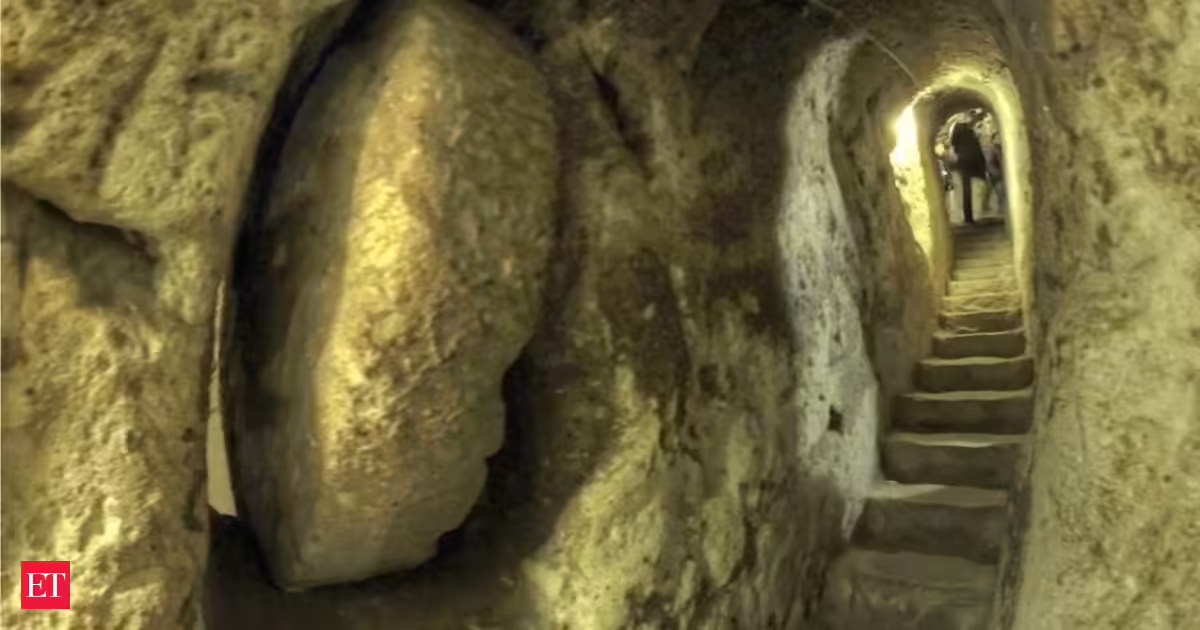
Archaeological discoveries are usually associated with planned excavations, research teams, and years of careful investigation, which is one reason the story of Derinkuyu remains so captivating. In 1963, a homeowner carrying out renovations in Cappadocia reportedly knocked through a wall and discovered a hidden passage leading into something far larger than anyone expected.What initially appeared to be a concealed corridor eventually revealed one of the most extraordinary underground settlements ever identified: Derinkuyu, a vast subterranean city carved beneath central Turkey. Today, scholars regard the site not as a legend or a curiosity but as a complex archaeological landscape whose tunnels, rooms, and infrastructure continue to raise important questions about how people lived below the surface for extended periods.A routine renovation exposed something enormousThe appeal of Derinkuyu begins with the contrast between the discovery and what was discovered. Home renovations are among the most ordinary activities imaginable, yet in this case a demolished wall became the entrance to an underground world that had remained hidden from modern view.A feature published by the Yale Globalist places Derinkuyu within Cappadocia’s wider network of underground settlements and identifies it as the largest discovered underground city in the region, with estimates suggesting it could once have accommodated more than 20,000 people. That scale is what transforms the story from an unusual household discovery into a major archaeological event.The hidden passage was not leading to a forgotten room or isolated chamber; it was leading to an entire built environment extending deep beneath the landscape. The realization changed how people viewed the region because it revealed that what appeared on the surface represented only part of the historical landscape.A passage in the underground city | Wikimedia CommonsThe city was far more than a shelterThe reason Derinkuyu continues to attract scholarly attention is that the site contains evidence of organized daily life rather than merely emergency refuge. Research published by Indiana University Indianapolis in 2025 examined aspects of Derinkuyu’s soundscape and spatial organization, highlighting interconnected living areas, kitchens, churches, and communal spaces throughout the underground complex.These features suggest a settlement designed to support prolonged occupation rather than temporary concealment. The city functioned as a real environment where people moved, cooked, worshipped, stored supplies, and carried out the ordinary activities of community life, and this is an important distinction because it changes how archaeologists interpret the site. Derinkuyu was not simply carved into the rock as a series of tunnels. It was planned as a functioning urban space adapted to life below ground.Scholars are still trying to understand itDespite its fame, many aspects of Derinkuyu remain uncertain, which is precisely why researchers continue returning to it. The same Indiana University study notes that limited historical documentation and the complexity of the city’s layout make interpretation challenging, leaving many questions about its development, use, and occupation open for further investigation.This uncertainty is not a weakness of the site. In archaeology, some of the most valuable places are those that continue generating new questions rather than simply confirming existing answers. Derinkuyu provides a remarkable amount of physical evidence through its architecture, yet much of its broader history remains incomplete. As a result, scholars increasingly treat the city as an active research landscape rather than a solved mystery.A deep ventilation well in the city | Wikimedia CommonsCappadocia’s underground world changed historical expectationsThe underground city is not an isolated anomaly but part of a wider regional tradition of subterranean construction, demonstrating that communities in the area developed sophisticated methods for adapting natural rock formations into large-scale living environments. The Yale Globalist notes that Derinkuyu represents the largest discovered example within this broader network, making it an important reference point for understanding the region’s history of underground habitation. What makes the discovery particularly powerful is that it expanded historical imagination. Before Derinkuyu entered public awareness, few people would have expected an entire city to exist beneath an ordinary neighborhood. The find challenged assumptions about where archaeology can be hidden and how extensive human-built environments can become without leaving obvious traces above ground.
In 1963, a homeowner knocking down a wall in Cappadocia found a hidden passage, and Derinkuyu opened a city underground
During a standard home remodeling project in Cappadocia, Turkey, the excavation unexpectedly unveiled Derinkuyu, an extensive underground city. This extraordinary find showcased an elaborate community that could accommodate over 20,000 individuals. Nowadays, archaeologists regard Derinkuyu as more than just a refuge; it is seen as a meticulously designed urban hub.
668 words~3 min read