This post is a companion piece to our presentation at Real World Crypto (RWC) 2026 in Taipei, Taiwan on March 11, 2026, where GitGuardian and Google researchers will present the full findings of this collaboration.
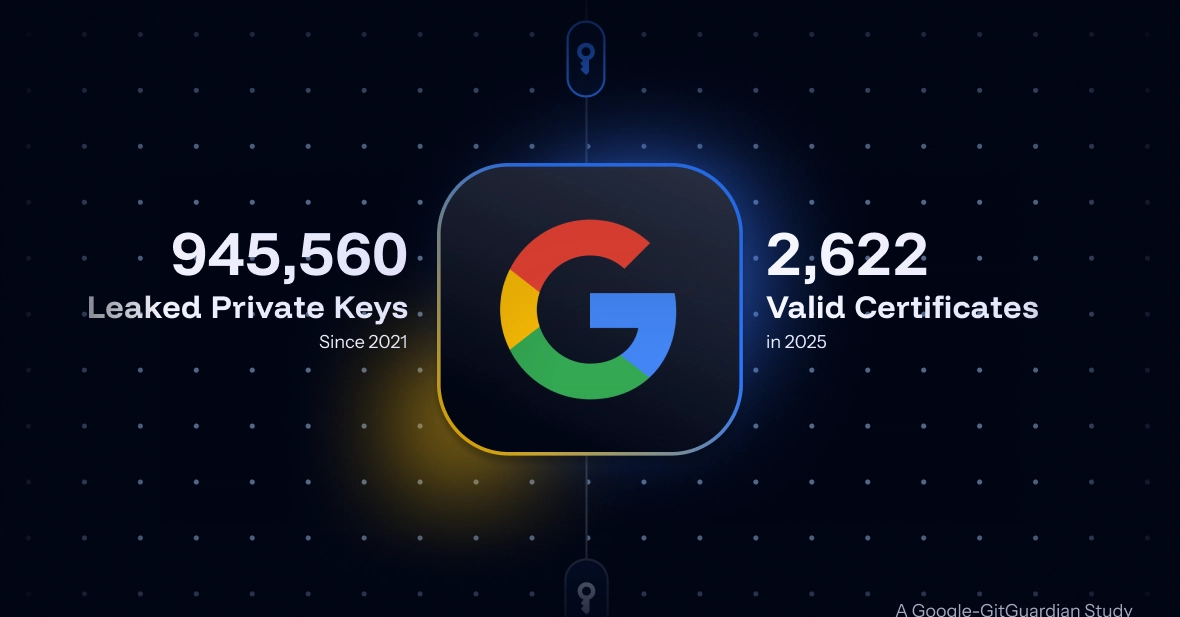
When a private key leaks on GitHub or DockerHub, detecting it is easy. What's harder, sometimes impossible, is understanding its real-world impact. Unlike AWS keys or OpenAI tokens, which are tied to their respective service, a leaked private key is just a mathematical object without an obvious owner.
Private keys are challenging to attribute at scale: they are used in many different contexts, ranging from SSH authentication to JWT signatures. When one leaks, where do you start assessing the impact? Among leaked private keys, those used in X.509 infrastructure are most critical. They authenticate web servers in HTTPS: a compromised key enables attackers to impersonate websites or intercept data. That's why GitGuardian partnered with Google's researchers to answer a deceptively simple question: what happens when private keys leak?
In the TLS ecosystem, a private key leak poses a critical threat, as attackers on the appropriate network path can impersonate websites, intercept or manipulate data, and decrypt past communications, particularly if the same private key is used for a long period of time prior to the widespread adoption of PFS.