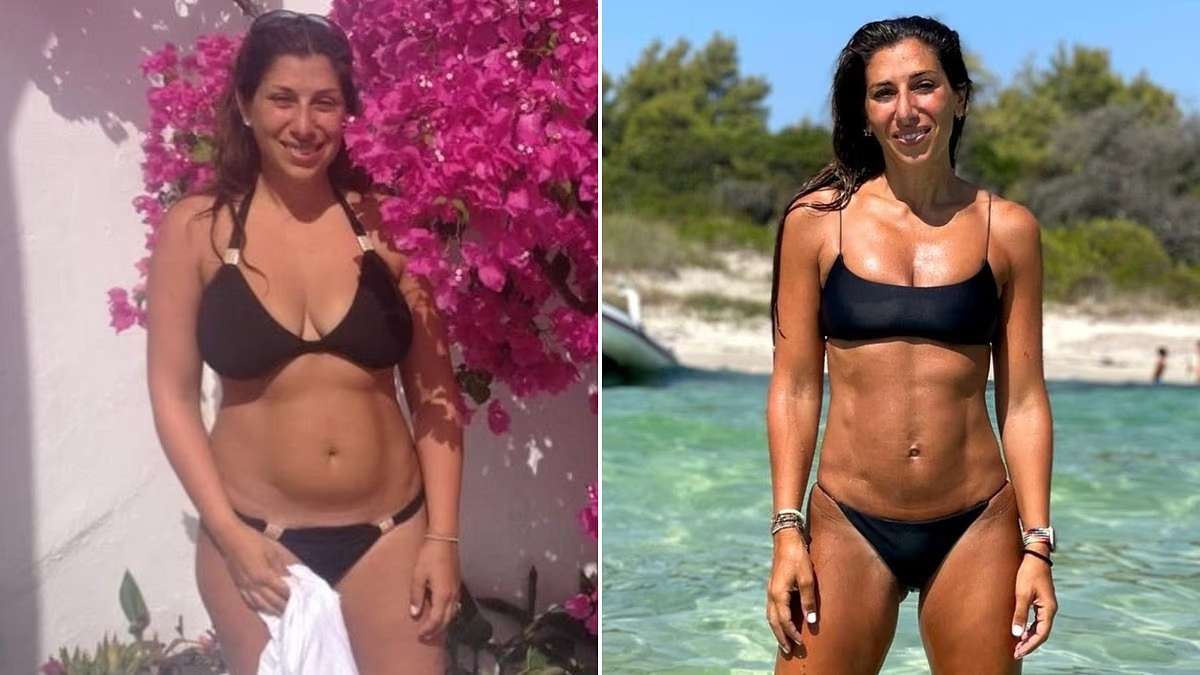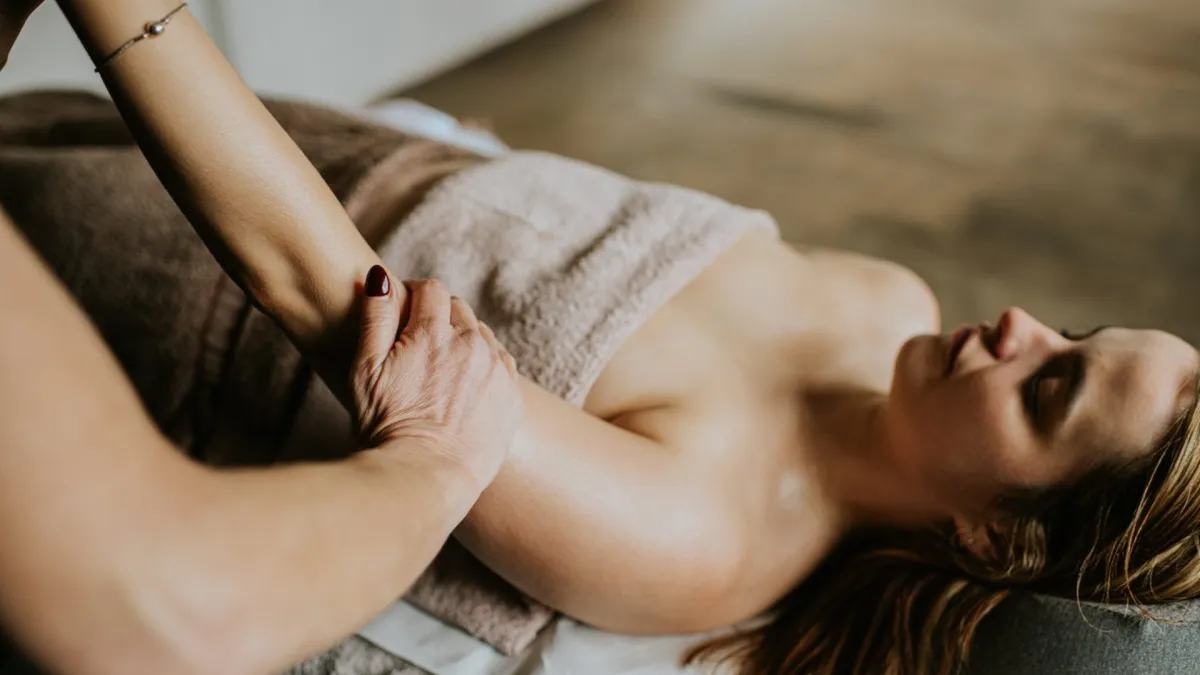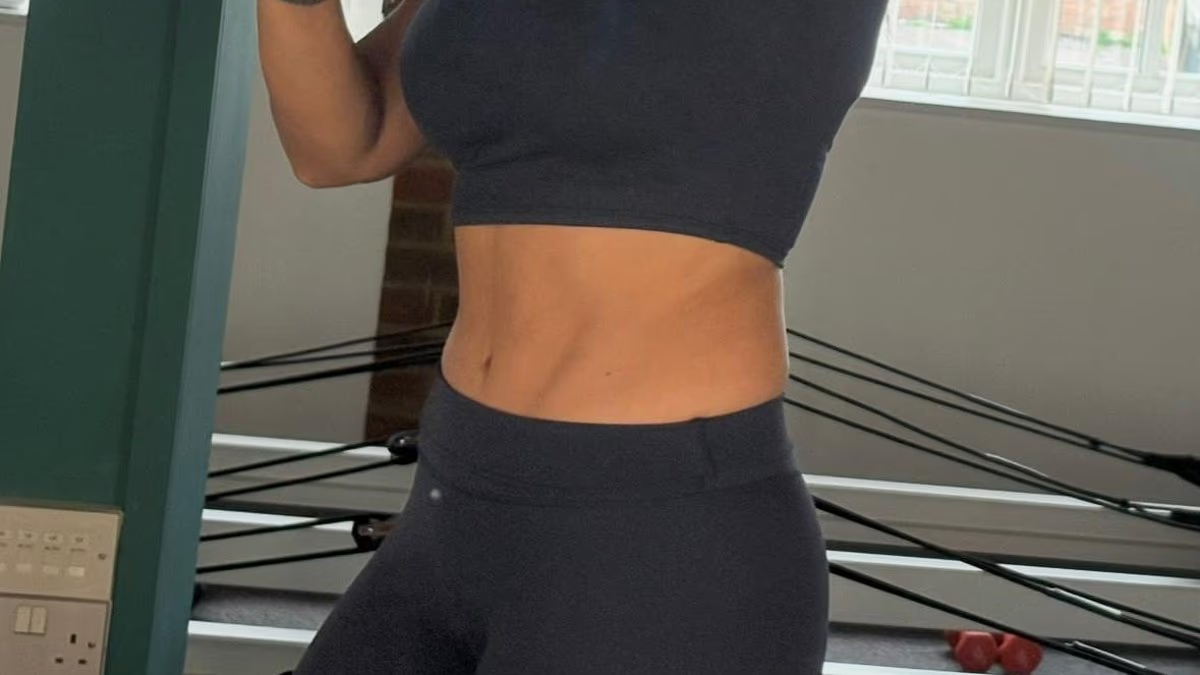
Lying on the operating table, waiting for the anaesthesia to take effect, I felt nervous but also excited.I was about to have a tummy tuck and hoped the operation would finally address something that had bothered me for years following my two pregnancies.As a fitness instructor and owner of a Pilates, yoga and wellness studio in Dunstable, Bedfordshire, I have spent my career helping women build strength, confidence and appreciation for what their bodies can do.Despite having an otherwise toned body, I had been left with something that plagues so many women following pregnancy – a ‘mum tum’, with loose skin on my stomach and a separation in my abdominal muscles – a common condition called diastasis recti.While I still wore bikinis and enjoyed holidays, I often chose higher-waisted styles and never felt completely comfortable with the appearance of my tummy. I always wished the skin was tighter and the area felt more supported.I had tried everything in my power to improve the area naturally through exercise before considering surgery, of course.Diastasis recti affects an estimated 60 per cent of women after childbirth, with around a third still struggling six months later. It’s important to note that many women can improve it through targeted exercise programmes. As a Pilates instructor, I know first-hand how beneficial these approaches can be.So, I spent thousands of pounds on specialist rehabilitation, targeted core training with a personal trainer, and even red light therapy, skincare treatments and nutritional approaches. Fitness instructor Carla Stephenson says despite being toned in most areas, the skin on her stomach remained loose after childbirth, so she often wore higher-waisted styles to hide it Carla's stomach before and after the tummy tuck treatment... a surgeon diagnosed her with diastasis recti – a separation of the abdominal muscles, common following pregnancyBut despite all this effort, nothing had worked for me. I was still left with a separation of around 2cm to 3cm and excess skin that never fully returned to how it had been before pregnancy.I knew surgery was not a decision to take lightly but I felt confident it was the right decision for me.I was 20 when my first son was born in 2003. Before that pregnancy I had always been slim and toned, yet although I regained my strength and fitness, the loose skin remained.I went on to have my second child in 2020 and afterwards I became increasingly aware that something wasn’t quite right. I could physically feel the gap in my abdominal muscles.In 2024, after being examined by plastic surgeon Dr Kerstin Oestreich, I received an official diagnosis.Most people looking at me probably wouldn’t have noticed anything unusual. It wasn’t a dramatic protrusion. However, I was very aware of the sagging, unsupported feeling through my abdominal wall and the excess skin that remained.So in 2023, when my second child was two and I knew my family was complete, I began researching surgical options.A mini tummy tuck only addresses skin below the belly button and wasn’t suitable for the extent of my muscle separation. After a consultation at Kat & Co, a specialist cosmetic clinic in Birmingham, I decided to proceed with a full abdominoplasty.It was a significant decision and not one I rushed into, particularly given the cost of around £9,000.In April 2025, I underwent a pioneering 'Lock and Glue' tummy tuck. Rather than using traditional post-operative drains, the technique combines internal locking stitches with surgical tissue glue.The procedure also allowed me to undergo surgery under twilight anaesthesia, meaning I remained deeply sedated while breathing independently. Carla had a full abdominoplasty, costing around £9,000. Her tummy tuck used the 'Lock and Glue' method, which combines stitches with surgical tissue glue. (Pictured: Before and after) 'Now at 43, I feel comfortable in my own clothes and swimwear,' says Carla. 'I don’t feel like a different person – I simply feel like a more confident version of myself'Before the operation, I was offered the opportunity to have the procedure filmed so that I could watch it afterwards, and I agreed. It was fascinating viewing – definitely a little gory, but I loved seeing exactly what had been done.The operation lasted around three hours. The surgeon repaired the separated abdominal muscles, removed the excess lower abdominal skin and then redraped the skin from above the belly button down towards the pelvis to create a flatter abdominal profile. A new belly button was then created before everything was secured and closed using the 'Lock and Glue' technique.When it was all done, I was bandaged up and checked into a nearby hotel to recover.I was amazed to learn surgeons had removed 620g of skin and 1,240ml of fat from my abdomen.Recovery was not easy. I spent around six weeks walking bent over and was unable to teach properly during that time, because my work at my Pilates studio Balance Fitt is so physical. I wore a compression garment for four months and underwent regular lymphatic massage to help manage swelling and support healing.I knew I needed to be patient because I had been told it could take up to a year for the final results and scarring to fully settle.Three months after surgery, I went on holiday and could really begin to see the difference.Now, 14 months on, I feel like a different woman. The biggest change is that I no longer think about my stomach all the time.At 43, I feel comfortable in my clothes and swimwear and more confident in myself generally.The surgery also gave me greater confidence in many aspects of my life, including intimacy, because I felt more comfortable in my own skin.What feels most empowering is that I made the decision for myself.For me, this wasn’t about achieving perfection. It was about addressing something that had remained, despite years of self-care.Of course, surgery wasn’t a decision I took lightly and it was a significant financial investment, but for me it was the right choice.I often tell people that I don’t feel like a different person – I simply feel like a more confident version of myself.As told to Eimear O’HaganAdditional reporting: Matthew Barbour
How this treatment got rid of my saggy mum tum and boosted my sex life
Despite having an otherwise toned body, I'd been left with something that plagues so many women after pregnancy - a 'mum tum', with loose skin and a separation in my abdominal muscles...
1,016 words~5 min read