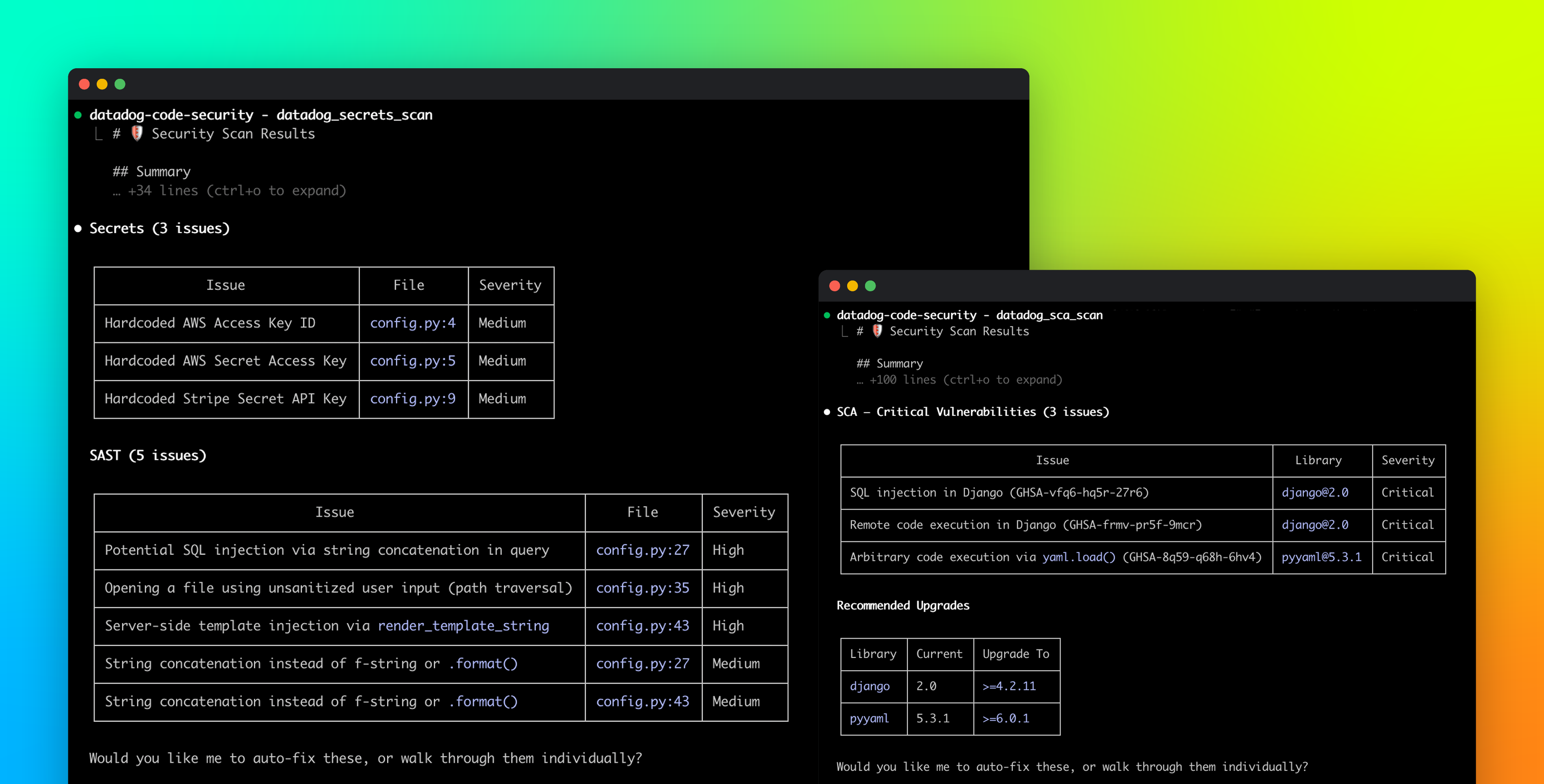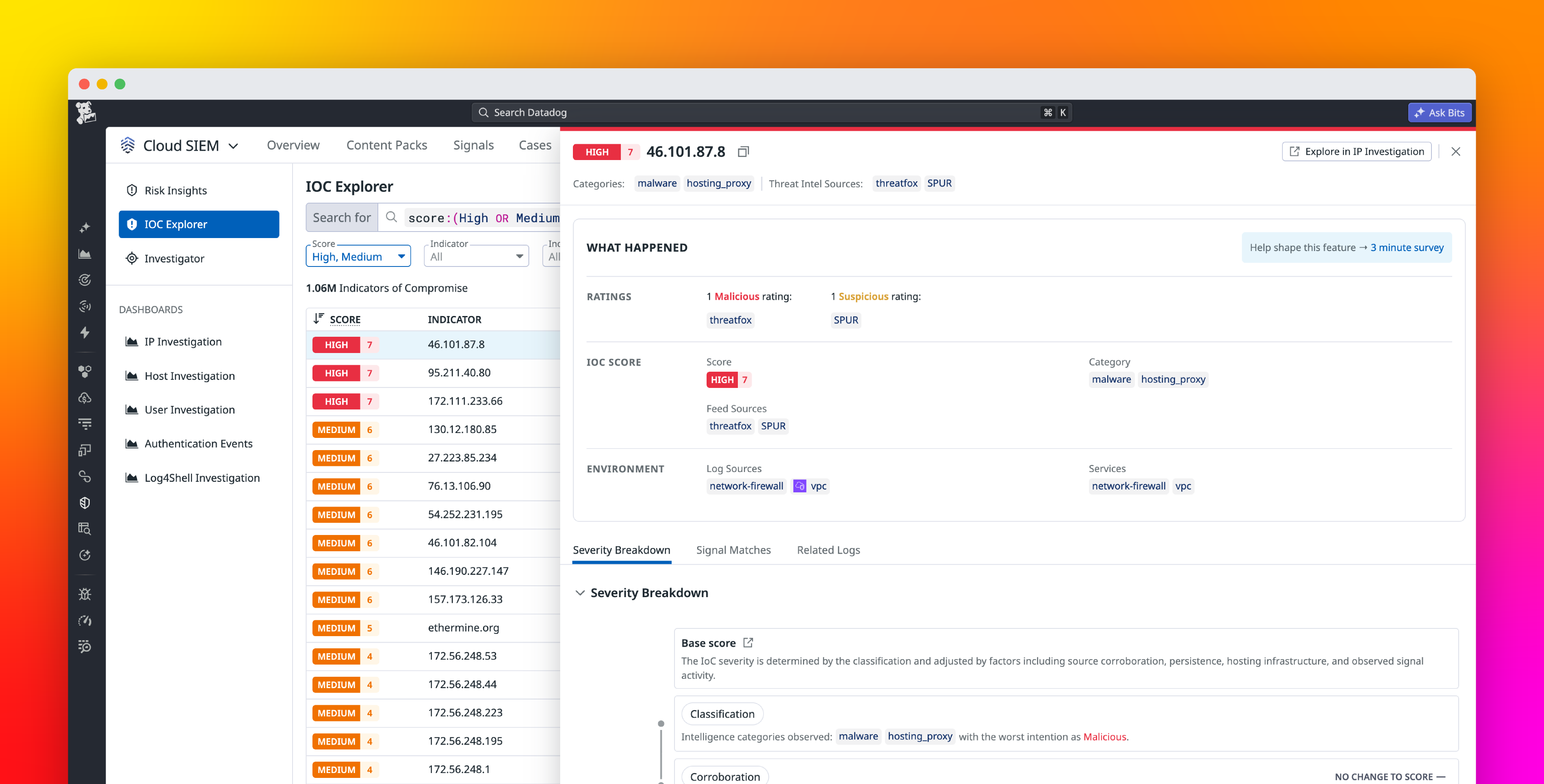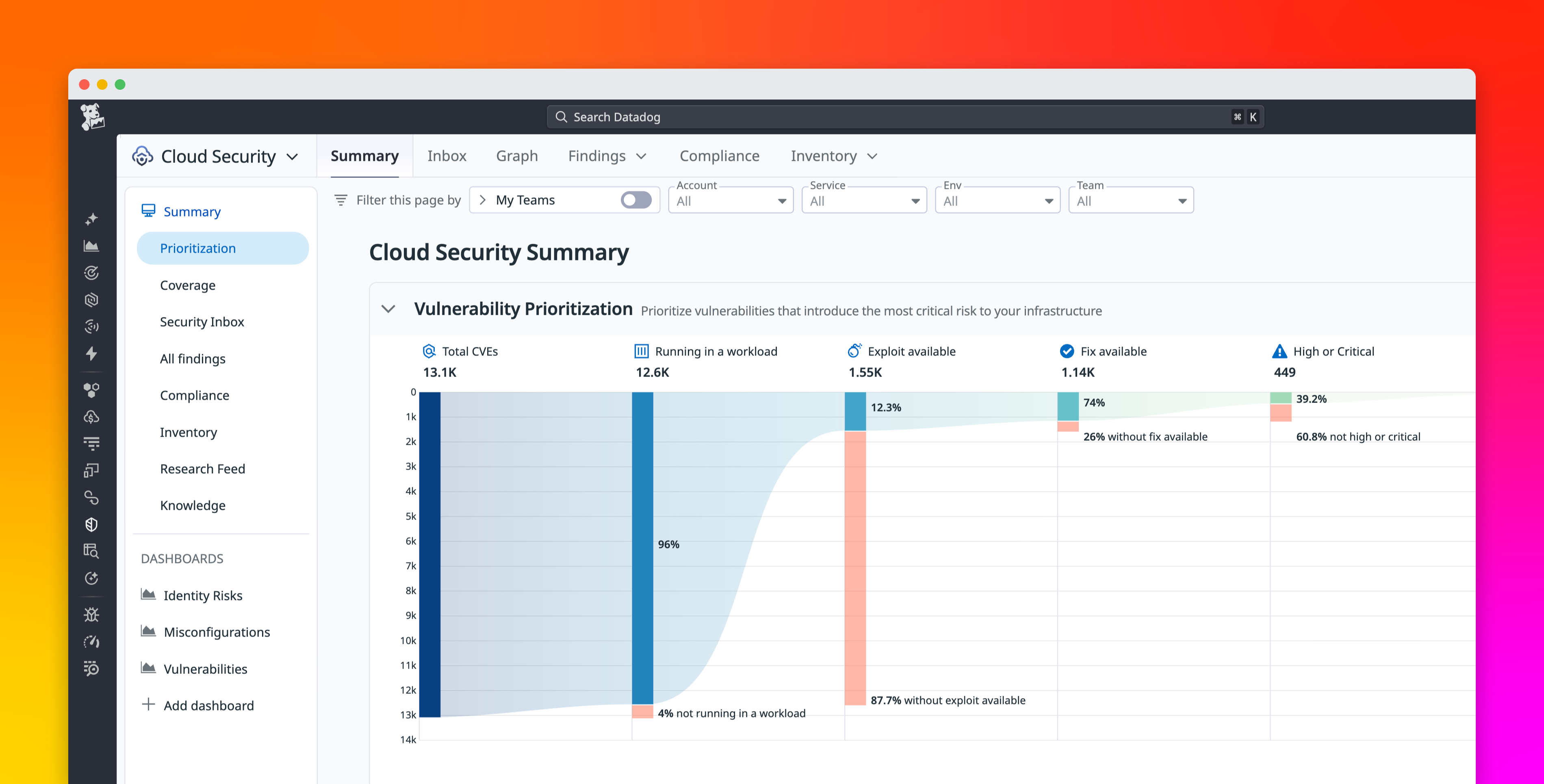
Security teams are dealing with a fundamentally different operating environment than they were a few years ago. AI-assisted development is rapidly pushing more code and infrastructure into production, and according to Datadog’s 2026 State of DevSecOps report, 40% of running services have an exploitable vulnerability. Meanwhile, AI is giving attackers new ways to automate reconnaissance and accelerate exploits, which has collapsed the window between vulnerability disclosure and active exploitation from months to minutes.
Attacks are only going to increase in volume and speed. But defenders are still overwhelmed by alerts and disconnected tools, manually reconstructing context during active incidents, and chasing ownership across services. The teams that stay ahead won’t close that gap with more tools or signals—what separates useful data from noise is knowing what is actually happening in your production environments. When you have a clear picture of your attack surface, you can identify what’s truly exploitable and focus on the threats that can actually harm your business. And when a threat surfaces, you can detect, investigate, and contain it faster, with a unified system that makes ownership clear and keeps pace with AI.