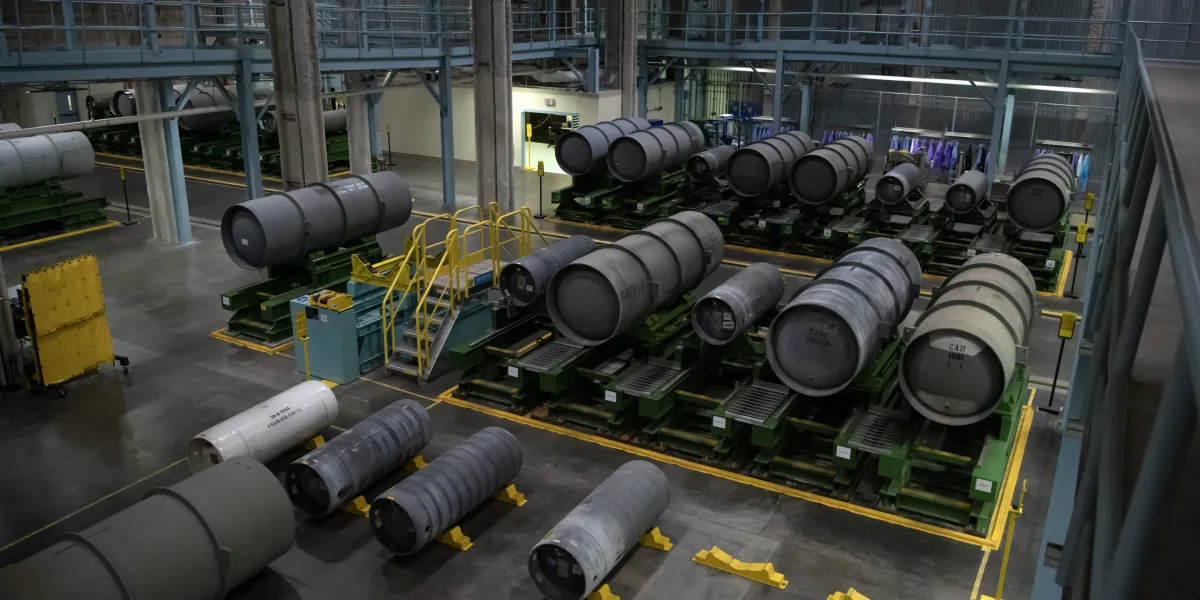
The Strategic Petroleum Reserve has proven its worth as a hedge against the energy shocks of conflicts like the wars in Ukraine and Iran. But what if the United States were sitting on another energy reserve that has been quietly accumulating for decades and that Washington has persistently mismanaged?The roughly 95,000 metric tons of used nuclear fuel stored at reactor sites across more than 30 states represents an extraordinary stockpile of recoverable energy comparable in scale to major global energy reserves. We have been treating it as garbage. It is a strategic asset, and our adversaries know it.The case for recycling this fuel has never been stronger, and the window to act has rarely been this open.
The shift from rhetoric to execution has already begun. In May 2025, President Donald Trump signed an executive order declaring it U.S. policy to “maximize the efficiency and effectiveness of nuclear fuel through recycling, reprocessing, and reinvigorating the commercial sector.” The bipartisan Nuclear REFUEL Act would streamline licensing for modern recycling facilities, removing a primary regulatory barrier that has chilled private investment for decades.
In February 2026, the Department of Energy awarded over $19 million to five companies to develop recycling technologies. Private-sector startups are moving decisively, with Oklo’s $1.68 billion recycling facility in Tennessee exemplifying the scale of investment now underway.