This piece was published in collaboration with Golden Goal, a literary magazine about the intersection of politics, culture and sport at the 2026 World Cup. To read more, visit their website: goldengoal.world.
*
Over the years, writers from around the world have tried their hands at using soccer as a backdrop for memorable fiction. Tonally speaking, they cover a vast terrain, including J.L. Carr’s comic How Steeple Sinderby Wanderers Won the F.A. Cup and Leonard Gribble’s whodunit The Arsenal Stadium Mystery. Some will cut more deeply for soccer fans of a literary bent; others can be savored no matter what your feelings about the beautiful game might be. David Peace’s modernist Red or Dead, about the life of the legendary Liverpool coach Bill Shankly, left me frequently breathless despite having little emotional investment in the ups and downs of Liverpool.
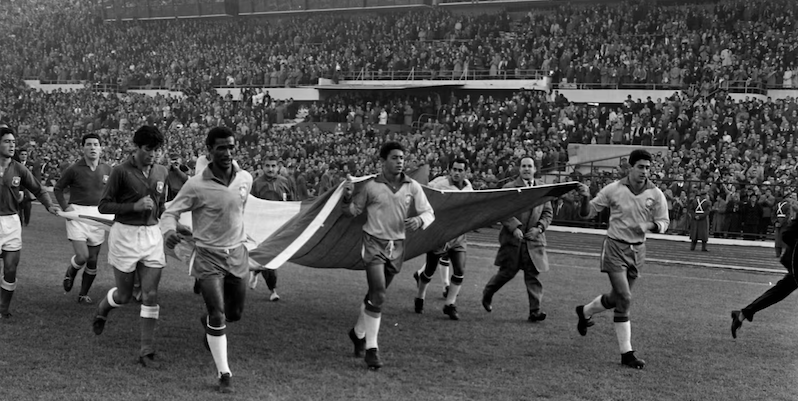
If that novel—a work of precisely composed prose in which Peace uses repetition and the sheer bulk of its more than 800 pages to take the reader into Shankly’s inner life and the meticulous rhythms of his squad’s play—represents one pole of how to make a great soccer novel, standing opposite it is Carlos Labbé’s 2015 The Murmuration, translated into English by Will Vanderhyden. I feel comfortable declaring that The Murmuration is the strangest novel ever written about the game of soccer. The bulk of the novel uses a real event as its setting: the 1962 World Cup semi-final between Chile and Brazil. That part of it, at least, will be familiar to longtime soccer enthusiasts. Where things get a little weirder comes when Labbé introduces psychic powers into the mix.