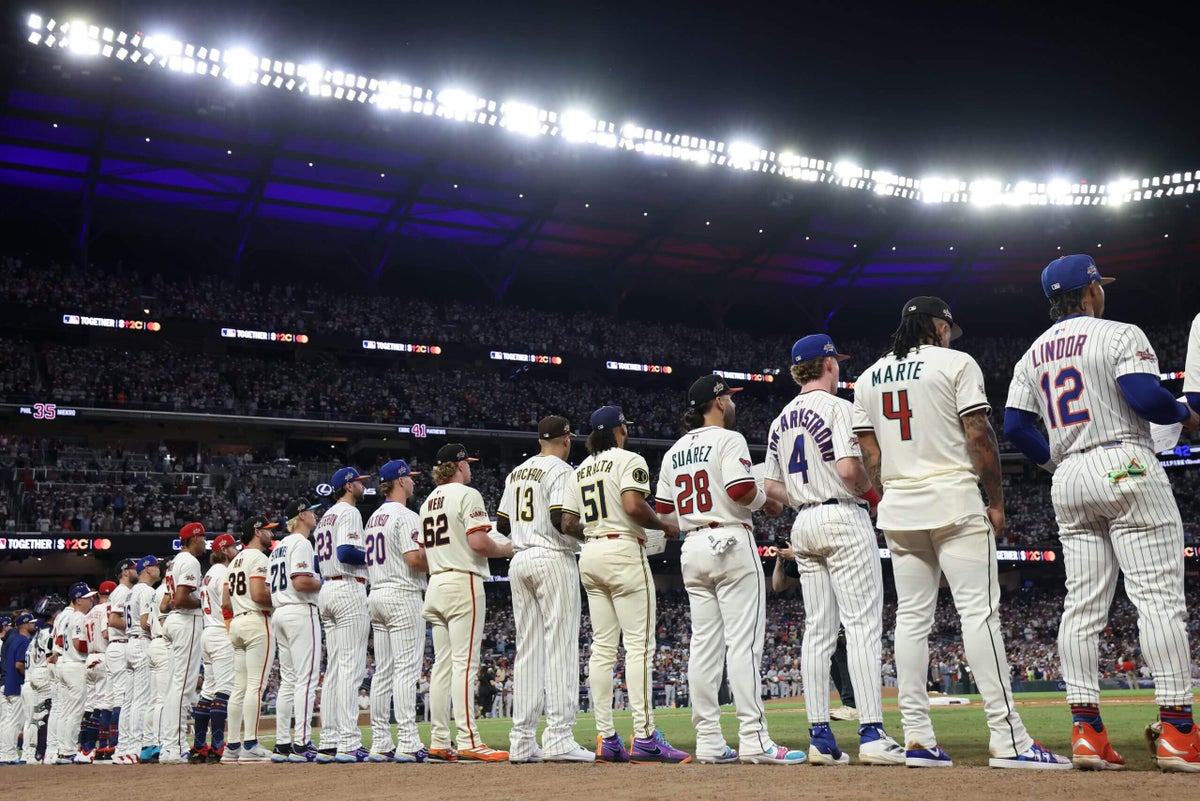
The last time Philadelphia hosted MLB’s All-Star festivities, at Veterans Stadium in 1996, Mike Piazza won All-Star Game MVP and Barry Bonds outslugged Mark McGwire in the Home Run Derby. Back then, the MLB Draft was still held in early June; the Futures Game and Celebrity Softball Game did not yet exist.Now, all of that is packed into the same week in July.Is it better, worse or just different?In just over a month, All-Stars will descend upon Philly again for the Midsummer Classic. We recently asked readers: If Rob Manfred named you MLB’s All-Star czar, what would you change? We’re back today to feature some of the wide-ranging responses. Submissions have been edited for clarity and brevity.Eliminate fan voting. I’ve always hated that fans vote either based on their hometown team members, regardless of their actual performance, or on what a player did last year. If you’re to be an All Star in 2026, it should be because of your 2026 performance. — Keith K.I have a distinct memory of sitting in the right-field seats at Comerica Park with my dad and brothers, each of us holding an important item: the 2000 MLB All-Star ballot. I wish I could tell you we debated which big leaguers were worthy of All-Star selections; or that we voted according to various statistics each of us held sacred; or that we thought about it at all.I’m afraid we did not.Was Damion Easley having a better first half than Chuck Knoblauch or Roberto Alomar? What did that matter? Damion Easley was a Tiger.Hey, I called it a distinct memory, not a proud one.The technology has changed with the times — fans can now vote five times per email address, plus an “exclusive opportunity” (don’t miss it!) for a sixth vote by downloading an app — but the root issue remains: Most fans vote for their favorite team’s players or for household names. Expecting fans to accurately select the AL and NL players who are having the best statistical seasons is not realistic.Does it matter?That depends upon what we’re solving for here.Is the All-Star Game purely entertainment? Or is it a meaningful moment of recognition that should be awarded as objectively as possible? The truth surely lies somewhere in between. Currently, the needle leans toward “pure entertainment.” I don’t love it, but I’m also not sure it’s a problem. Even if voting were taken seriously — some readers suggested a voting body consisting only of writers, players, coaches and front office members — the most rigorous process would only result in a clearer picture of which players had the best first half of the season. (You must admit it’s funny how much play the “All-Star” honorific gets when it definitionally ignores half the season.)Stripping fans’ All-Star voting rights wouldn’t dramatically change the All-Star experience, so I’m inclined to let them remain involved in the selection process. They occasionally produce some strange results, like when the 2015 Royals dominated fan voting, but it’s not the event’s greatest issue. As it is, many of the players voted in by fans wind up being replaced due to injury — or vaguely disguised disinterest.Make it a “King’s League” game. Between innings, fans vote on qualifiers: mulligan at-bats, fastballs only for one hitter, two-strike outs for an inning, etc. — Cole M.This was only part of Cole’s grand All-Star vision, which also included:
How can we improve the MLB All-Star Game? Our mailbag, your solutions
MLB's All-Star Game is better than those of its peers. But that doesn't mean it can't be better, and it turns out you all have some ideas.
1,957 words~9 min read