in Education, Harvard, History | June 10th, 2026 Leave a Comment
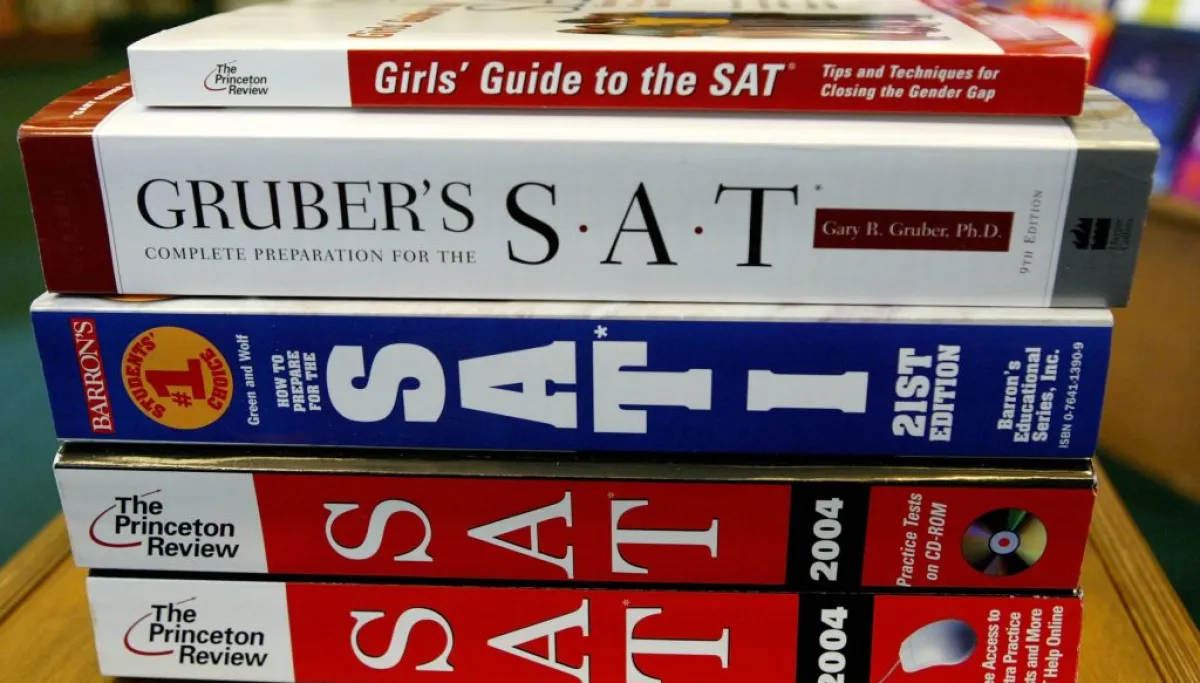
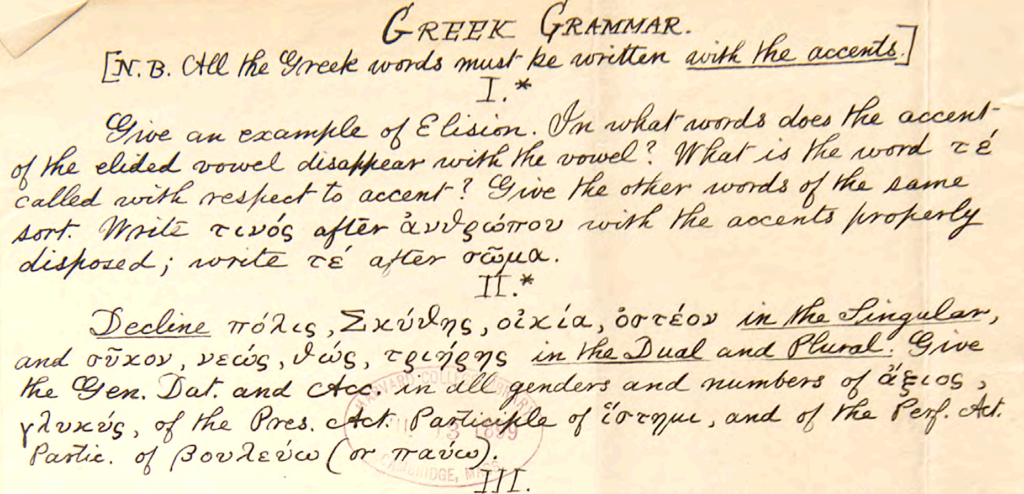
In 2025, Harvard once again began asking applicants to submit an SAT or ACT score. This was a reversal of the no-test-necessary policy that it and quite a few other American colleges and universities adopted during the COVID-19 pandemic. To some observers of higher education, the disappearance of the standardized-test requirement came as a shock, though in a sense, it wasn’t without precedent. Until the mid-nineteen-tens, Harvard had applicants take its own entrance exam, since no standardized test existed. One example from 1869, which you can see here, evaluated students on their proficiency in Latin, Greek, history and geography, arithmetic, algebra, and plane geometry.
The idea wasn’t so much to evaluate the test-taker’s reasoning abilities as to make sure he’d already undergone the expected education for his class. Even so, as the New York Times’ Alison Leigh Cowan notes, “colleges occasionally allowed prospects to correct deficiencies as a condition of admission.”
This reflects the very different role higher education played in American life a century and a half ago than it does today: back then, Harvard admitted 185 out of 210 applicants; last year, it admitted 1,968 out of 57,435. As the country industrialized, colleges and universities changed accordingly: existing ones grew, many new ones appeared, and a greater and greater percentage of students submitted to a process surrounding tertiary education that eventually came to seem machine-like itself.