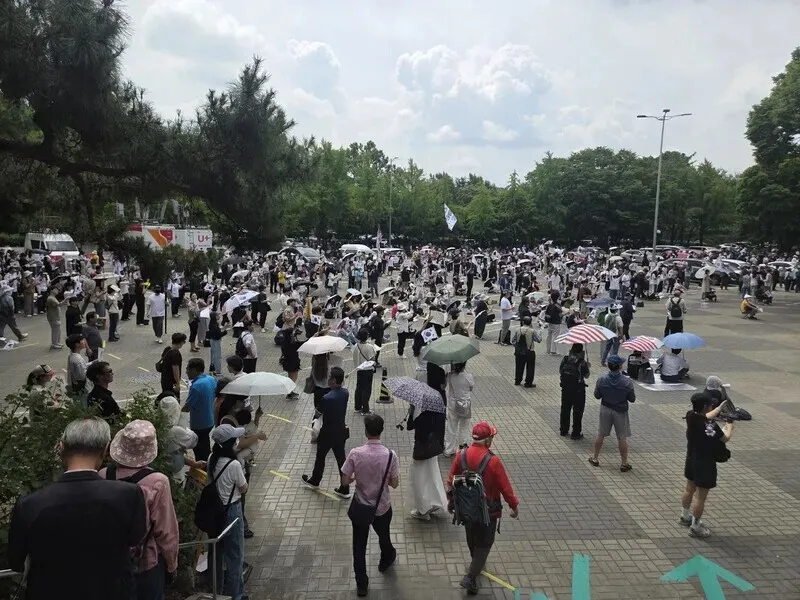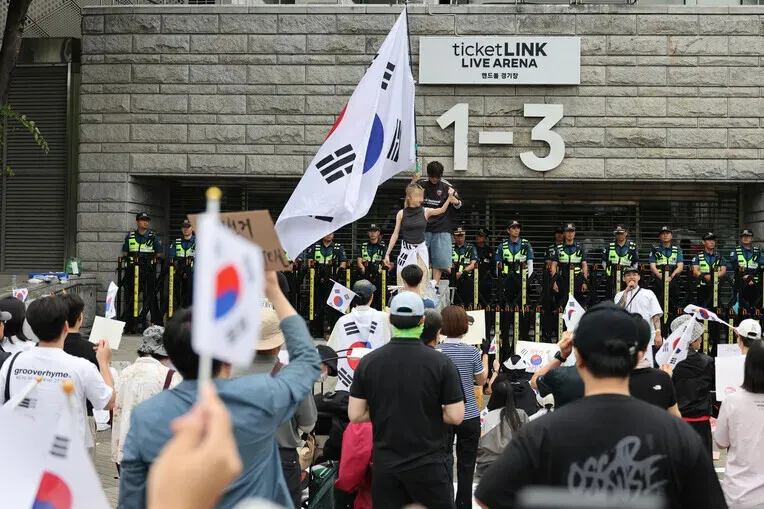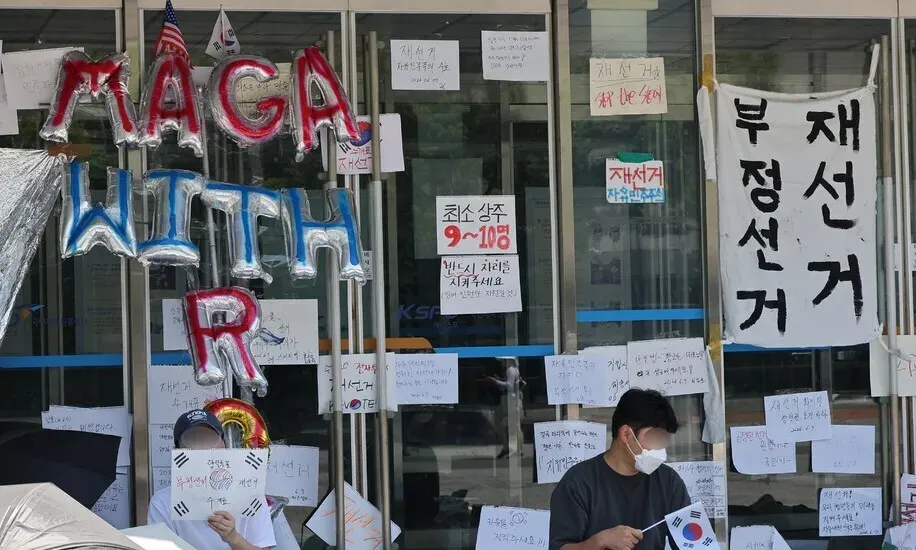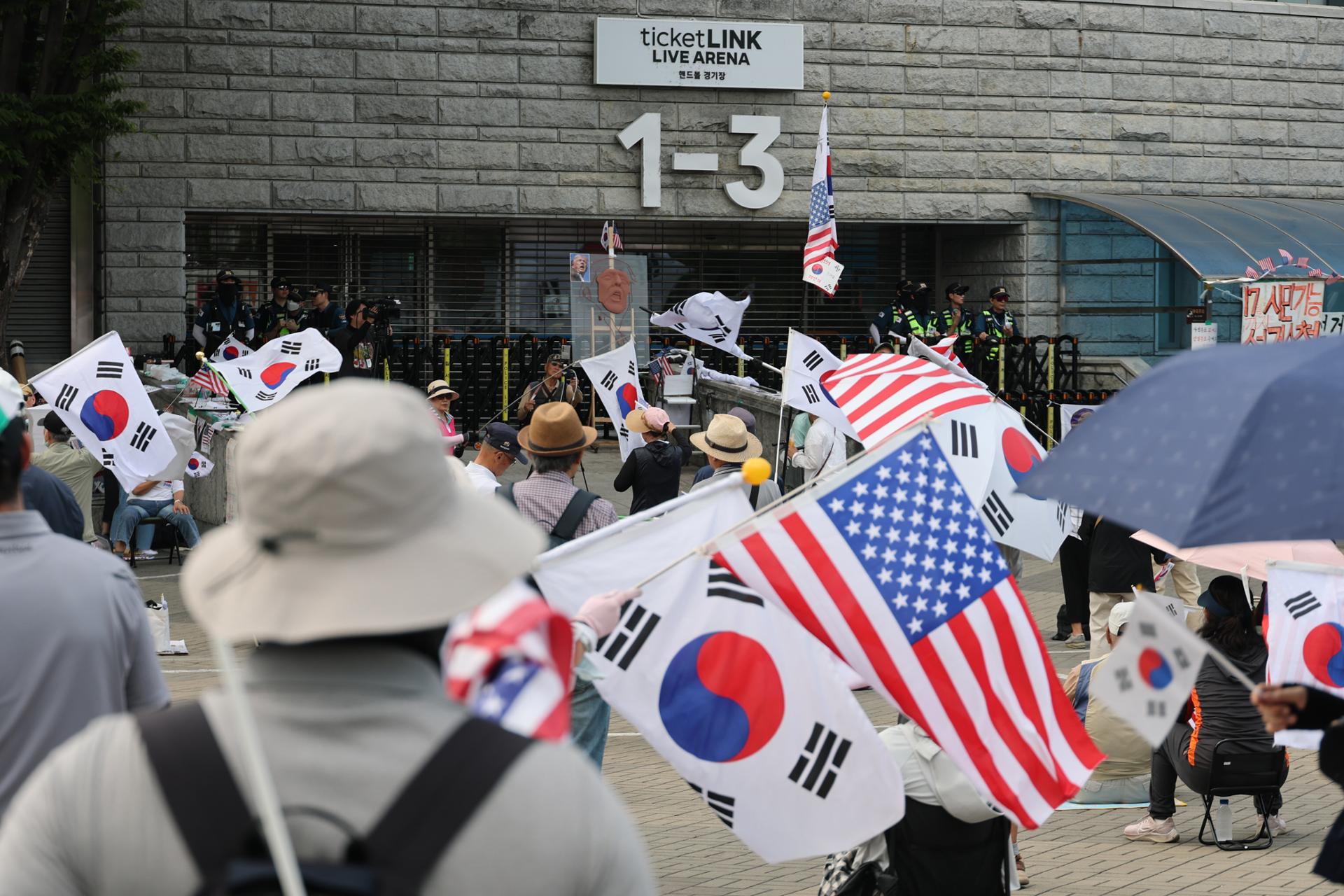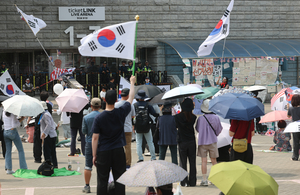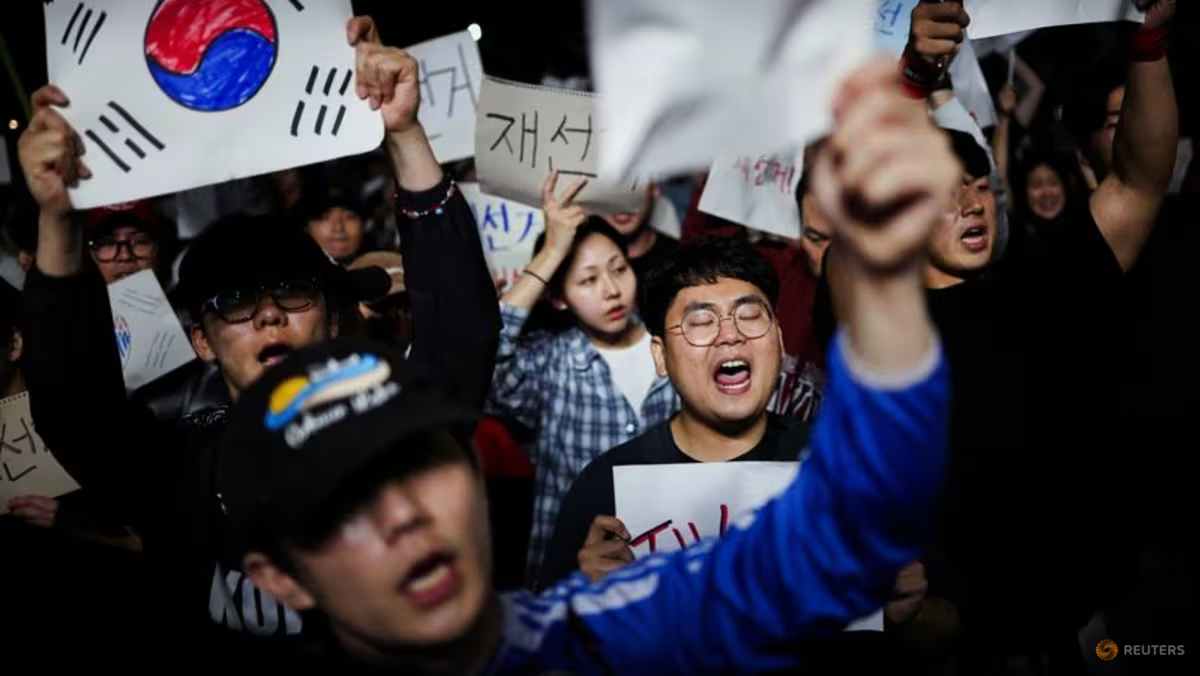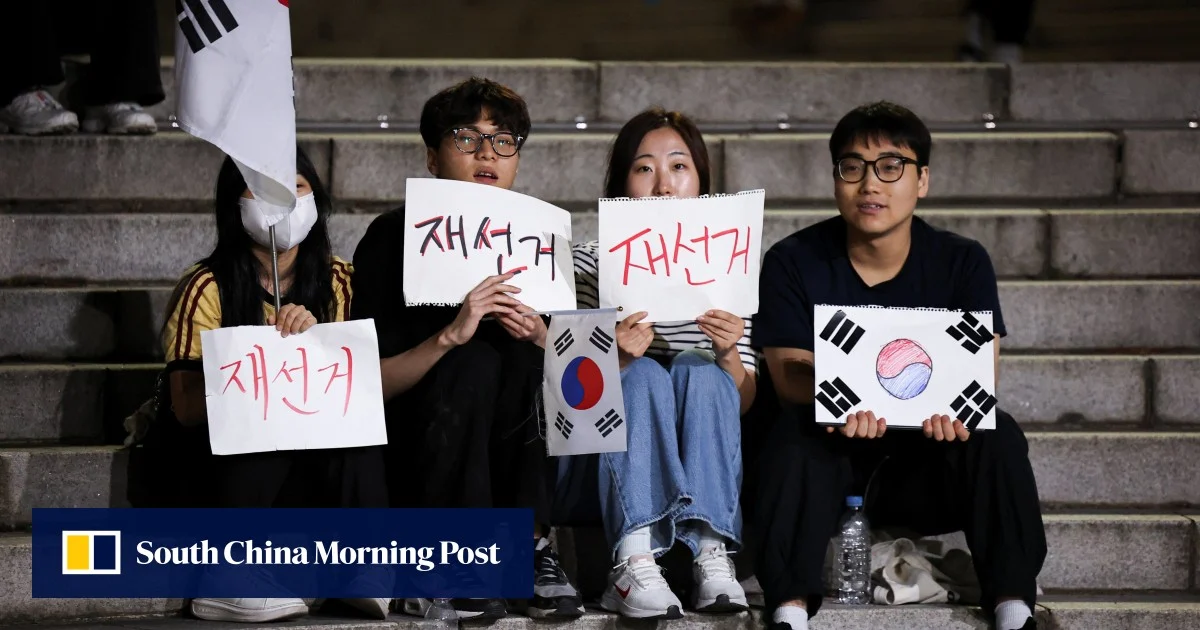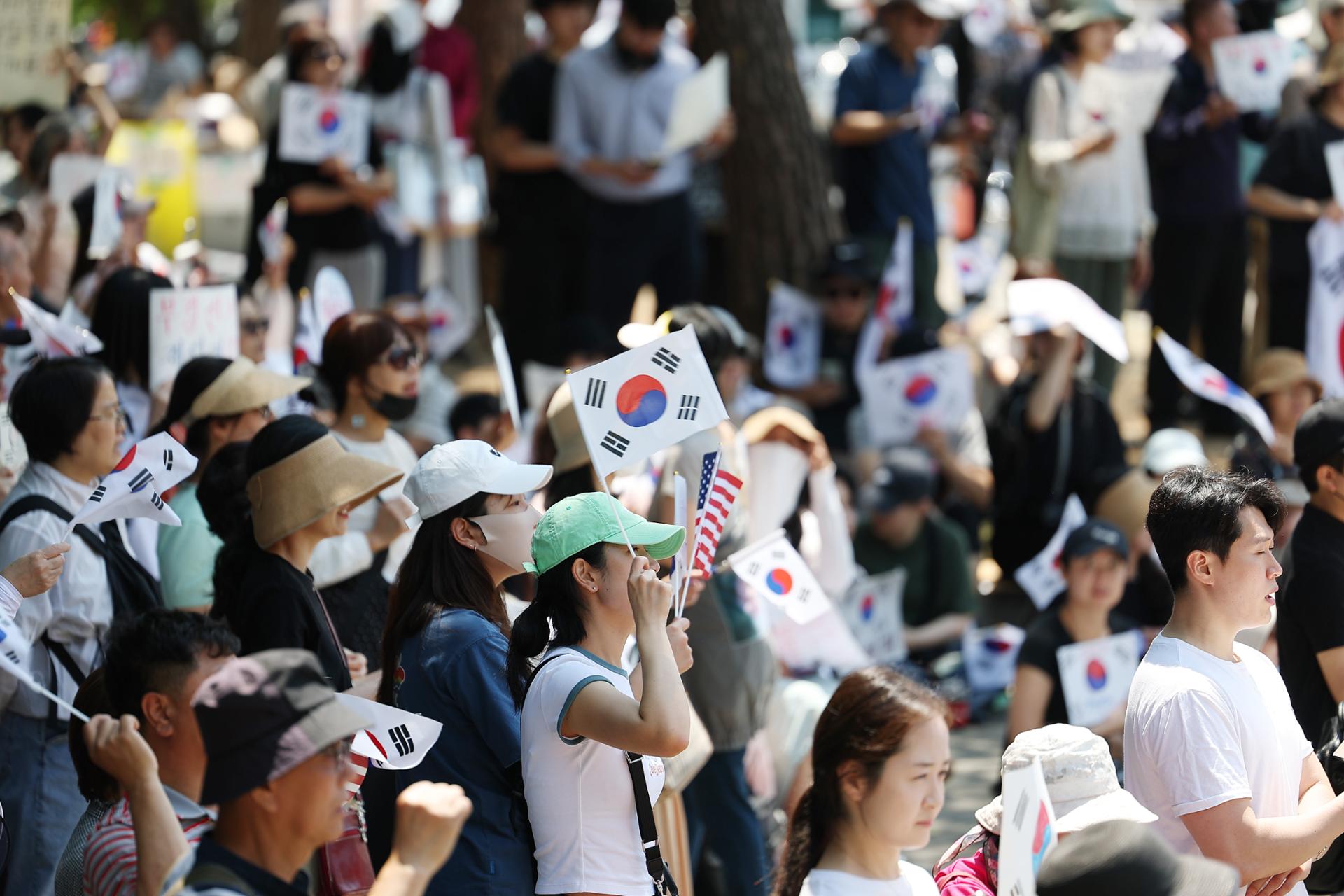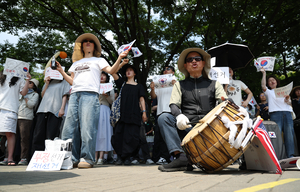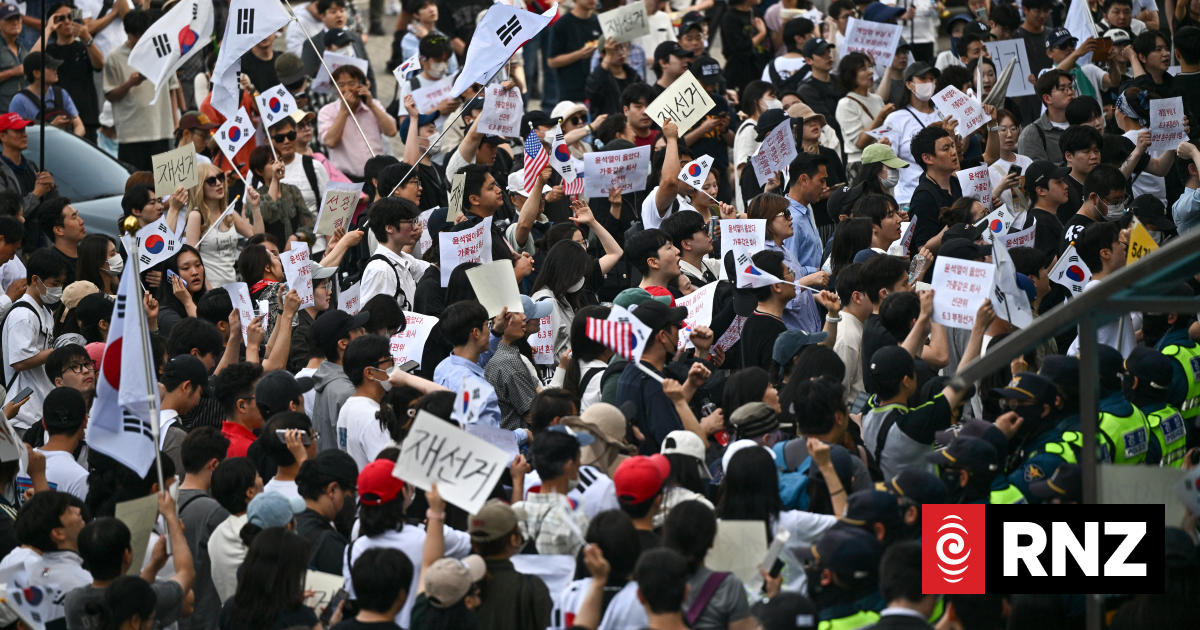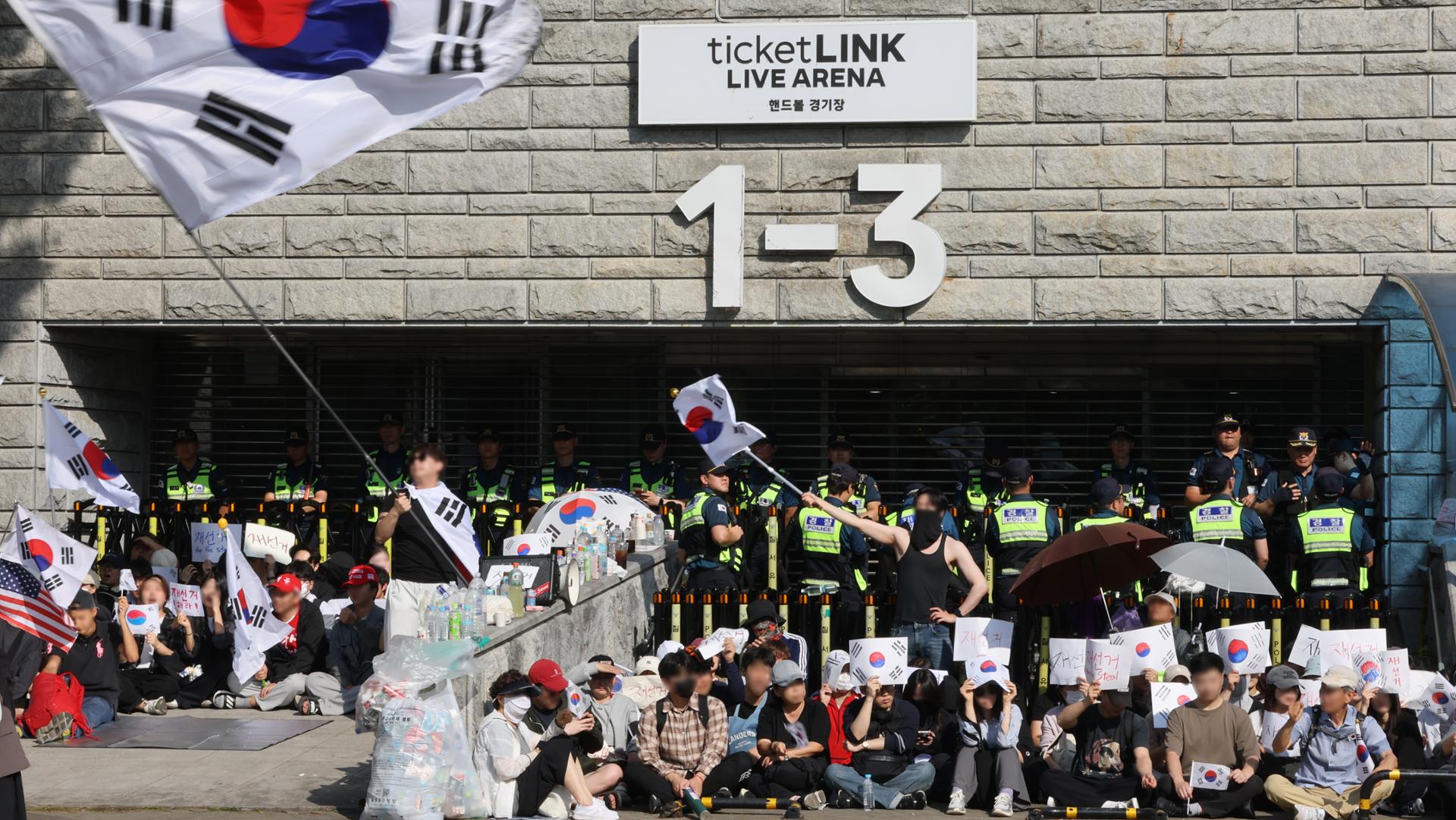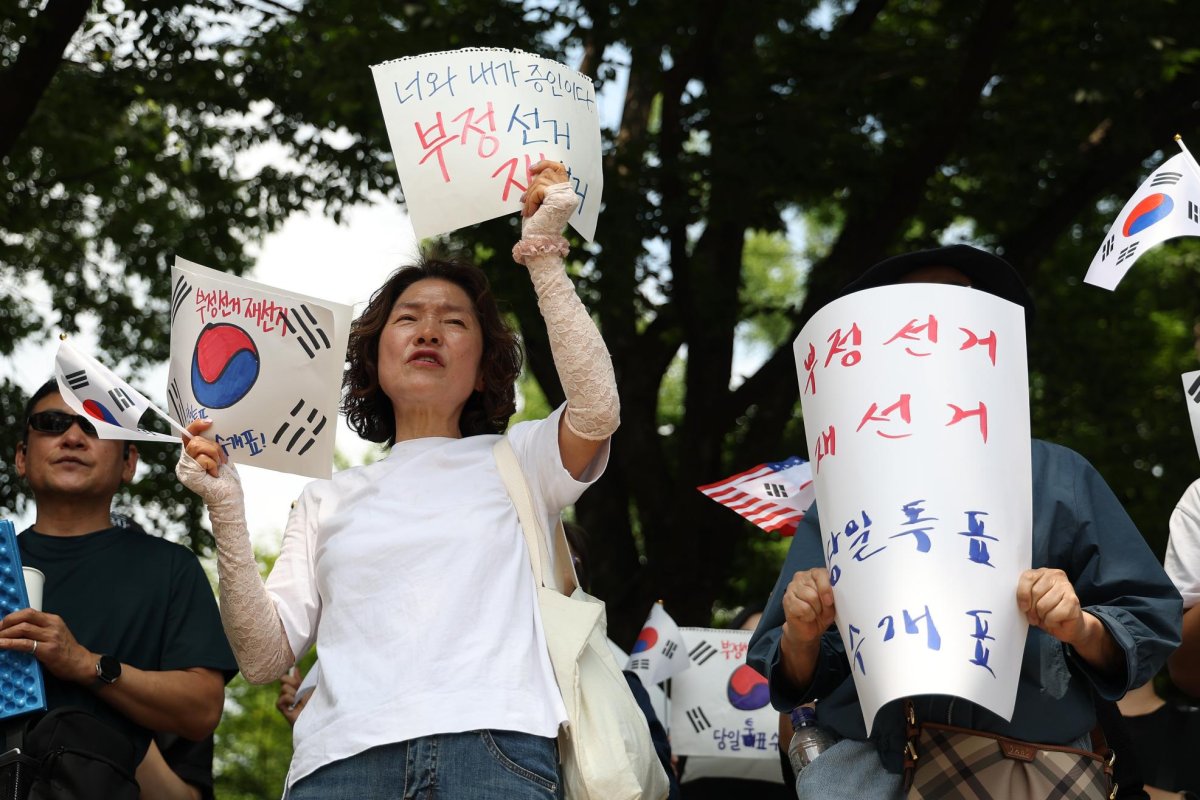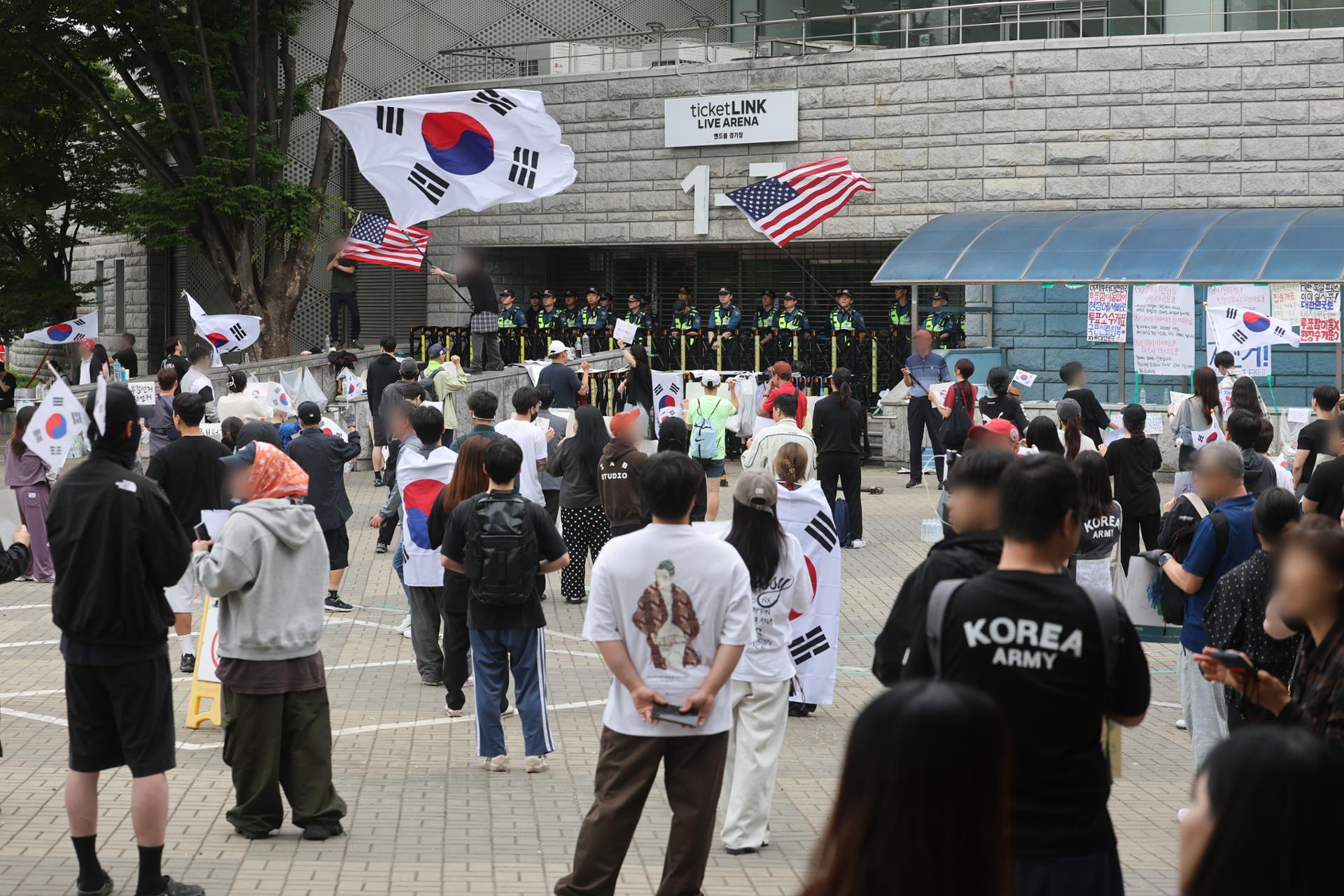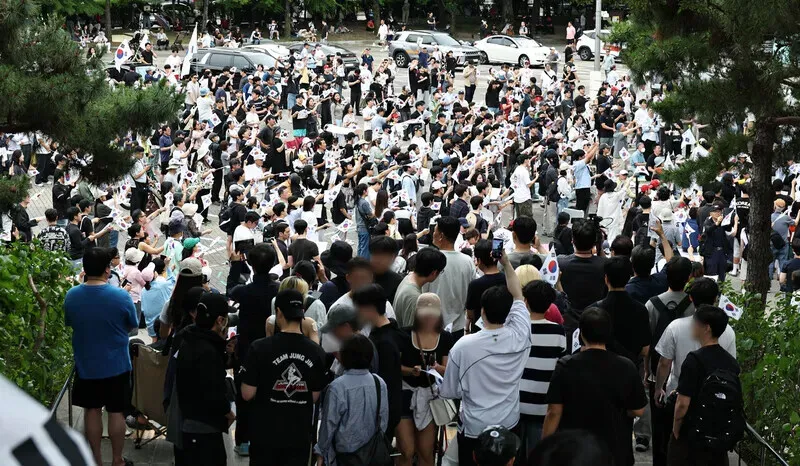
Protesters gather outside the handball arena at Seoul’s Olympic Park on June 7, 2026, as protests continue after a ballot shortage in Korea’s local elections on June 3. (Yonhap)
By Bang Hye-rin, secretary general of the Center for Military Human Rights KoreaI recently received an unusual phone call for a consultation at the center. It was a complaint from a soldier who said his request for leave to vote in the June 3 local elections was rejected. I asked if his duties made it difficult for him to vote early and why he insisted on taking leave to go to a polling station near his home when early voting was available. He replied that he had to vote on Election Day because of rumored fraud in early voting, and that preventing him from casting his ballot on the day of the election itself was a violation of his right to vote.Though momentarily speechless, I concluded the call by saying that since he had no valid reason to opt out of early voting and that his military unit had fully ensured his right to vote, it would be difficult to definitively conclude that this was a violation of his right to political participation.Since the 2024 insurrection attempt, conspiracy theories about election fraud have spread like wildfire among those who supported the former president’s declaration of martial law. Such notions have gained more traction following the ballot shortage in last week’s local elections. But no matter how you slice it, the primary fault lies with the National Election Commission (NEC), which clearly dropped the ball.As a constitutional body, the NEC must deeply reflect on how it played into the hands of election fraud conspiracy theories and conduct a comprehensive overhaul of the organization. A thorough review of the election watchdog as well as the election management system is in order.But was this election fraud? On Election Day, voting was temporarily suspended due to a shortage of ballots but eventually resumed after they were resupplied. Content from a KakaoTalk chat room used by officials at polling sites released to the media by the Korean Government Employees Union said the ballot situation at each polling station was monitored; in some places, ballots were delivered within voting hours.Resolving suspicion and assigning blame should focus on clarifying why the NEC provided inadequate supervision and responses despite the situation being shared in real time. It is dangerous to jump to the conclusion that the ballot shortage was part of some big, sinister plot to rig the vote rather than a straightforward infringement of voting rights.I also fail to understand the reason for claiming that the election was stolen. The concept of electoral fraud means gaining an advantage through illegitimate means or breaking rules. In a nutshell, someone who rigs the vote wants to win. So does that mean Seoul Mayor Oh Se-hoon, who won reelection, is guilty of election fraud?Some suggest that President Lee Jae Myung and the ruling Democratic Party are the masterminds behind this debacle — which would suggest that Lee got Oh elected. Morse Tan, a Korean American election fraud conspiracy theorist, has accused North Korea and China of trying to win with votes because they “cannot win with bullets,” calling the local elections “clearly rigged.” But is Oh’s reelection really in China’s interest?Suppose those crying election fraud are a minority and the majority who gathered in Seoul’s Jamsil area argue that the ballot shortage disenfranchised voters and shook the very foundation of Korea’s democracy. So why is a redo of the elections the priority goal over demands for fundamental measures to fight infringements on voting rights?Given that the trigger was the ballot shortage, if the solution is to redo the election so that every voter can cast one ballot within the designated time, will the results of the revote be accepted regardless of who wins?Though not nearly as publicized as this incident, violations of the voting rights of people with severe or developmental disabilities and others who need assistance due to their conditions are an issue in every election. During the COVID-19 pandemic, voting abroad was suspended, preventing overseas Koreans from casting absentee ballots in their countries of residence. The Constitution does not discriminate in the exercise of voting rights based on disability or similar grounds. So the nation’s top priority should be to use this opportunity to gauge if the electoral system in practice truly guarantees substantive political rights to all citizens, as well as to strive to make the necessary improvements. Ultimately, my point is this: What do the people who flocked to Jamsil to protest the ballot shortage, the people putting out content on Instagram and YouTube calling on “young patriots” to do their part, and the people like Morse Tan inciting others by saying that South Korea “is in danger of being communized by forces that are against the people of this country — those from North Korea, those from the Chinese Communist Party and the radical in office here right now in Korea,” actually want to happen? If they want assurances that everyone will be guaranteed their right to participate in the political process and this sort of fiasco will never happen again, why are they all waving signs about wanting a revote? A specter is haunting Korea, indeed — the specter of stolen elections, that is. Please direct questions or comments to [english@hani.co.kr]