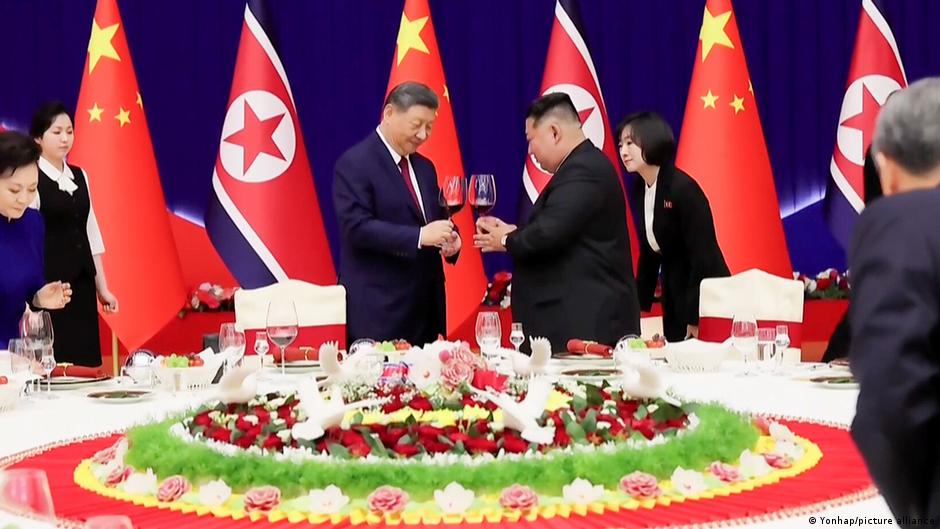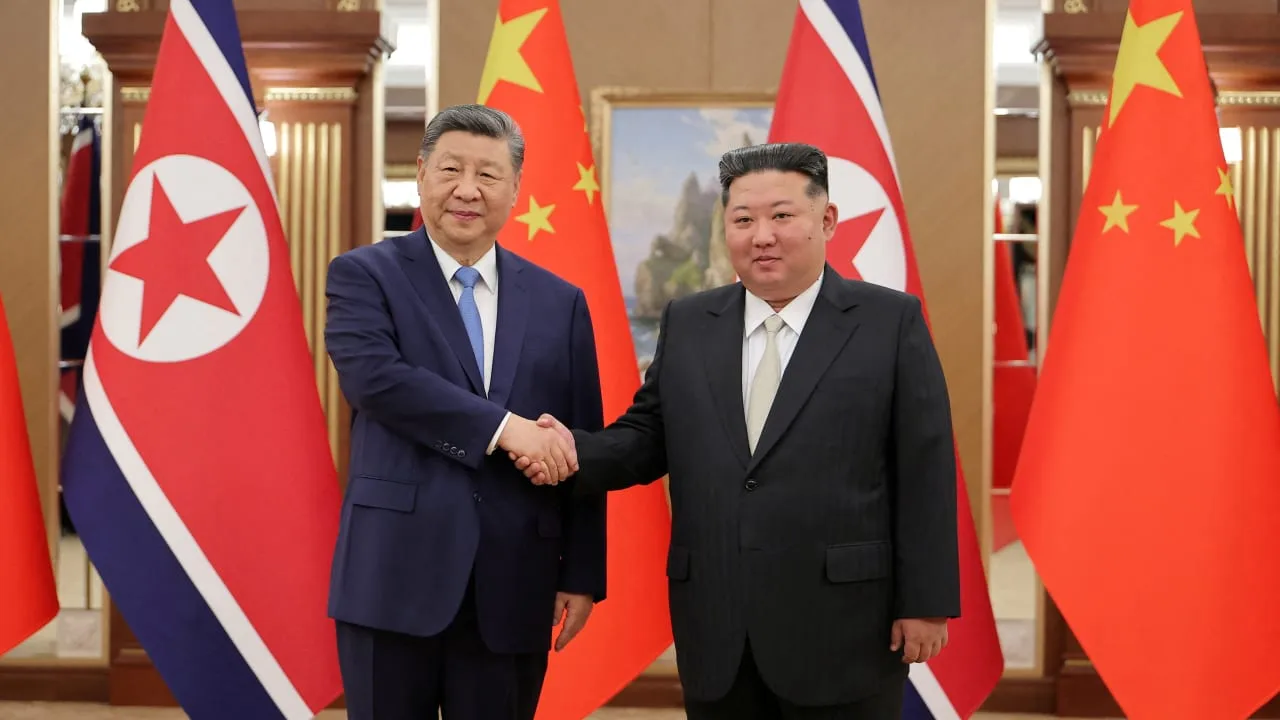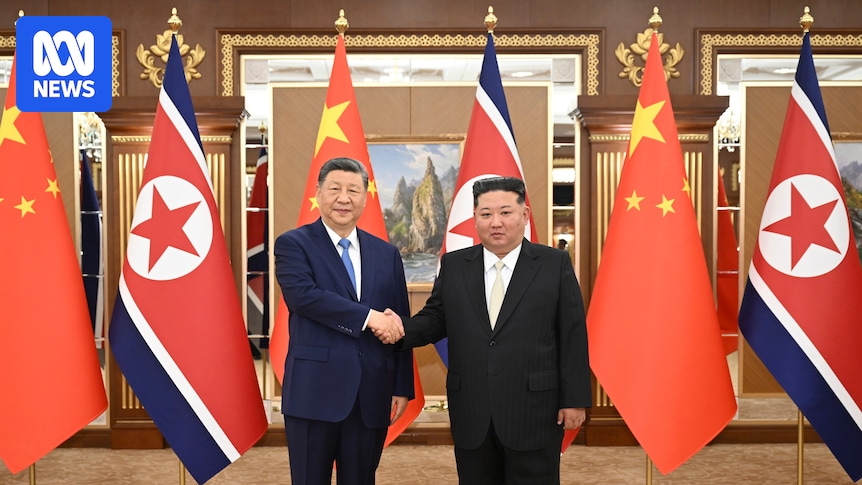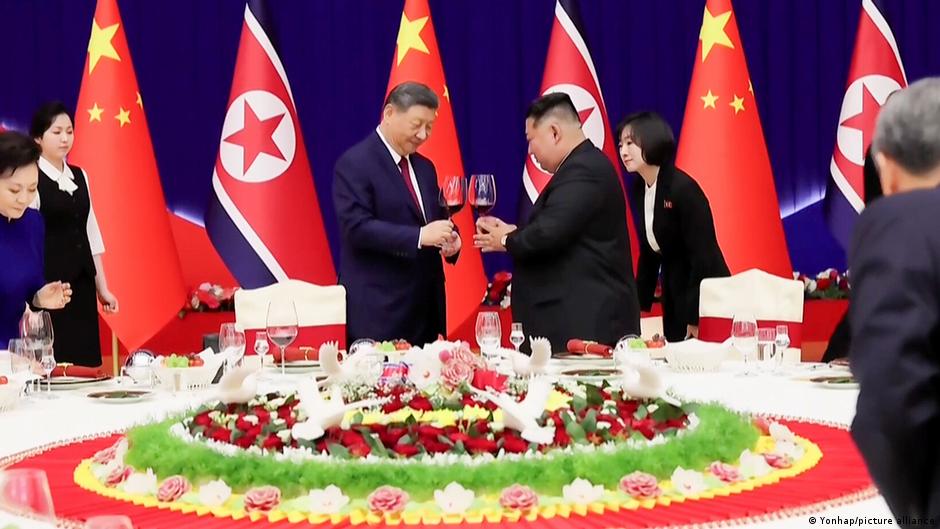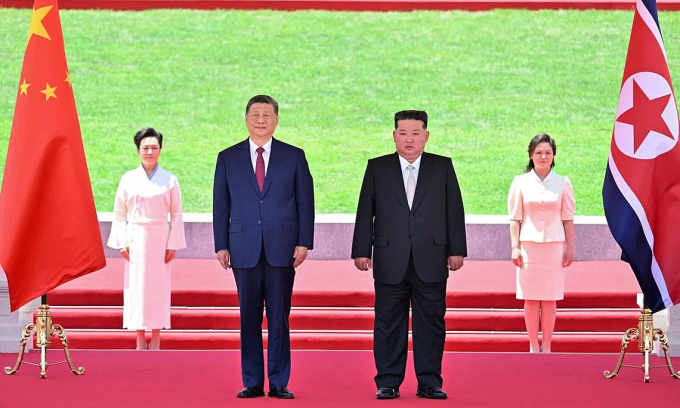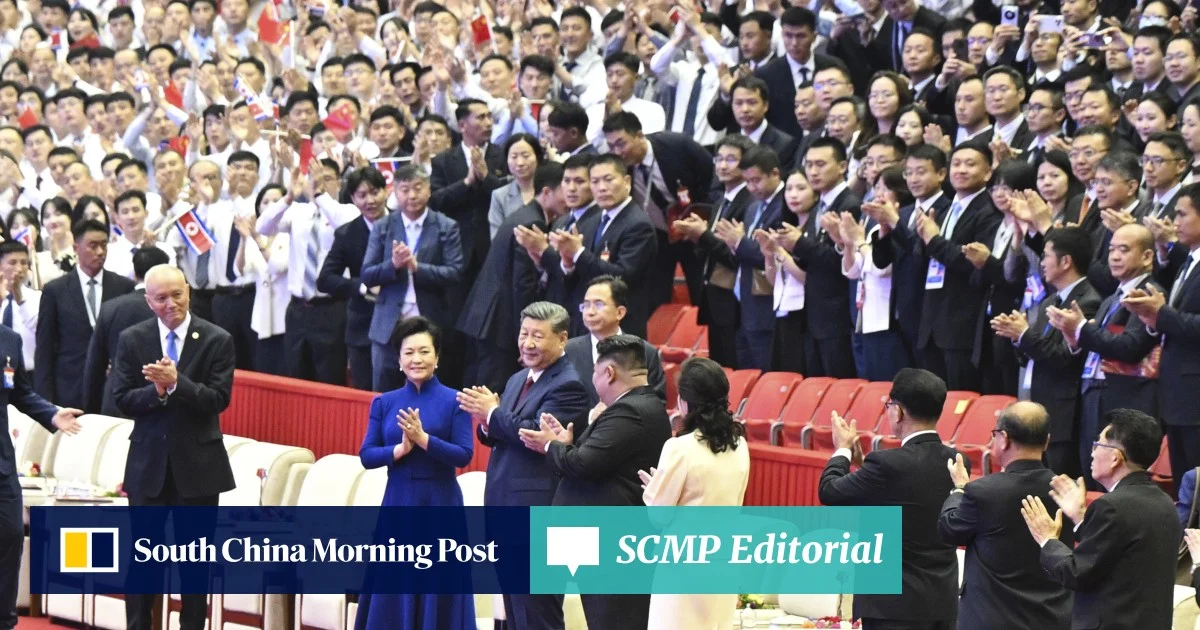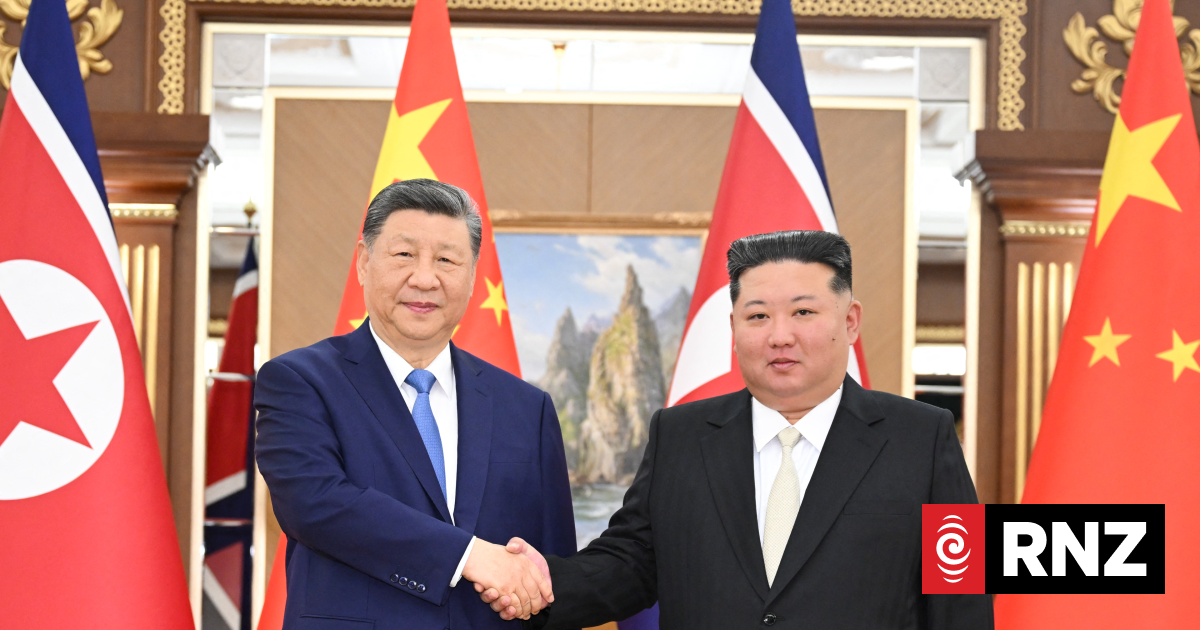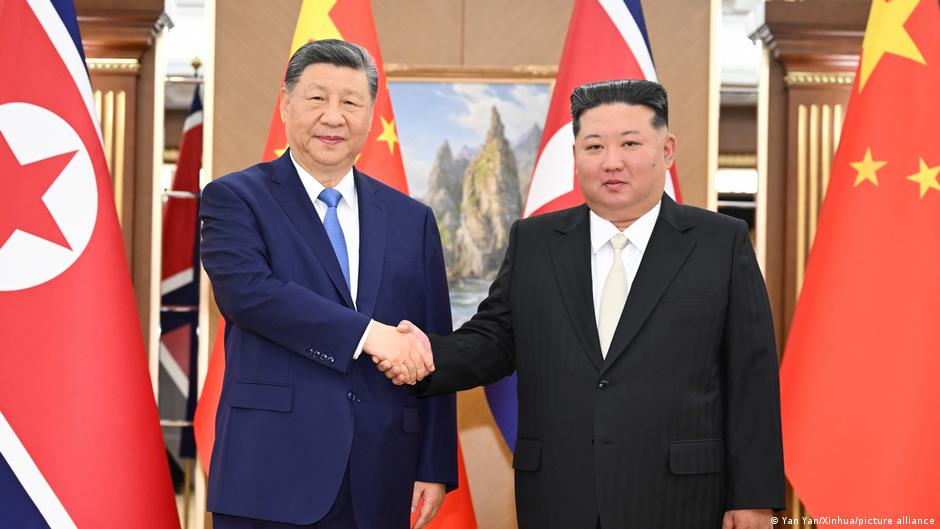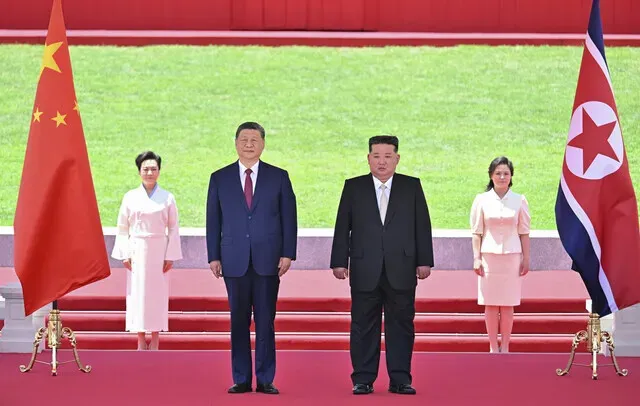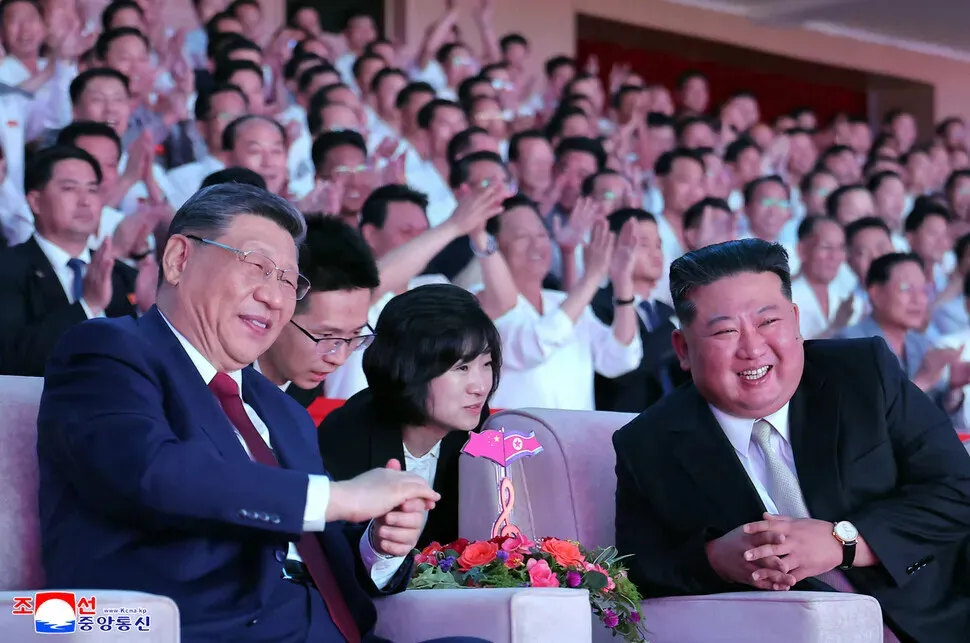
President Xi Jinping of China and North Korean leader Kim Jong-un smile while taking in a performance at the Pyongyang Indoor Stadium on June 8, 2026. (KCNA/Yonhap)
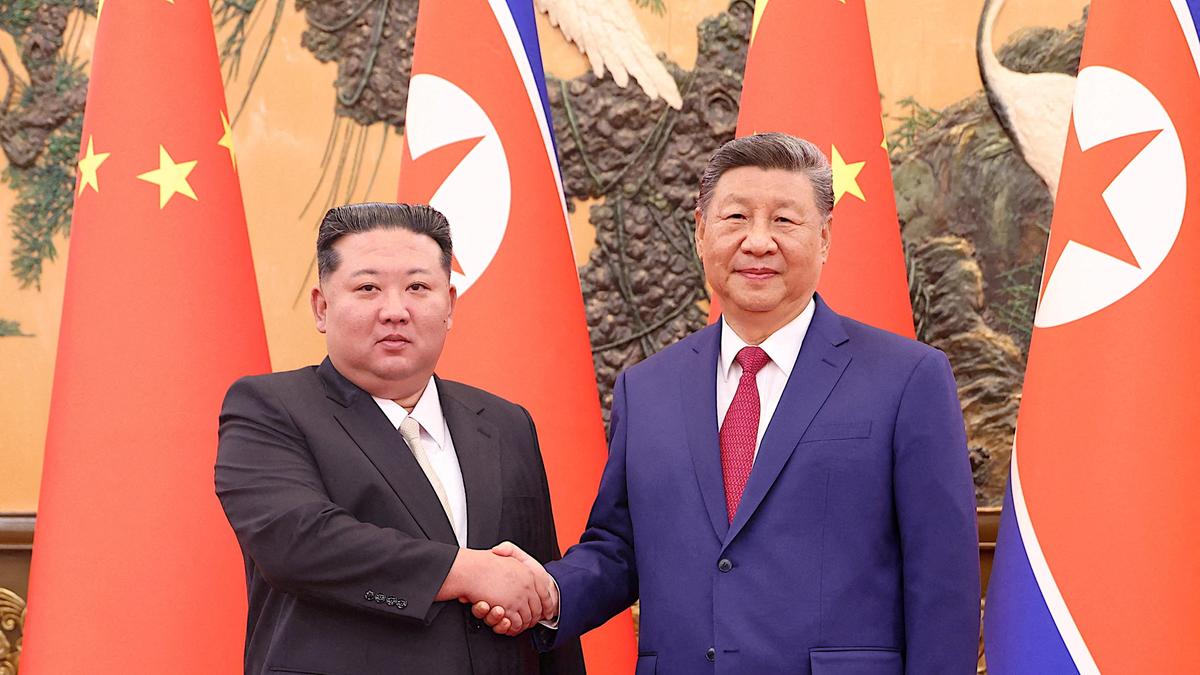
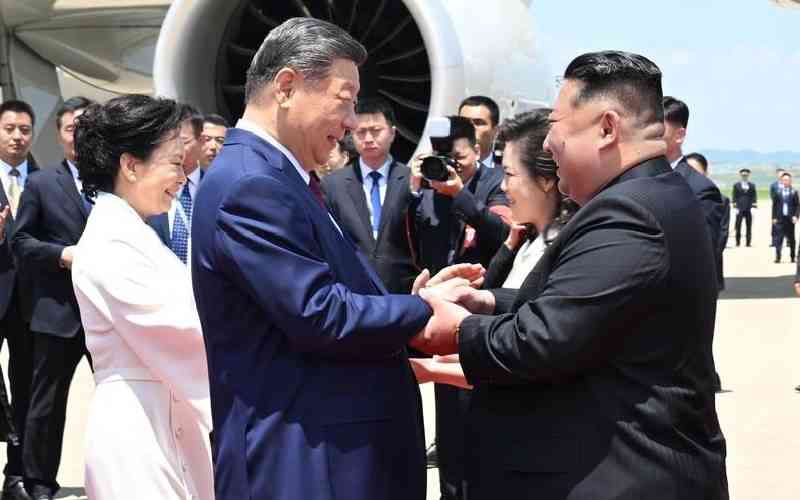
Chinese President Xi Jinping returned to Beijing on Tuesday from his first trip to North Korea in seven years.In their summit on Monday, Xi and North Korean leader Kim Jong-un are believed to have pledged greater cooperation in the military and economic areas and to have strategically upgraded their bilateral relationship.Notably, the two leaders avoided any mention of denuclearization, as North Korea wished, while China appears to have countered North Korea’s cozy ties with Russia by strengthening its own military cooperation with the North.As of Tuesday, no language about North Korea’s denuclearization had appeared either in statements by the Chinese Foreign Ministry or in North Korean state-owned media following Xi and Kim’s summit on Monday.Leading up to Xi’s visit, North Korea had not-so-subtly hinted through moves by Kim Jong-un and his sister Kim Yo-jong, director of the General Affairs Department of North Korea’s ruling party, that denuclearization was not on the table.On Sunday, the day before Xi was set to arrive in Pyongyang, Kim Yo-jong flatly stated that the US State Department was “spreading false information” when it claimed that US President Donald Trump and Xi had reaffirmed the goal of North Korea’s denuclearization.On June 3, North Korea published images of Kim Jong-un inspecting a fissile material factory presumed to be a uranium enrichment site, underscoring the regime’s determination to remain nuclear-armed.That day, Kim emphasized that “thoroughly exercis[ing] the position of a nuclear weapons state” is the North’s invariable and essential political and military stance.Considering that North Korea’s denuclearization went completely unmentioned, it would appear that Kim got his way in his summit with Xi.China feels the need to boost its strategic position on the Korean Peninsula while countering North Korea’s efforts to strengthen ties with Russia amid China’s intense competition with the US. As such, Beijing appears to have decided not to mention denuclearization given Pyongyang’s discomfort with the topic.“When it comes to denuclearization, China appears to be trying to manage the situation without making it worse. China is moving forward with cooperation in economic areas, including foreign investment and opening up, while keeping [sensitive topics] under wraps,” said Lee Hee-ok, professor emeritus of comparative politics at Sungkyunkwan University.Kim also said that North Korea continues to hold to the “one-China principle,” backing Beijing on the issue of Taiwan, which Beijing regards as a nonnegotiable “core interest.”Kim and Xi raised eyebrows with their mention of military cooperation. It was the first time that military exchange has come up in the seven summits the two leaders have held since March 2018.“We believe this is the first time that exchange in the military area has been publicly mentioned in North Korea-China relations [under Kim Jong-un]. We will be monitoring related developments,” an official with South Korea’s Ministry of Unification said on Tuesday.That shift appears to be driven by North Korea and China’s intersecting interests. China needs to compensate for North Korea’s rapid move toward Russia following its deployment of troops to Russia’s war against Ukraine. For its part, North Korea is only too happy to increase military cooperation with China.“Given the potential for strategic instability to increase in the region if closer relations between North Korea and Russia lead to transfers of military technology or nuclear weapons development, China may feel the need to manage the situation by increasing people-to-people exchange with the North Korean military and keeping an eye on developments,” said Hong Min, a senior research fellow at the Korea Institute for National Unification in Seoul.But it’s unclear from the summit how North Korea and China will strengthen military cooperation in the days to come.“The cooperation being discussed probably won’t be a trilateral coalition or alliance involving Russia. China wouldn’t engage in the kind of overt military cooperation with North Korea that would make an enemy of South Korea,” predicted Kim Heung-kyu, the director of the Ajou University US-China Policy Institute.North Korea and China’s pledge for expanded economic cooperation was noteworthy as well.China’s state-run Xinhua News Agency reported on Monday that Xi and Kim’s summit had resulted in the full reopening of trade crossings on the border, as well as the resumption of commercial flights and passenger train service between the two countries.That has prompted speculation that the New Yalu River Bridge connecting Sinuiju, North Korea, and Dandong, China, may finally open 10 years after its construction and that the two countries may move forward with development plans on the Tumen River.It appears that Xi and Kim also shared information and exchanged their views about the US and other factors in Northeast Asian affairs.Following his summit with South Korean President Lee Jae Myung in January, Xi met separately with the leaders of the US and Russia in May and has now concluded his summit with the North Korean leader. Xi’s busy schedule implies that China has taken the lead in Northeast Asian diplomacy.Xi may also have passed along messages from Seoul and Washington in his meeting with Kim.By Jang Ye-ji, staff reporterPlease direct questions or comments to [english@hani.co.kr]