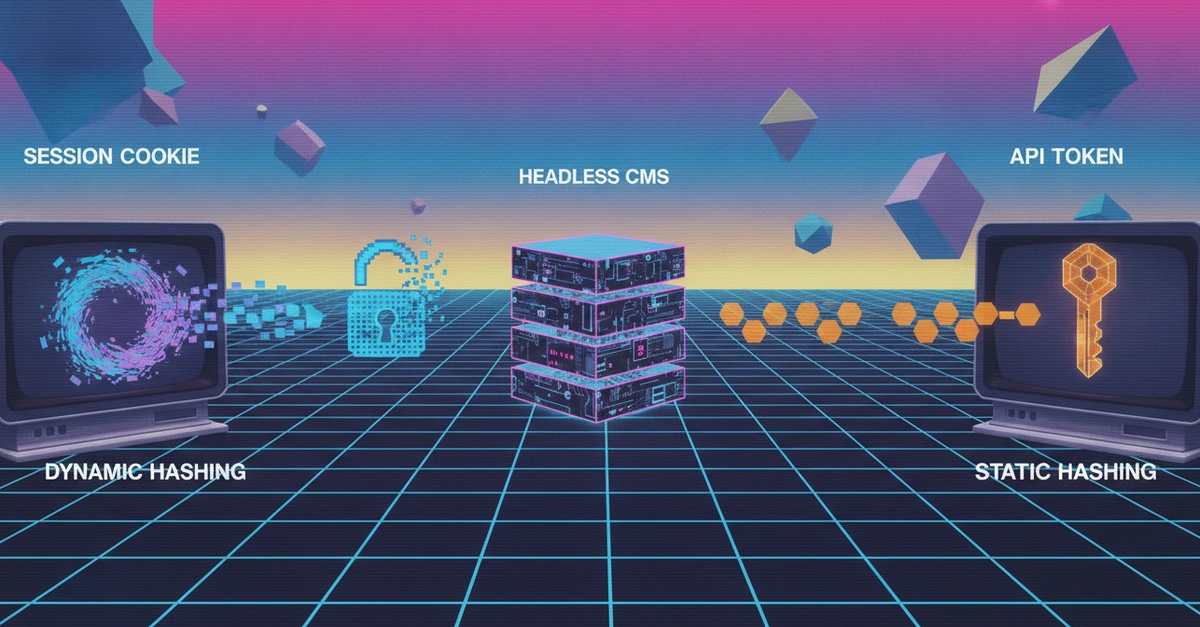
A coupled CMS puts the admin login on the same hostname visitors reach. A headless CMS puts it on a different hostname behind auth. That single architectural difference is why headless CMS security is meaningfully better than traditional coupled-CMS security on most real-world dimensions — and it's also why the comparison gets oversimplified into "headless is more secure" when the truth is more interesting.
This post is the architectural take on headless CMS security: why decoupled is safer on most dimensions, where it can be less safe if you don't handle API hygiene properly, and what the honest comparison looks like in 2026. TL;DR: headless wins on attack-surface reduction (admin off the public hostname, smaller plugin attack surface, API-first auth model) but loses on dimensions teams typically don't think about (exposed APIs without rate limits, JWT misuse, secrets in frontend code, draft preview tokens leaking). A well-built headless CMS is meaningfully more secure than a typical WordPress site; a poorly-configured headless CMS can be worse than a maintained WordPress site. The architecture biases toward safer; the implementation determines actual outcomes.
The audience: technical decision-makers and security-conscious teams comparing CMS architectures with security as a deciding factor. If you're earlier in the architectural decision, see headless CMS vs traditional CMS: key differences. For the WordPress-specific security picture this post compares against, WordPress security problems in 2026.