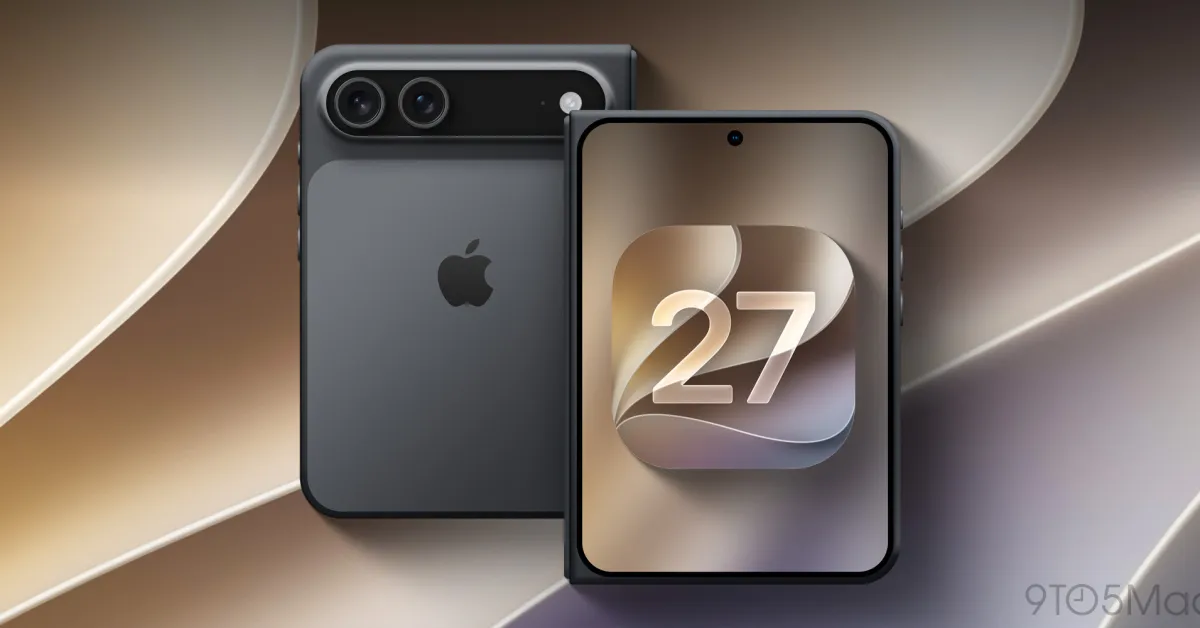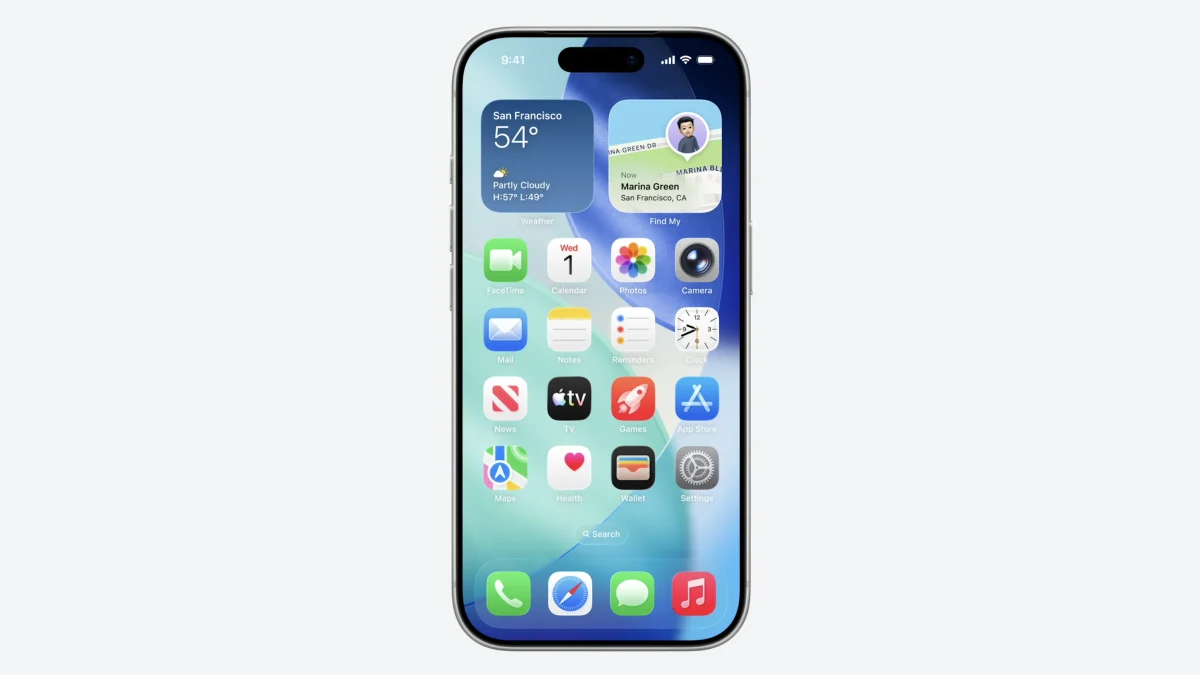
Photo credit: X/@MacRumorsFor the first time, the iPhone that folds exists in writing inside Apple’s own software. The opening developer beta of iOS 27, the build Apple released after its WWDC 2026 keynote, carries code that only a folding device would need: a 'foldState' flag, strings that read the angle of a hinge, and a routine that asks how many displays the hardware holds. Every iPhone Apple has shipped answers that last question with “one”. The code now allows for more.That is the shift. Rumours, patents and dummy units have circled an iPhone Fold since 2019. This is the first instance of iOS itself learning what to do when the screen bends.A caution worth stating before anything else: software groundwork guarantees nothing about a ship date. Apple seeds flags for hardware years ahead, and some of those devices stay in the lab forever. The iOS 27 references are unusually specific all the same, and they line up with what Bloomberg has reported for months. My read Apple is building a new tier above the Pro Max, a roughly $2,000 flex aimed squarely at Samsung’s Galaxy Z Fold, rather than a bid for foldable volume.Key takeawaysiOS 27’s developer beta carries direct code references to a foldable device — a `foldState` flag, hinge-angle strings, and a routine that counts more than one display. This is the first time iOS itself has named the hardware.Developers Sam Henri Gold and M1Astra surfaced the strings; Bloomberg’s Mark Gurman ties them to a September 2026 debut alongside the iPhone 18 Pro line, at around $2,000.A rumoured 7.8-inch internal display at a 4:3 ratio would open to roughly iPad mini size, making this the first iPhone built as two screens.The discordant note: zero hardware components have leaked and a mass-production signal stays absent, which is unusual this close to a claimed autumn launch.For India, a $2,000 phone after duties reads as a status-tier halo device — a flex above the Pro Max rather than a volume play.What the code actually saysTreat the beta like a dig site. Developers spent the week after the keynote sifting the iOS 27 framework, and what they pulled out are fragments strings, the potsherds of software that let you reconstruct the shape of a device Apple has yet to show.Sam Henri Gold posted the first finds to X on 8 June: references to 'foldState' and 'angleDegrees'. The developer known as M1Astra passed further fragments to Gurman, including 'mechanicalAngleDegrees' and a string called `_MgGetLogicalDeviceDisplayCount` — a routine that reports how many displays the current device runs. A fold-state flag tells the system whether the device sits open, part-folded or shut. An angle reading tracks the hinge through its travel. A display count above one describes hardware Apple has never sold.String found in iOS 27What it impliesfoldStateSystem tracks open, partial, and closed positionsangleDegreesHinge-angle detection through the foldmechanicalAngleDegreesMechanical hinge-angle measurement through the fold_MgGetLogicalDeviceDisplayCountDevice awareness of more than one displayOne fragment wants a caveat. Macworld separately reported code hinting at a device carrying both a Dynamic Island and Touch ID, a pairing absent from any shipping iPhone. That find sits with a single outlet for now and feeds the “iPhone Ultra” naming chatter rather than the fold mechanics, so weigh it lighter than the strings above.The dig tells you a structure existed. It withholds the building itself.The software was already bending toward thisThe fold strings are the loud signal. The quieter one ran through the keynote.iOS 27 introduces full-page widgets, letting Music, News and Weather fill an entire home screen — a layout that earns its keep on a larger canvas. macOS 27 Golden Gate updated iPhone Mirroring so a connected phone resizes to iPad-sized layouts. And at the Platforms State of the Union, Apple pressed developers to drop fixed-screen assumptions and build interfaces that resize and adapt across configurations, a concept it labelled app adaptability.On its own, that last instruction reads as generic responsive-design advice; Apple has pushed it for years across iPhone, iPad and Mac. Stacked on top of `foldState` and a multi-display count, it reads as staging. Apple rarely asks an entire developer base to rework layouts without hardware waiting behind the request.The hardware Apple has been slow to trustA folding phone is a complication, in the watchmaker’s sense an added mechanism that multiplies the ways a movement can fail. The hinge is the escapement: the part that must survive a hundred thousand open-and-shut cycles without losing tolerance or letting the two halves drift out of plane. Apple’s lateness to this category is the engineer refusing to ship a movement that wanders.The hard problems are physical. A flexible OLED that resists a visible crease. A battery split across two thin halves. Heat to move through a slab that runs thinner unfolded than any Pro model. Gurman’s reporting puts the internal display near 7.8 inches at a 4:3 ratio, opening to roughly iPad mini size, with a September 2026 launch beside the iPhone 18 Pro family at around $2,000.Rumoured (Gurman / Bloomberg)Status~7.8-inch internal display, 4:3Reported, unconfirmedOpens to roughly iPad mini sizeReported, unconfirmed~$2,000 launch priceReported, unconfirmedSeptember 2026, with iPhone 18 ProReported, unconfirmedDynamic Island plus Touch IDSingle-outlet code referenceHere sits the discordant note. The software is loud while the supply chain stays mute. Zero hardware components have leaked, and a mass-production signal has yet to surface rare this close to a claimed autumn shipment. Either Apple’s chain is running tighter than usual, or September is the optimistic end of the range. The strings settle intent. They leave the timeline open.What a $2,000 iPhone means for IndiaRun the price physics. At $2,000, the foldable lands above every iPhone in the current range, the Pro Max included. After Indian customs duties and the usual premium-tier markup, a device at that level reaches a price few handsets in the market touch. This is aspiration hardware.The foldable category in India stays thin. Samsung’s Fold line sells in modest numbers against a market that buys overwhelmingly under Rs 30,000, and the book-style fold remains a premium curiosity rather than a mainstream choice. Apple entering at the very top changes the halo, not the volume. Expect a status device a brand flex that draws attention to the whole line with launch availability likely held to limited quantities, a pattern that fits Apple’s first run at any new form factor. Read that as a working expectation rather than a confirmed plan.The strategy underneath is the clearer signal. Apple looks set to cede the foldable mainstream to Samsung and the Chinese makers while planting a flag at the price ceiling, taking the margin crown on a category it arrives at last. A small-volume, high-status entry suits a company that has spent a decade letting rivals prove a form factor before walking in and charging more for a tighter version of it.The gap the code cannot closeiOS 27 proves Apple wants this phone to exist; the strings are too specific to read any other way. What the strings stay silent on is the hinge. Software bends on command. A flexible display and a mechanism rated for years of daily folds answer to physics, and physics has kept this device in the lab since 2019. The code says the iPhone Fold is being written for. Whether the hardware is ready for September is the one question a `foldState` flag cannot answer.Frequently asked questionsIs the foldable iPhone confirmed? No. Apple has stayed silent on a folding iPhone. The evidence is code in the iOS 27 developer beta, which signals active software preparation rather than an announced product.When will the foldable iPhone launch? Bloomberg’s Mark Gurman reports a September 2026 debut alongside the iPhone 18 Pro line. Apple has yet to confirm any date, and code references guarantee nothing about a ship window Apple seeds software flags for hardware that can be years away.How much will the foldable iPhone cost? Gurman puts the launch price near $2,000, which would make it the most expensive iPhone to date. After Indian duties, the price in India would sit far above the current top iPhone. Treat the figure as reported and unconfirmed.What does the iOS 27 code reveal? References to `foldState`, hinge-angle strings such as `angleDegrees` and `mechanicalAngleDegrees`, and `_MgGetLogicalDeviceDisplayCount`, a routine that reports more than one display all signs of a device that folds and runs multiple screens.How big is the screen? Rumoured at around 7.8 inches internally with a 4:3 ratio, opening to roughly iPad mini size. This spec is reporting, not an Apple figure.end of article
Apple’s Foldable iPhone Surfaces in iOS 27 Code Ahead of a September Launch
Find latest technology news, gadgets reviews & ratings. Popular & latest gadgets specifications, features, prices, photos & videos. Trending mobile phone comparisons, slideshows, how tos and videos for latest mobile phones, tablets, technology news updates.
1,408 words~6 min read