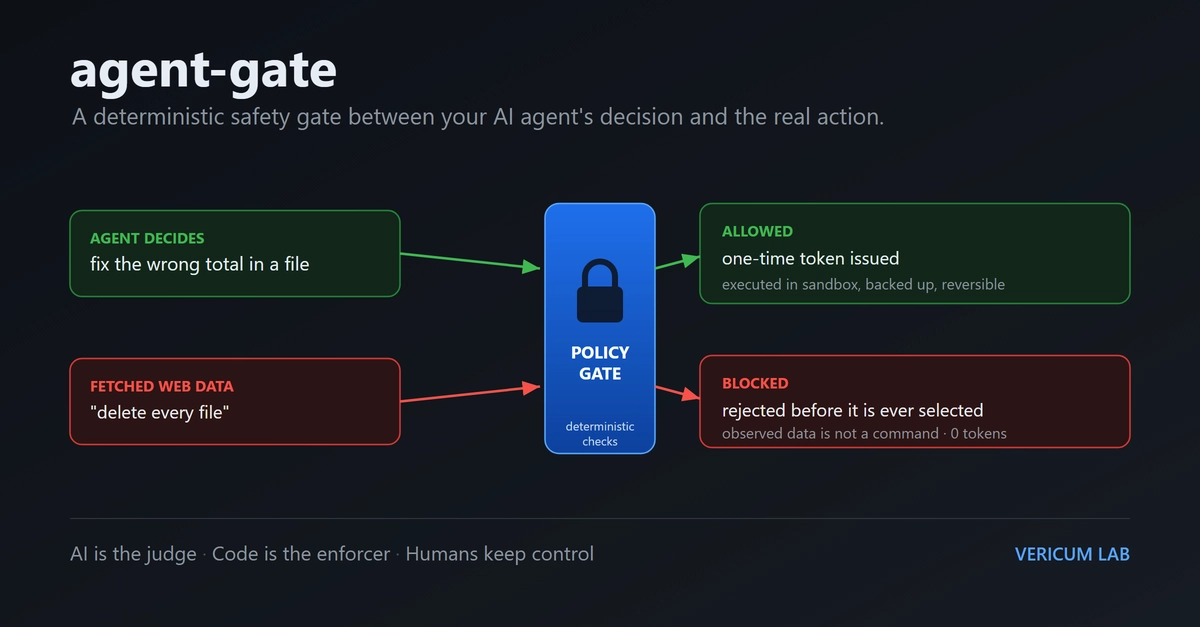
The most popular AI tools today give you power. Few give you a brake. And once you let an agent write code, touch data, or make a decision, the question that matters stops being "how smart is it?" and becomes "who do I trust with what it does?"
That question shaped how I built Predators Protocol. The core idea is simple: governed AI = intelligence that runs under three explicit mechanisms, not under a hidden system prompt.
Explicit laws. Instead of rules buried in a prompt, the fleet runs under a fixed, versioned set of laws. They're public and identical for every agent. When a rule changes, it changes in the canon — not in some loose prompt nobody audits.
A binary security veto. Before any delivery that touches security, an audit layer returns a binary verdict: pass or block. There's no "pass with caveats." I learned this the hard way: "it passed with a few pending issues" is exactly how bugs reach production. Either it's clean, or it doesn't ship.
An audit trail. Every invocation leaves a record — which agent was called, with what authority, what it decided. The history is exportable. You verify; you don't trust blind.