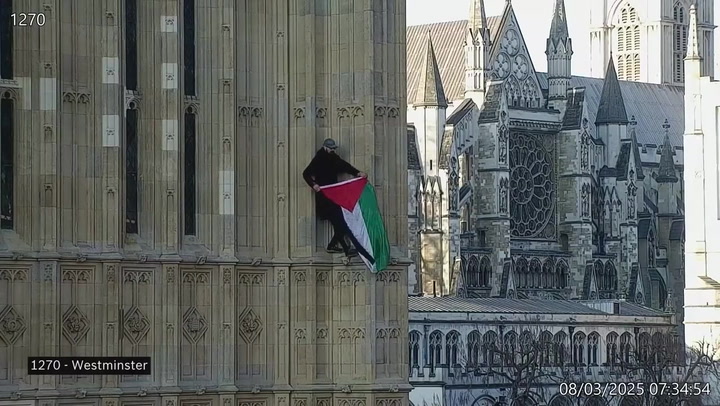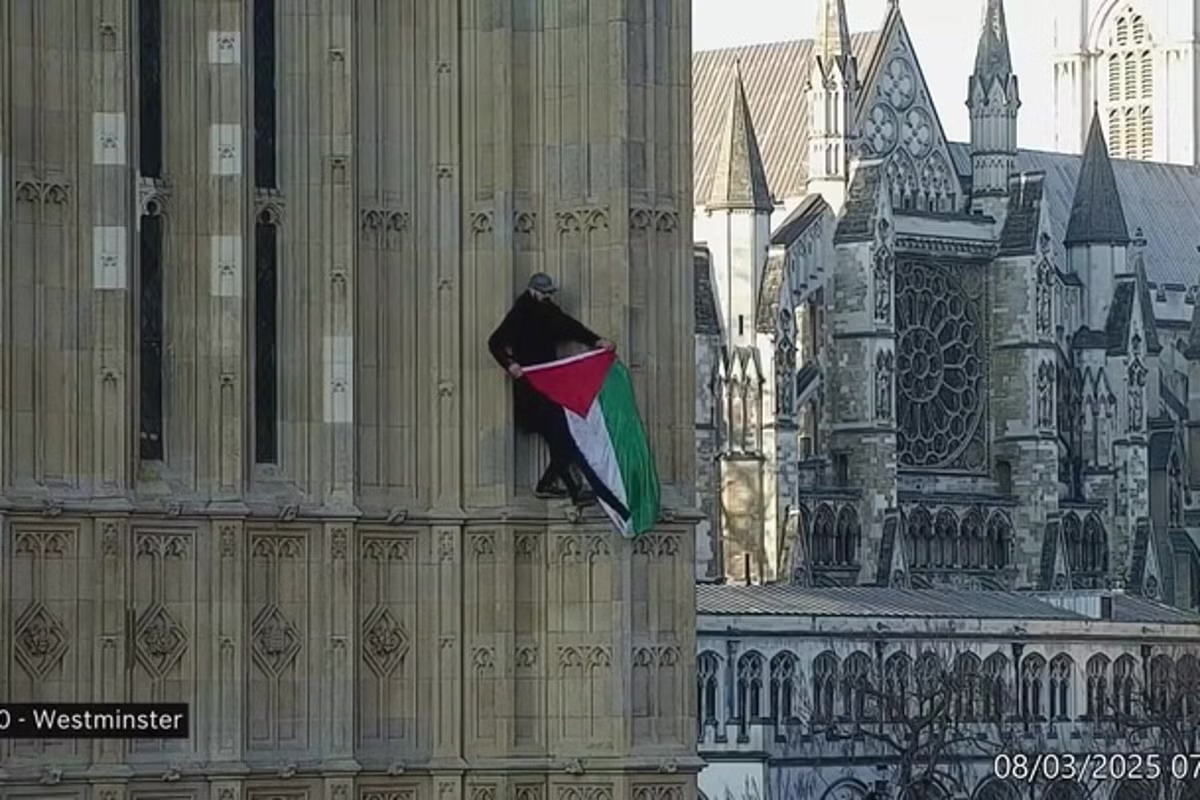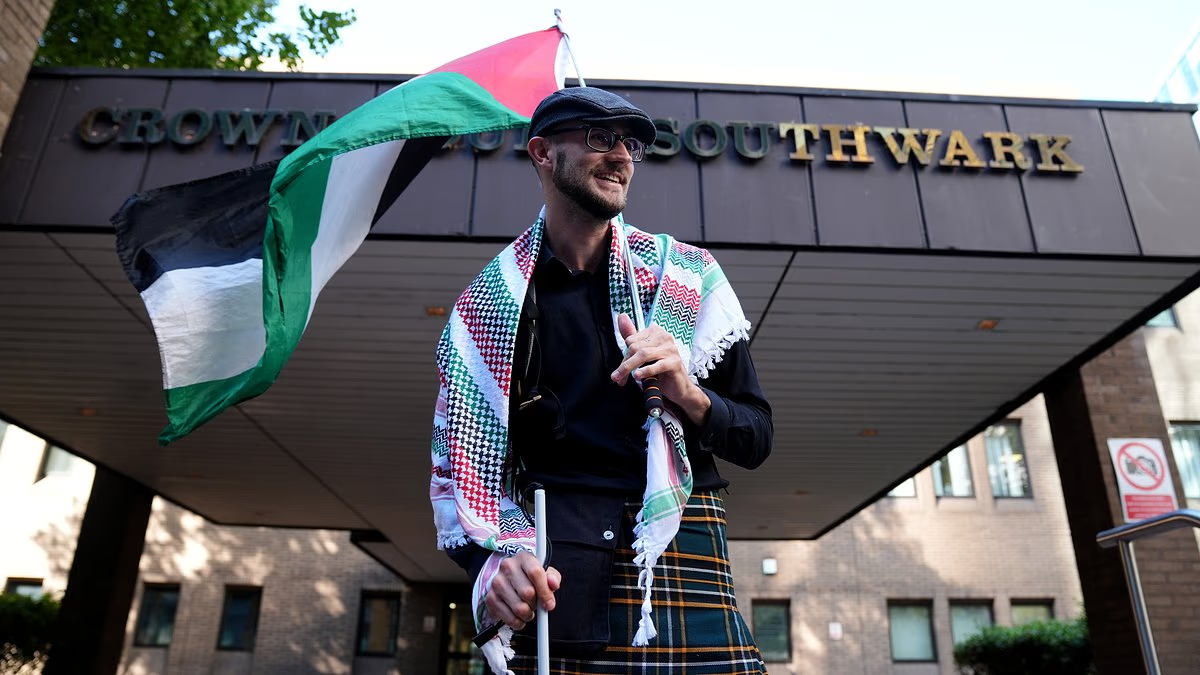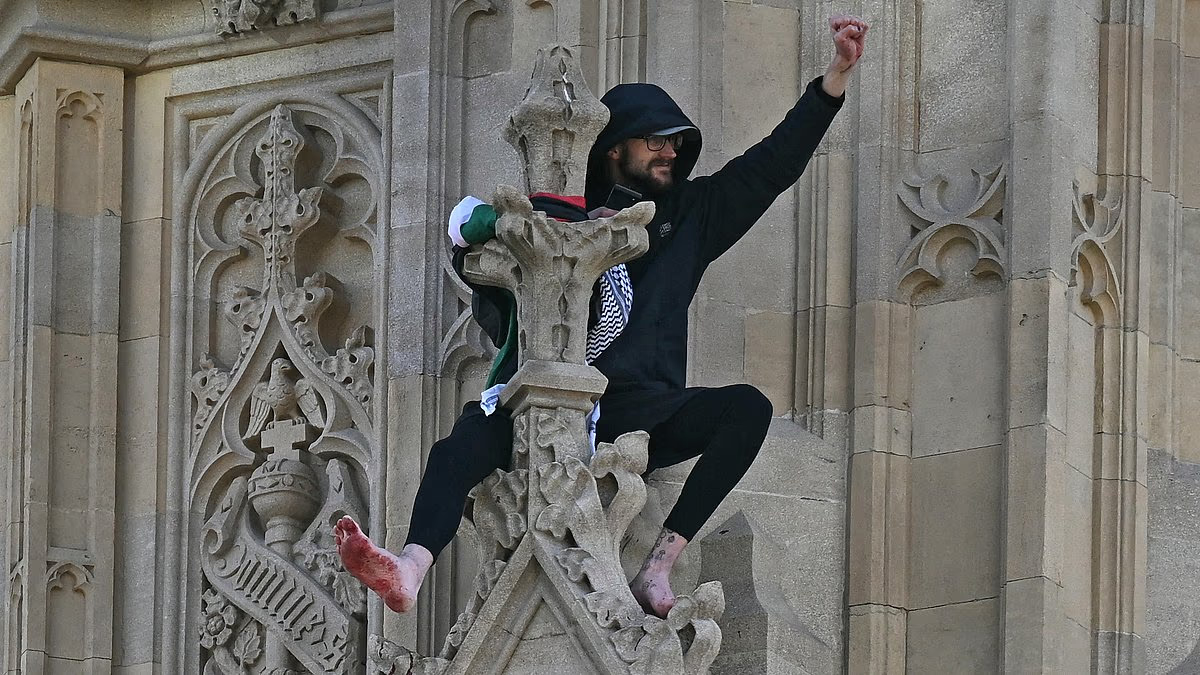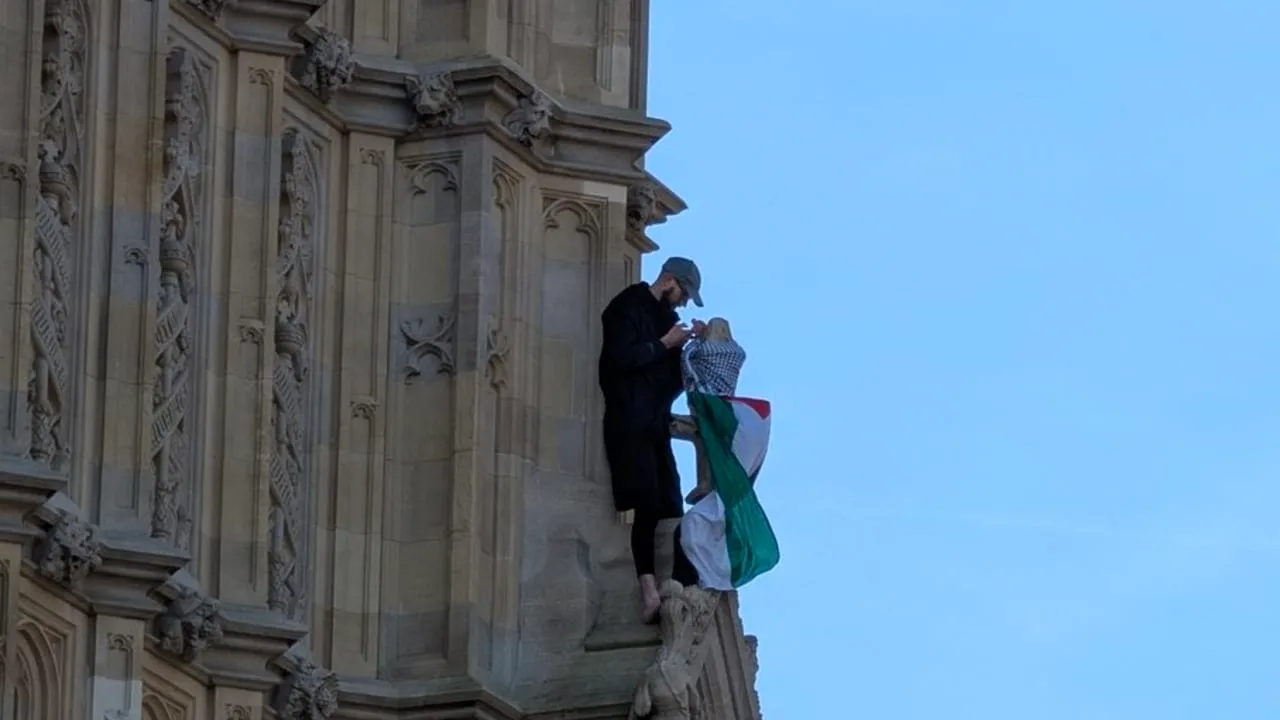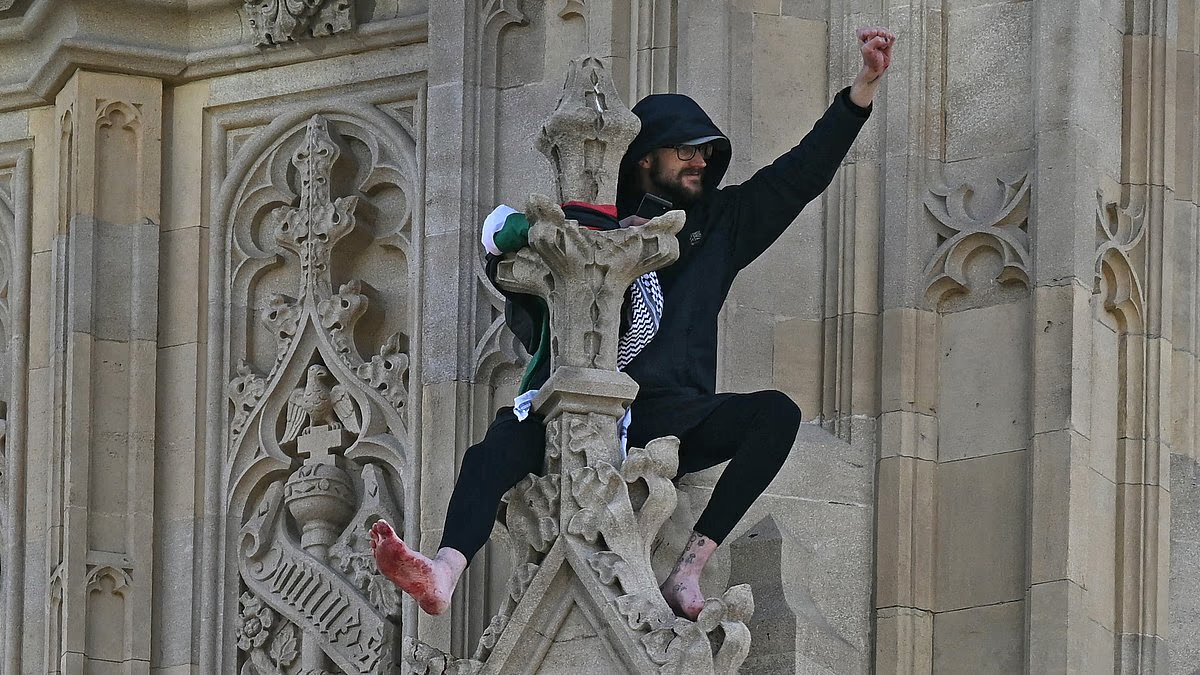
A pro-Palestine protester who climbed Big Ben barefoot and refused to come down for more than 15 hours cost the British taxpayer £67,000, a court has heard.A small section of central London was brought to a standstill after Daniel Day scaled the 96-metre-high structure on March 8 while carrying a Palestinian flag.The 30-year-old, from Westcliff-on-Sea, Essex, live-streamed himself scaling the building at 7.24am and refused to come down until after midnight.As he climbed Big Ben, the protester, who was wearing a black coat and baseball cap, cut his foot and smeared the beloved British landmark with his blood. While Day was unmoved, police roadblocks were put in place surrounding the building and security at the historic site was focused on dealing with the protest.Mattresses were put down at the base of the tower, to try to catch Day as he was at a 'precarious position' at a height, according to Alison Giles, the director of security for Parliament.Transport for London (TfL) also lost an estimated £25,000 in bus fares as diversions were put in place to avoid Westminster.Later that day, sympathetic protesters also blocked a fire engine as onlookers with Palestine flags cheered, the jury heard.A little more than 2,500 visits, largely by tourists, to Parliament had to be cancelled.Ms Giles said the loss of revenue had been estimated at £67,000, telling the court that 'ultimately it is (a cost to) the British taxpayer because those funds are used to offset the running costs of the Houses of Parliament'.Daniel Day scaled part of the 96-metre-high structure and denied intentionally or recklessly causing a public nuisance in court The 30-year-old climbed the Elizabeth Tower and sat on the corner of the historic landmark smeared with blood from his foot Day denies intentionally or recklessly causing a public nuisance by climbing the Elizabeth Tower on March 8 last year.Ms Giles said: 'Three minutes after he began his climb, the police appeared on the scene and we began to manage the incident.'We had to take the decision to stop all visits.'On a Saturday, we will have thousands of visitors to Parliament.''All of our security personnel and all the police were very much focused on the security incident.'More widely, the police had to close Westminster Bridge, position fire service and ambulance and manage the incident.'It was pretty inaccessible and for security purposes, I could not allow visitors onto the estate.'Prosecutor David Matthew said that 'a little over 2,500' visits to Parliament were stopped.Ms Giles said it would have been 'absolutely inappropriate' to allow the visits to take place and potentially risk public safety while they were managing a security incident.She added: 'We had a significant number of police officers monitoring the incident.'We had a person up a tower in a precarious position.'This was about safeguarding life.''We were managing an ongoing security incident of a man who was elevated in the air. We were very concerned he might fall off the tower.'We placed mattresses on the base of the tower to protect him.'She described it as a 'significant incident to manage' which included the emergency services and a cherry picker with a police negotiator to try and persuade the protester to come down.Police blocked off Bridge Street, before shutting down Westminster Bridge, closing traffic and pedestrian access off the Embankment, and closing parts of Parliament Square at times, the court heard.Clint Robertson, of TfL, said an estimated £25,000 in bus fares were lost, adding that many potential customers 'would have avoided the buses because of the disruption'.Chief Inspector Jonathan Waterfield, who was making tactical decisions for the handling of the incident during the day, was in a control room watching CCTV of the event. The protester pictured on the side of Big Ben on March 8 after scaling the historic structure Firefighters attempting to rescue the protester from the side of the Elizabeth tower Mr Waterfield, who had spotted the protest at 7.45am as he left Westminster tube station on his way to work, said at first it was 'very much spectators' who formed part of the crowd.By lunchtime, there were people who were 'sympathetic' in attendance and 'displaying Palestinian flags', he said.Mr Waterfield later said the negotiator told him 'there were real concerns' about the climber 'around the possibility he might slip and the interaction of the crowd who were holding Palestinian flags and that were sympathising with him'.Mr Waterfield also said: 'The person on the tower was shouting to the group who was on Bridge Street and that did create a fear that he might fall and for the negotiator to resolve the situation.'He also had to move officers to Whitehall from a planned static protest outside the BBC and from another location in east London that was being 'targeted' for patrol as a crime hotspot.Of the fire brigade engine being blocked, he said: 'I think it is one of those things that is hard to believe when you see it play in front of your eyes.'Officers were also called away from their local boroughs across the capital to take over from those who were on duty in central London.Mr Waterfield said there were 'assets available' that could have negotiated Day's descent 'down sooner'. He said communications between Day and the crowd were 'exaggerating the situation', but did not suggest that Day told people to block a fire engine.Inspector Simon Blondell, who was the police bronze commander working with resources on the ground, helped officers clear away a number of people who were standing in front of a fire engine at Bridge Street.When he arrived in Whitehall, he heard crowd members 'chanting support' for Day, including shouts of 'Free Free Palestine' and one who said 'you are a hero'.He also recalled negotiators asking a number of times 'to move people out of Mr Day's line of sight'.The hearing continues.
Pro-Palestine protester who climbed Big Ben 'cost taxpayer £67k'
A small section of central London was brought to a standstill after Daniel Day scaled the 96-metre-high structure on March 8 while carrying a Palestinian flag.
966 words~4 min read