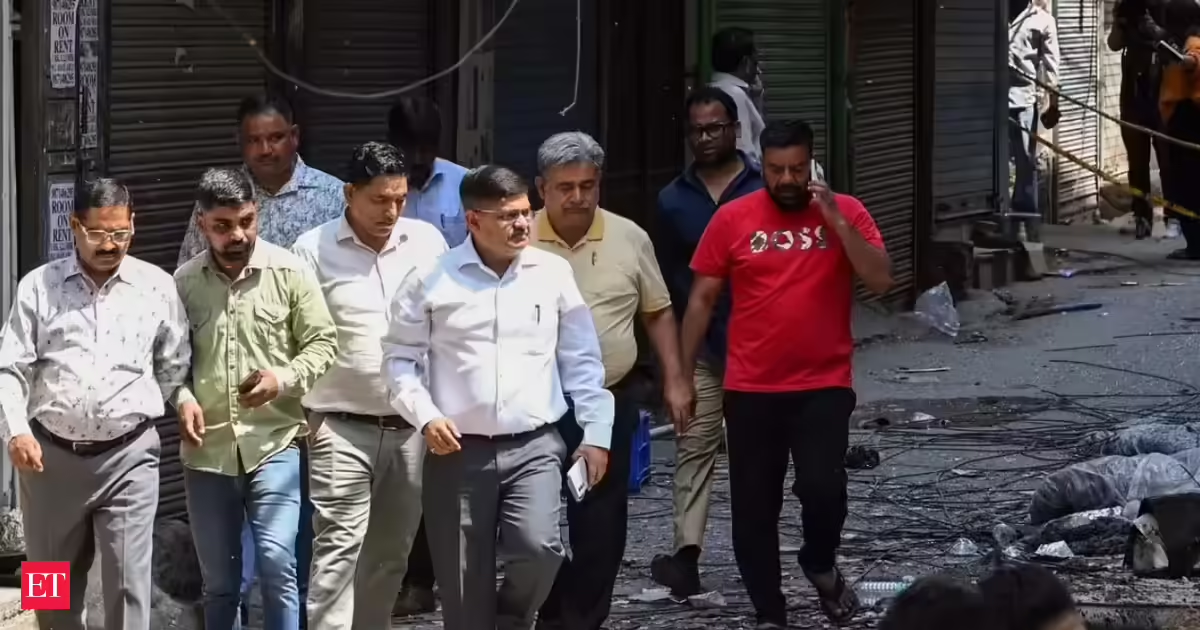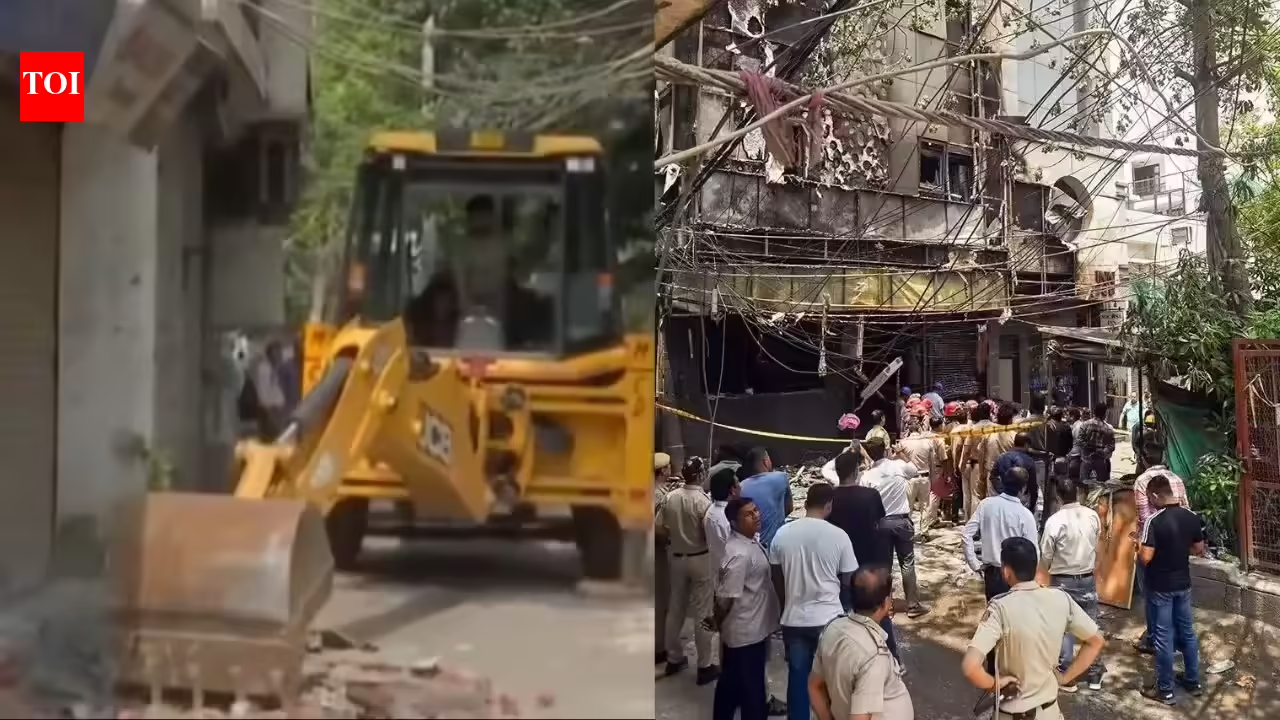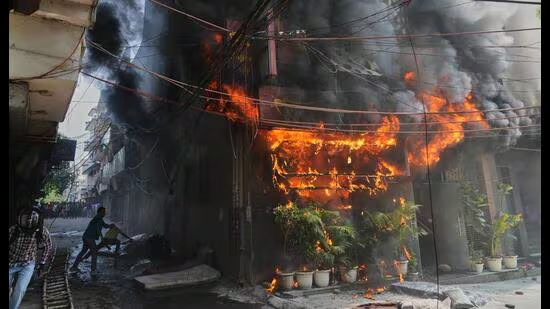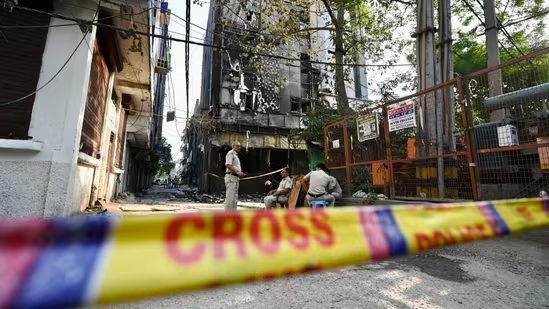
Experts and former municipal officials have raised concerns over the Municipal Corporation of Delhi’s (MCD) newly relaxed trade licensing regime, arguing that the policy appears to go beyond the civic body’s powers by allowing food-related businesses to obtain operating permits even in non-conforming and unplanned areas that fall outside the framework of the Master Plan for Delhi (MPD).Deregulation norms permit trades in non-conforming areas; concerns raised over safetyThe concerns come days after the deadly Hauz Rani fire, where investigators found that a restaurant was allegedly operating under the cover of a tea-and-snacks licence. Critics say the new regime not only dilutes scrutiny but also shifts responsibility for critical safety requirements almost entirely onto business owners, reducing the role of regulators in ensuring compliance.Under the revised system, 67 categories of food-related trades can obtain deemed health trade licences based primarily on Food Safety and Standards Authority of India (FSSAI) certification, without submitting many of the documents that were earlier required.The deregulation order states that “FSSAI guidelines will be adopted for the deemed health trade licences irrespective of the provisions of the Master Plan of Delhi 2021” and that the “onus of ensuring public safety and property in running the health trade will be that of the licensee only”.Previously, applicants were required to submit building-related records, layout plans and, in several cases, fire safety clearances before a licence was granted.Anil Gupta, former chief law officer of the erstwhile North Delhi Municipal Corporation, said the move raises serious legal questions. “The Master Plan is the foundation of Delhi’s planning framework. MCD cannot amend or supersede it through an administrative order. This is akin to a state legislature attempting to amend the Constitution,” Gupta said.He warned that weaker scrutiny could increase risks. “In Hauz Rani we saw how licences were allegedly used for purposes very different from what was permitted. Diluting regulatory oversight can create more opportunities for such misuse.”He added that many non-conforming areas already struggle with inadequate infrastructure, narrow lanes and limited emergency access. “Certain trades require infrastructure support. Many of these localities are simply not designed to safely accommodate high-intensity commercial activities,” Gupta said.Under the Master Plan, non-conforming areas are locations where actual land use differs from the land use designated in planning documents. These include residential areas being used for commercial or industrial purposes without formal approval under zoning regulations.Urban planning expert and former MCD works committee chairman Jagdish Mamgain said reforms should strengthen safety standards rather than weaken them. “The objective of ease of doing business should be to simplify procedures without compromising public safety.”He noted that while Delhi has previously permitted commercial activities on designated mixed-use roads after payment of conversion charges, “that does not mean commercial activities can simply be permitted anywhere. The Delhi Municipal Corporation Act is a parliamentary law and planning regulations cannot be bypassed through administrative decisions.”Mamgain described the existing inspection framework as inadequate but argued the solution lies in better enforcement. “Delhi needs to move towards better fire safety, more annual inspections and self-certifications and structural checks. With overburdened infrastructure, more checks are needed. We need a better [oversight] mechanism,” he added.Municipal officials, however, have defended the changes by arguing the reforms aim to bring thousands of unlicensed establishments into a regulatory framework. “The onus is on the licensees to act responsibly. Agencies such as the Delhi Fire Service (DFS) are responsible for examining fire-safety aspects,” the official said. “A large number of such establishments are already running in non-conforming areas with no license or oversight. At least under this system, such establishments will enter a formal database and remain subject to inspection powers,” official added.However, a DFS official noted the department typically examines buildings only when cases are formally referred or when structures legally require a fire NOC – generally hotels above 12 metres, educational buildings above nine metres, and most buildings taller than 15 metres. “We do not automatically inspect every establishment,” the official said.[ONE MORE COMMENT HERE]
Deregulation norms permit trades in non-conforming areas; concerns raised over safety
Experts criticize Delhi's relaxed trade licensing, claiming it compromises safety by allowing food businesses in non-compliant areas, shifting responsibility to owners. | Latest News Delhi
657 words~3 min read