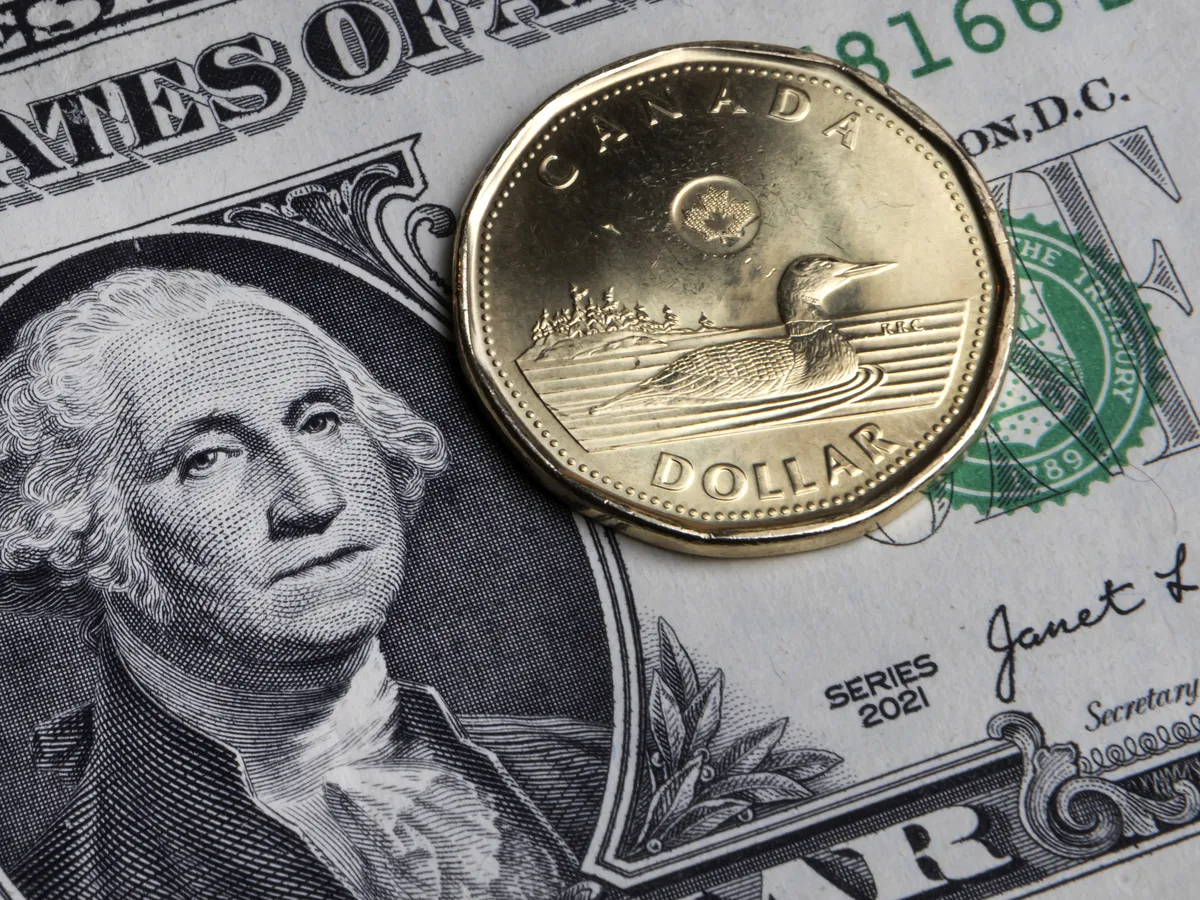
The Canadian dollar dropped to 1.3969 against the US dollar on June 9, the currency’s weakest print since December 2025. That translates to roughly 71.67 US cents per loonie, a level that has traders increasingly nervous about what comes next for Canada’s economy.
The culprit is straightforward: markets are pricing in a Bank of Canada that has no intention of moving rates anytime soon. The central bank’s policy rate has been parked at 2.25% since December 10, 2025, and economists surveyed by Reuters expect it to stay exactly there for the rest of 2026. When a central bank signals it’s comfortable standing still while the US Federal Reserve maintains higher yields, the math on currency flows gets ugly fast.
Why the loonie keeps losing altitude
Speculative short positions on the CAD have climbed to their highest levels since late 2025. The traders who bet on currencies for a living are increasingly wagering that the loonie has further to fall.
Yield differentials between Canadian and US government bonds have been tightening, which makes holding CAD-denominated assets less attractive relative to their US counterparts.