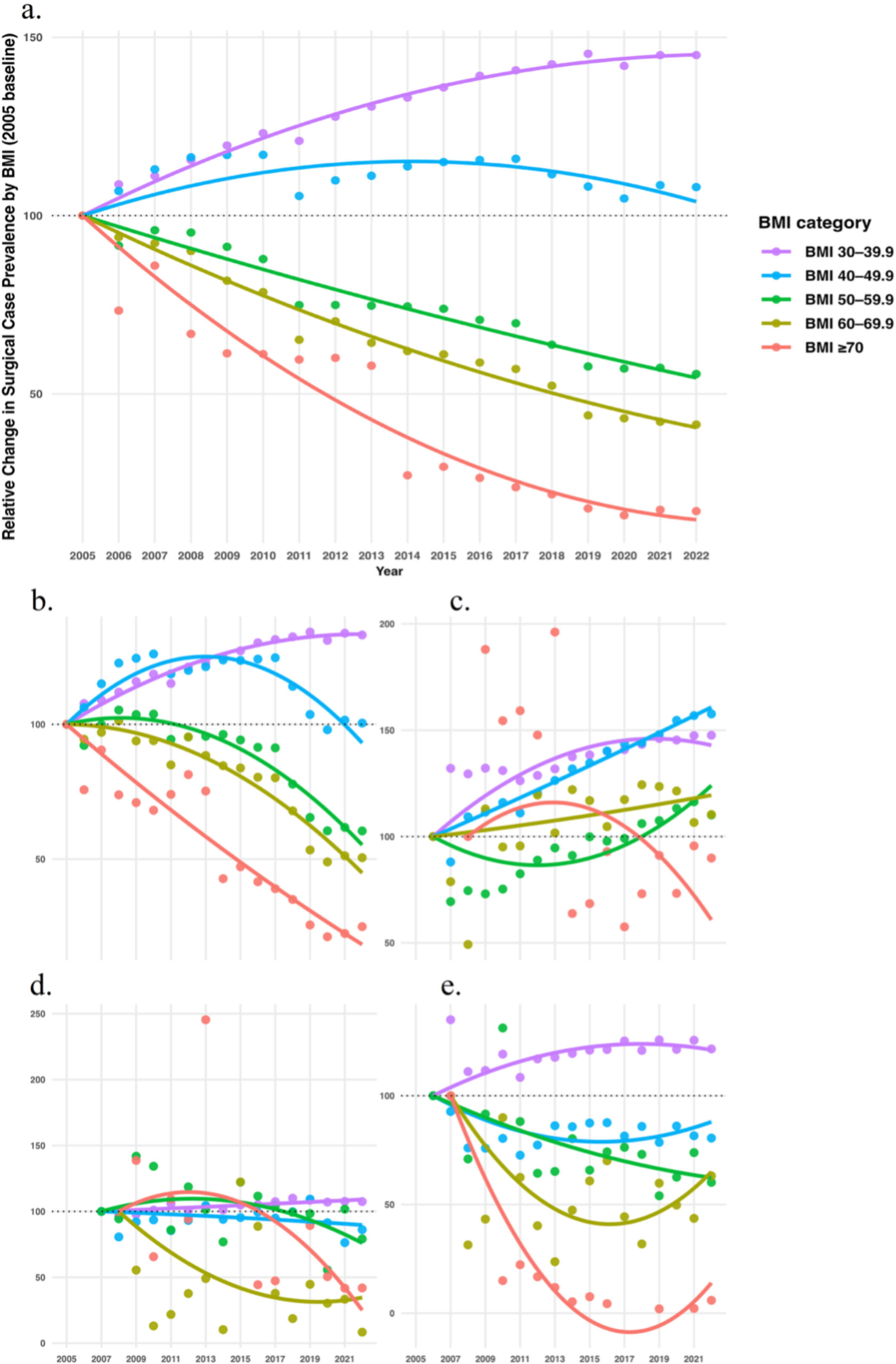
Relative change in surgical case prevalence stratified by BMI, 2005–2022. Credit: Obesity (2026). DOI: 10.1002/oby.70240
Researchers from LSU's Pennington Biomedical Research Center and collaborating institutions have found that Americans with the highest levels of obesity are undergoing fewer surgical procedures overall. These procedures include common operations like knee or hip replacement, hernia surgery, and surgery of the breast, prostate and colon—operations that are frequently done for cancer.
Study authors say these trends are concerning because rising obesity nationally should lead to more, not less, surgeries for common obesity-related diseases and ailments. The study, "Increasing Obesity Severity is Associated with Less Surgical Care in the United States," published in Obesity, analyzed more than 11.6 million surgical cases from the American College of Surgeons National Surgical Quality Improvement Program (NSQIP) between 2005 and 2022.
Investigators found that patients having a higher body mass index (BMI) or extreme obesity experienced progressively lower representation in surgical care over time. Despite the increased prevalence of extreme obesity, these individuals appear to be undergoing fewer operations year after year.