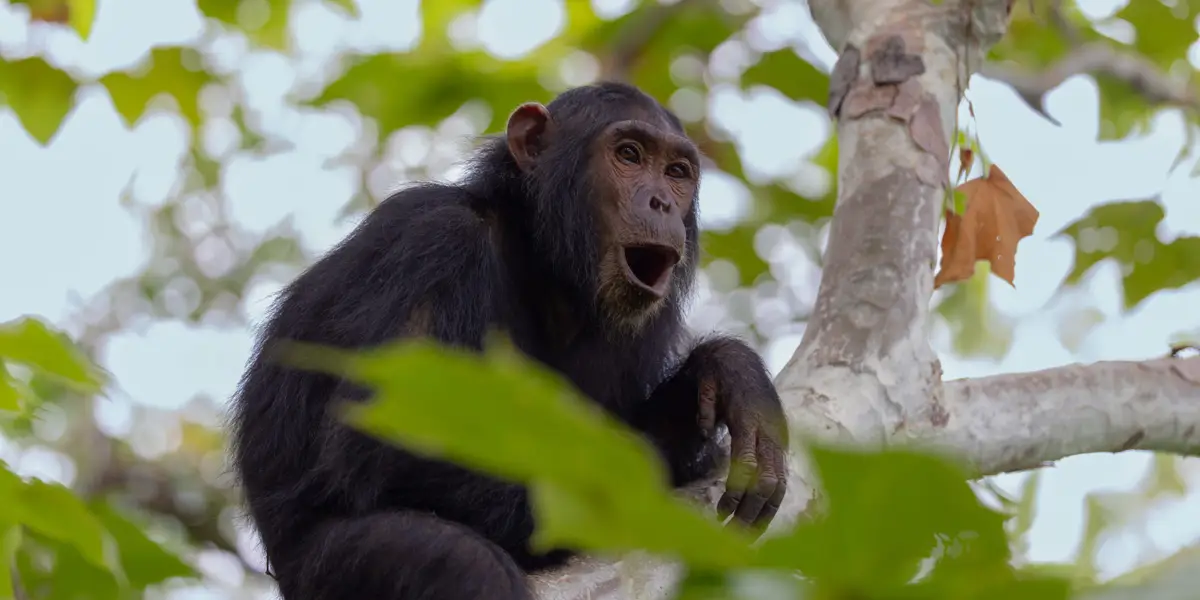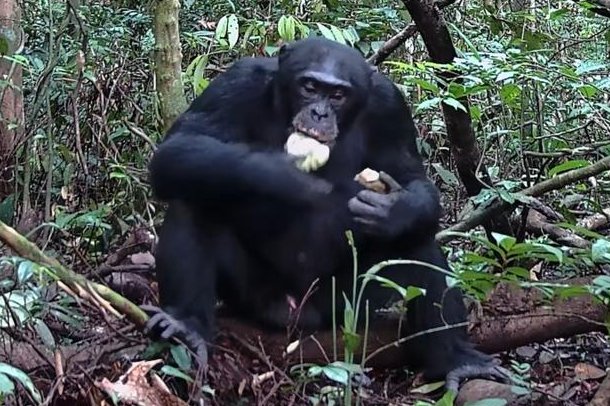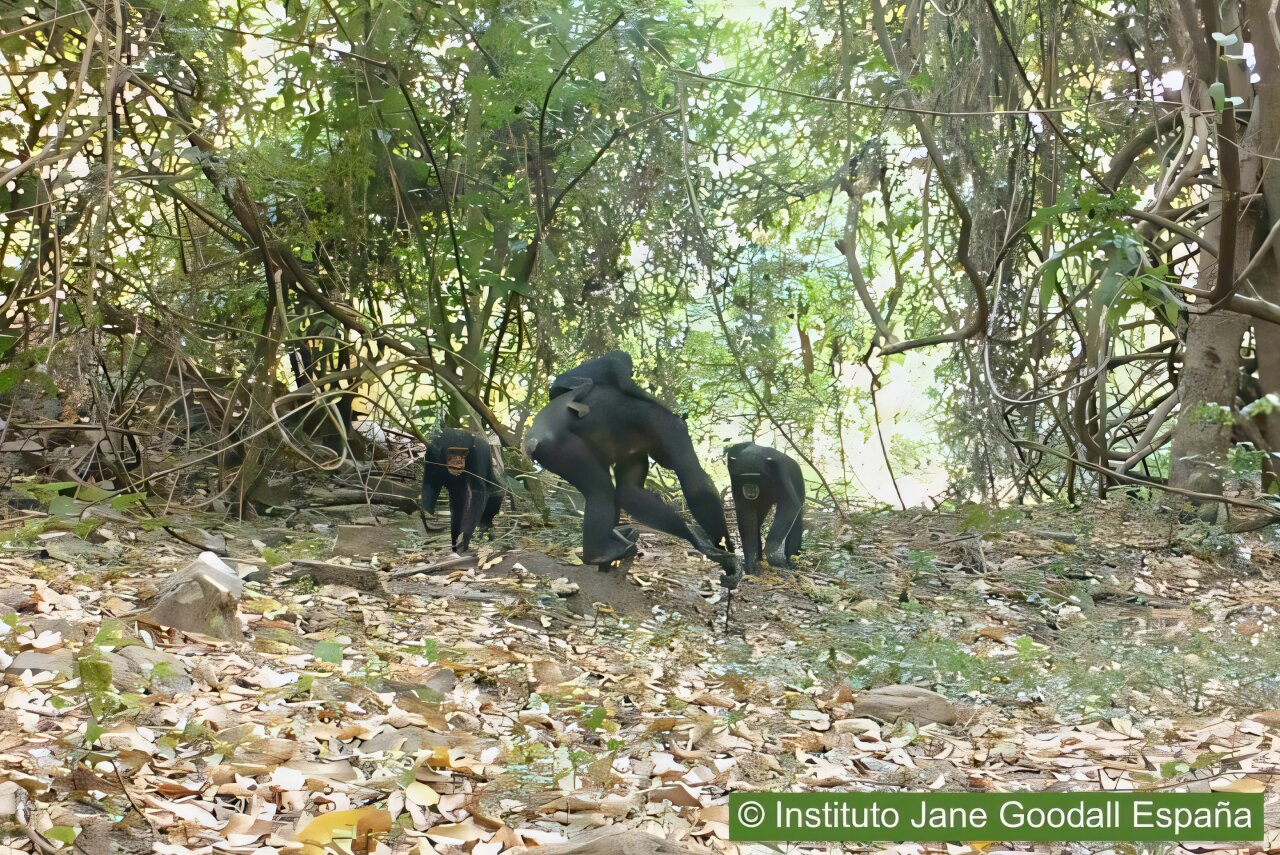
Chimpanzees are the only great apes, apart from humans, that have adapted to living on savannas as well as in forests. However, it is not yet well understood how the harsh ecological conditions of the savanna—compared with those of the forest—affect the foods chimpanzees eat and how they obtain them. Now, a study led by the University of Barcelona and the Jane Goodall Institute Spain (IJGE) reveals for the first time the strategies savanna chimpanzees use to make tools and extract aggressive army ants—also known as marabunta—from their underground nests and eat them in these dry, hot habitats.
The paper, published in the journal Scientific Reports, is led by Andreu Sánchez-Megías and R. Adriana Hernández-Aguilar, from the UB's Faculty of Psychology and the IJGE. The team includes Laia Dotras and Jordi Galbany (UB and IJGE) and Adrián Arroyo, from the UB's Faculty of Geography and History and the Institute of Archaeology (IAUB), as well as experts from the Max Planck Institute for Evolutionary Anthropology and the University of Copenhagen.
To date, only the feeding strategies of chimpanzees in forest habitats have been described. The new study, carried out in Dindefelo, a savanna site in Senegal, reveals that to avoid the painful bites of army ants, chimpanzees use stick tools—with peeled bark or frayed ends—from eight plant species, mainly lianas. The primates put the tools in their mouths and cut the tips with their teeth.