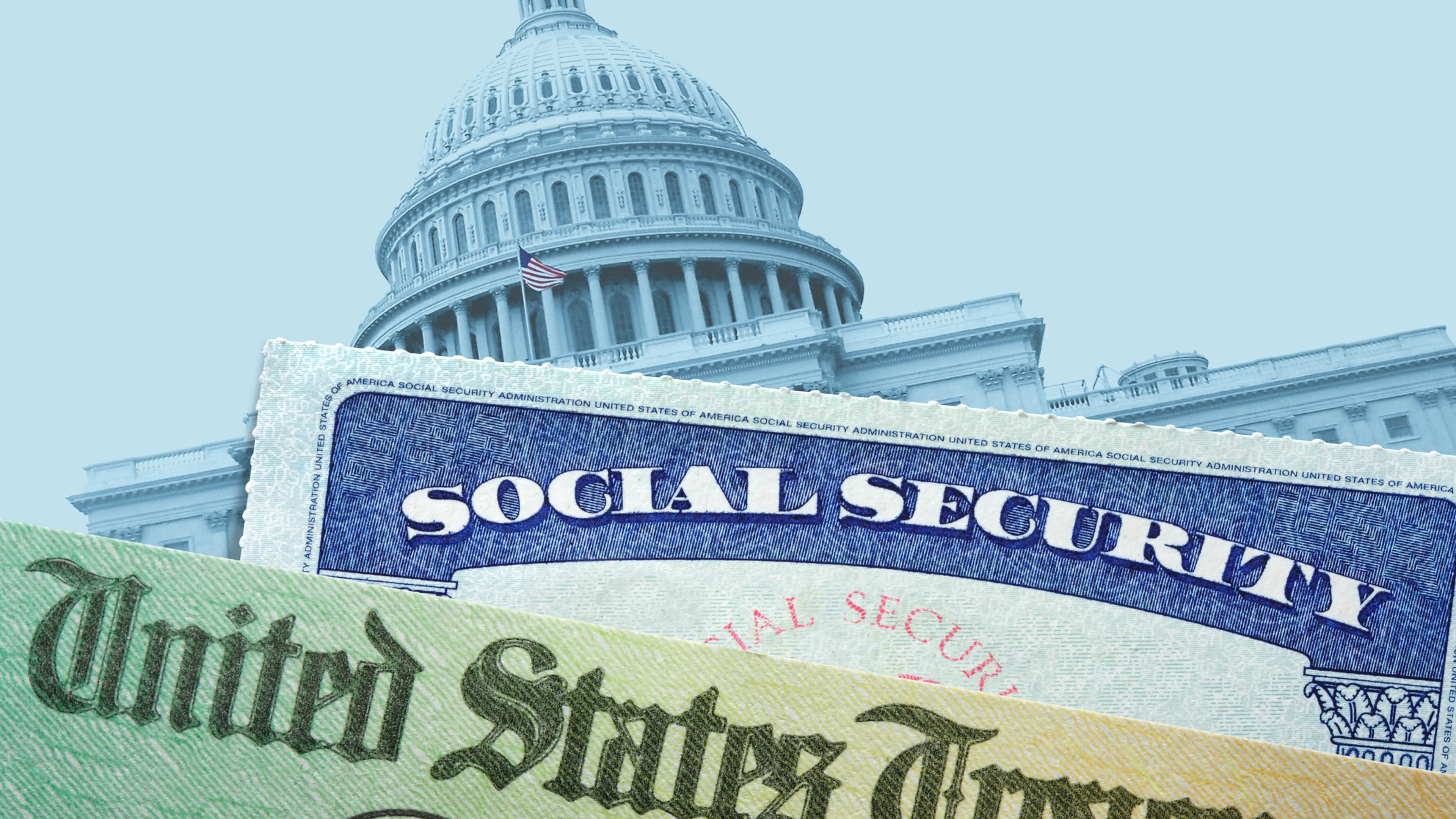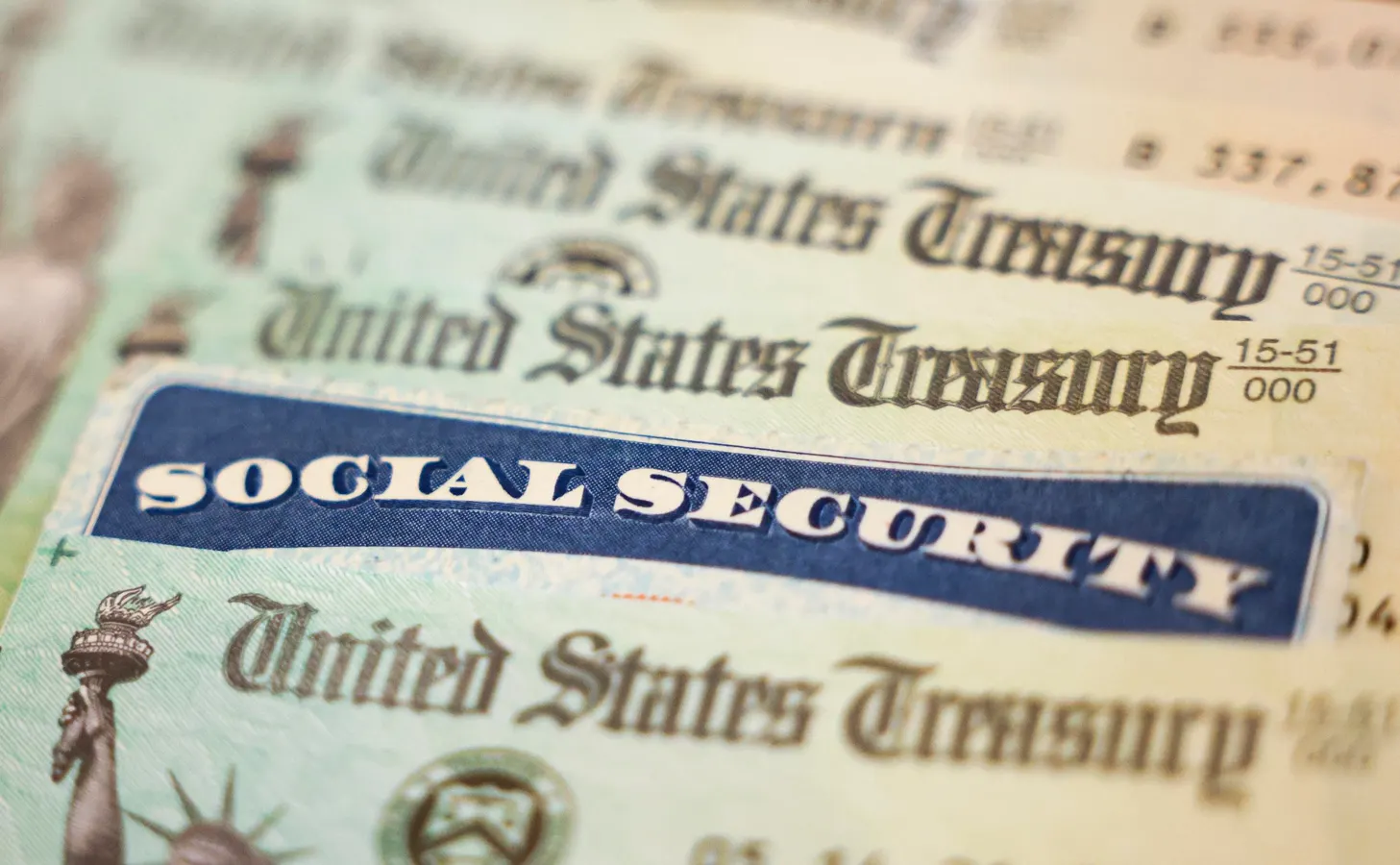
ToplineA new study found the critical Social Security fund that allows the program to cover the disparity between income and beneficiary payouts is projected to run out of money in late 2032, putting the monthly income of tens of millions at risk sooner than previously thought, unless Congress acts to shore up the fund.A Social Security card sits alongside checks from the U.S. Treasury.Getty ImagesKey FactsThe Social Security Administration's annual trustees report predicts the Old-Age and Survivors Insurance (OASI) Trust Fund will run out of money in late 2032, at which point only 78% of retirement benefits will be payable. That scenario would result in the typical benefit payment going down 24%, according to recent analysis from the nonpartisan Committee for a Responsible Federal Budget, which equates to a nationwide average of about $500 in monthly cuts. If Social Security combines the OASI trust fund with the disability insurance trust fund, retirement benefits would remain fully funded through the third quarter of 2034, and benefits could be paid out at 83% going forward. Combining the trust funds is prohibited by law, and while Congress could authorize the shifting of money to cover shortfalls, one economic expert told CNBC the move would be “merely a band-aid” patching the larger problem of Social Security insolvency. It's up to Congress to make policy changes that would lessen or stop the looming benefit cuts, and actions taken to avoid similar outcomes in the past included raising the retirement age and taxing benefits. The new prediction also takes into account a lower projected birth rate (1.75 children per woman as opposed to 1.9 children) and a lower number of temporary and undocumented immigrants working in the U.S. BIG NUMBER29. That’s in how many states retirement benefit recipients would see monthly benefit cuts higher than $500 if the trust fund runs out. The average monthly retirement benefit for 2026 was projected by the Social Security Administration as $2,071. CRUCIAL QUOTE“This should be a wake-up call: Congress needs to act,” AARP CEO Myechia Minter-Jordan said in a statement. “Americans have worked hard and paid into Social Security their entire lives, and they deserve to count on it when they retire. No family should see any cuts to what they’ve earned in Social Security.”Key backgroundThe Social Security trust funds are being depleted because the program is paying out more in benefits than it collects in payroll taxes. The program has generally been running a cash-flow deficit for years and the mass retirement of the baby boomer generation (which has been peaking since 2024 and is expected to continue through next year) has caused benefit obligations to outpace revenue. The most recent insolvency prediction comes after President Donald Trump passed his sweeping domestic agenda package, called the One Big Beautiful Bill Act, which lowered income tax rates and introduced a new deduction for senior citizens. The new laws mean less taxes paid on Social Security benefits, which in turn leads to less money rolling back into the Social Security and Medicare trust funds. further readingForbesThe Coming Social Security Crisis And The Fight To Save ItBy Mike PattonForbesMore Americans Plan To Claim Social Security Benefits EarlyBy Bob Carlson
Social Security Retirement Fund Expected To Run Dry In 2032, New Report Says
Tax cuts for seniors, a lower predicted birth rate and fewer immigrants working in the U.S. have all pushed up a predicted depletion date for an important Social Security retirement fund.
528 words~2 min read