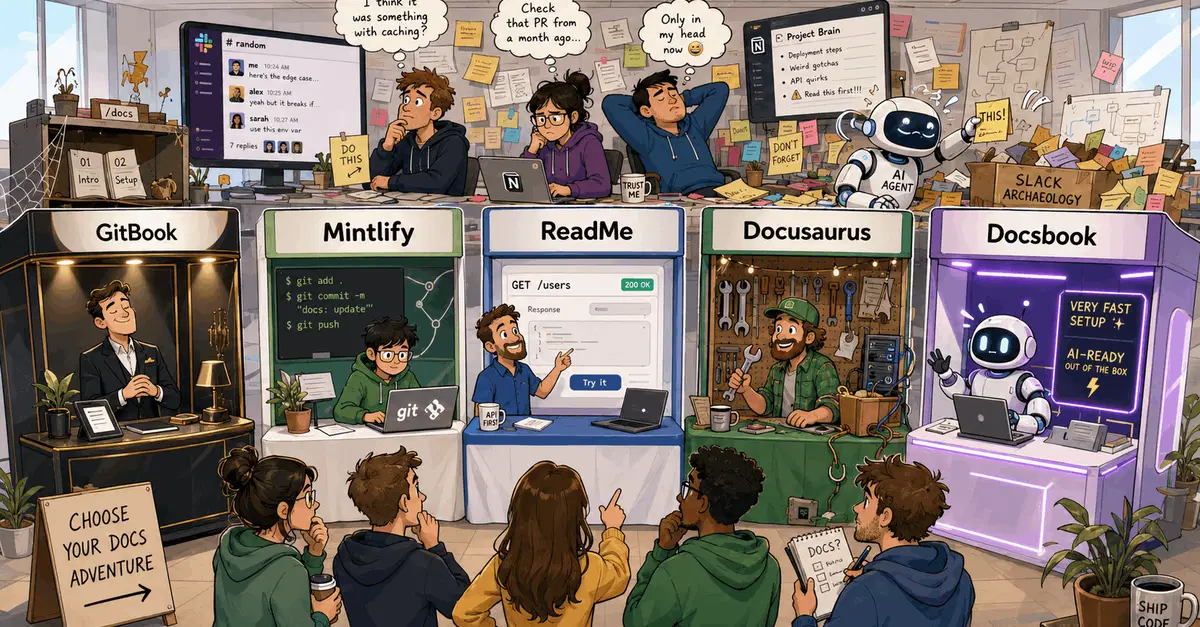
Which platform actually fits how your team works — and how AI agents are starting to consume your docs?
There's a weird thing that happens at a lot of startups. Someone sets up a shiny documentation site in the first week of a product launch, puts two or three pages on it, and then... nothing. The site collects dust while the actual knowledge lives in Slack threads, Notion pages, and engineers' heads. The tool wasn't wrong. The friction was just slightly too high, and nobody ever felt like it was their job to fix it.
Documentation tooling has come a long way from "we write Markdown and push to GitHub Pages." In 2026, the real differentiator between platforms isn't the editor or the theme system — it's how well the platform fits your team's actual workflow, whether that's code-first or wiki-style, and increasingly, how accessible your docs are to AI agents running in tools like Claude Code or Cursor.
I've spent a fair amount of time with the major players this year. Here's an honest rundown.
GitBook