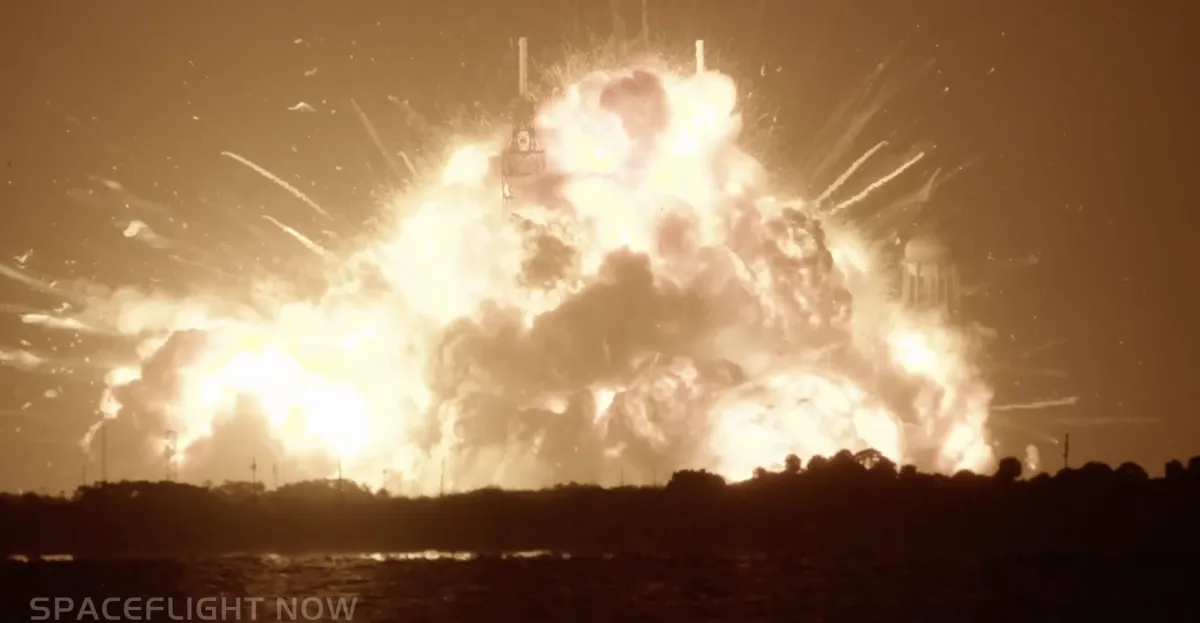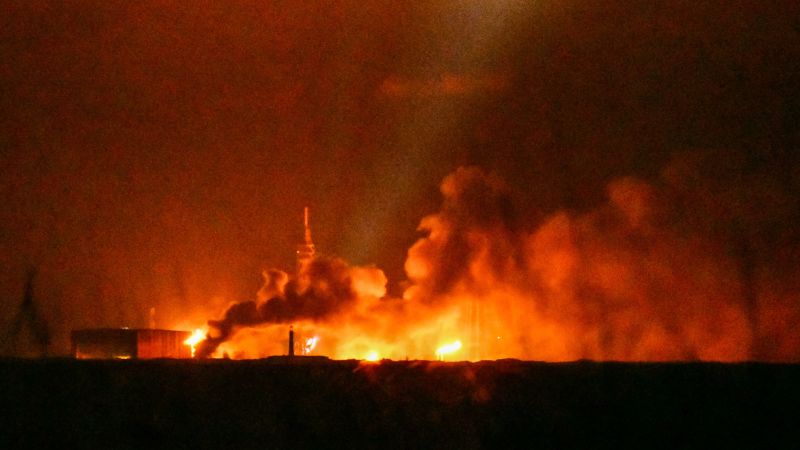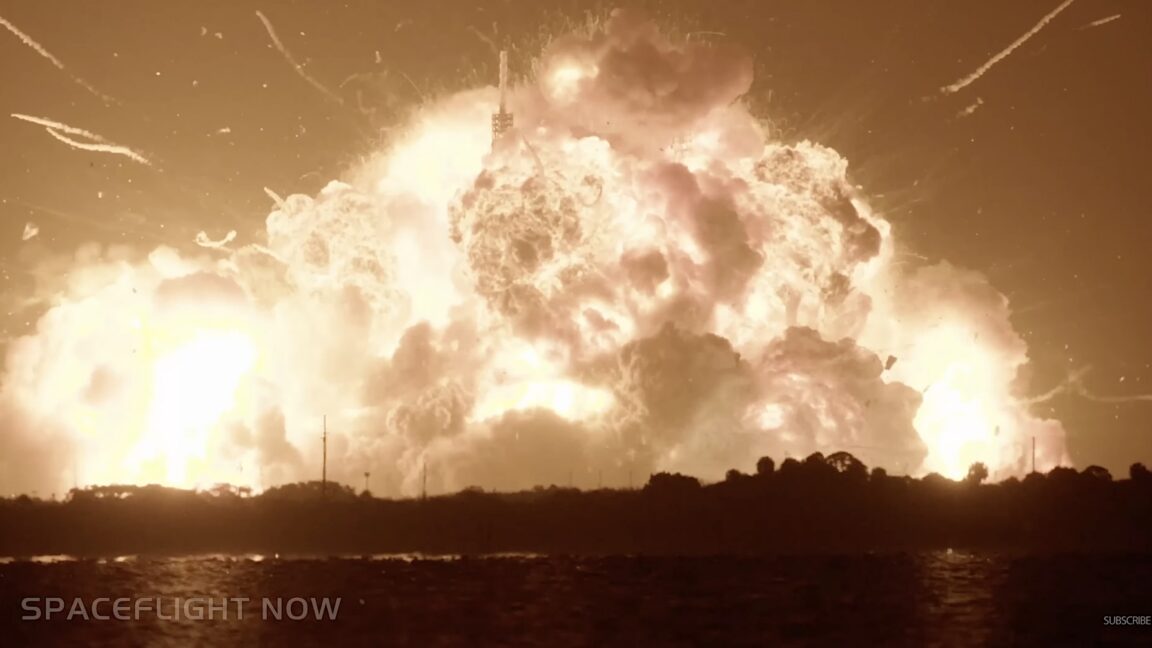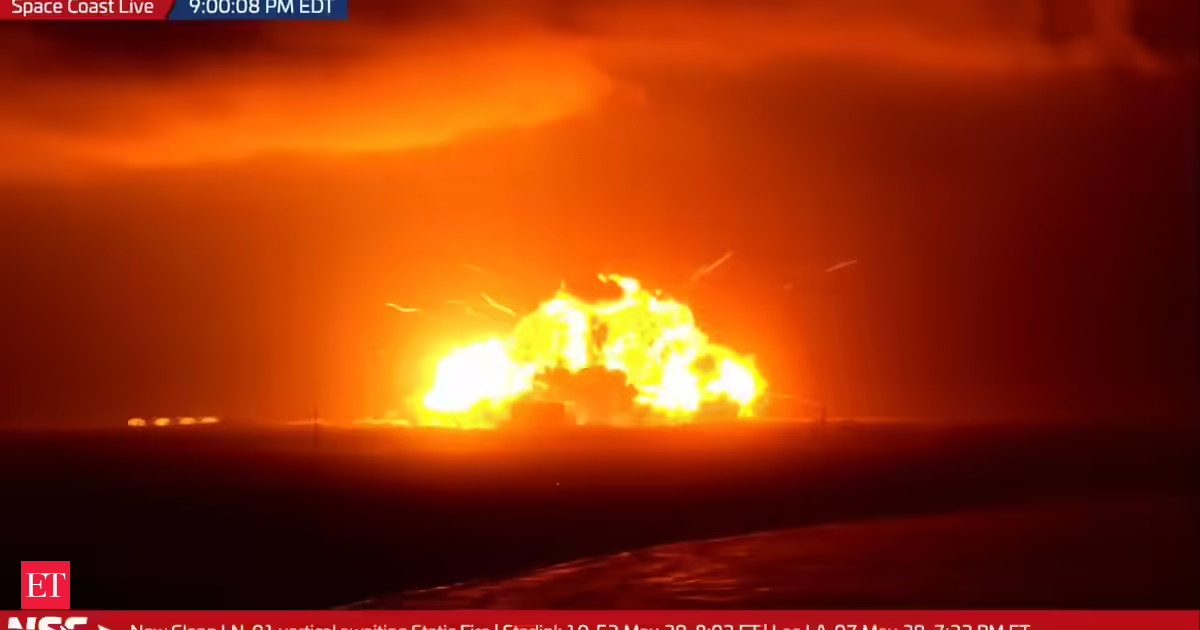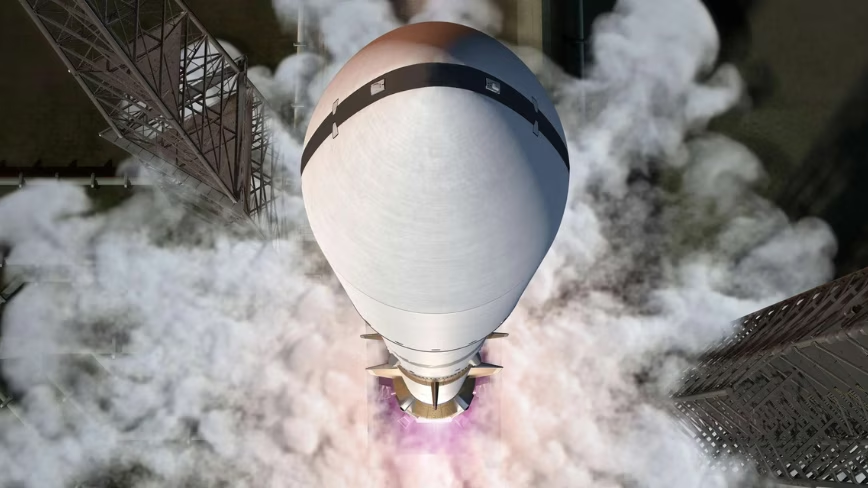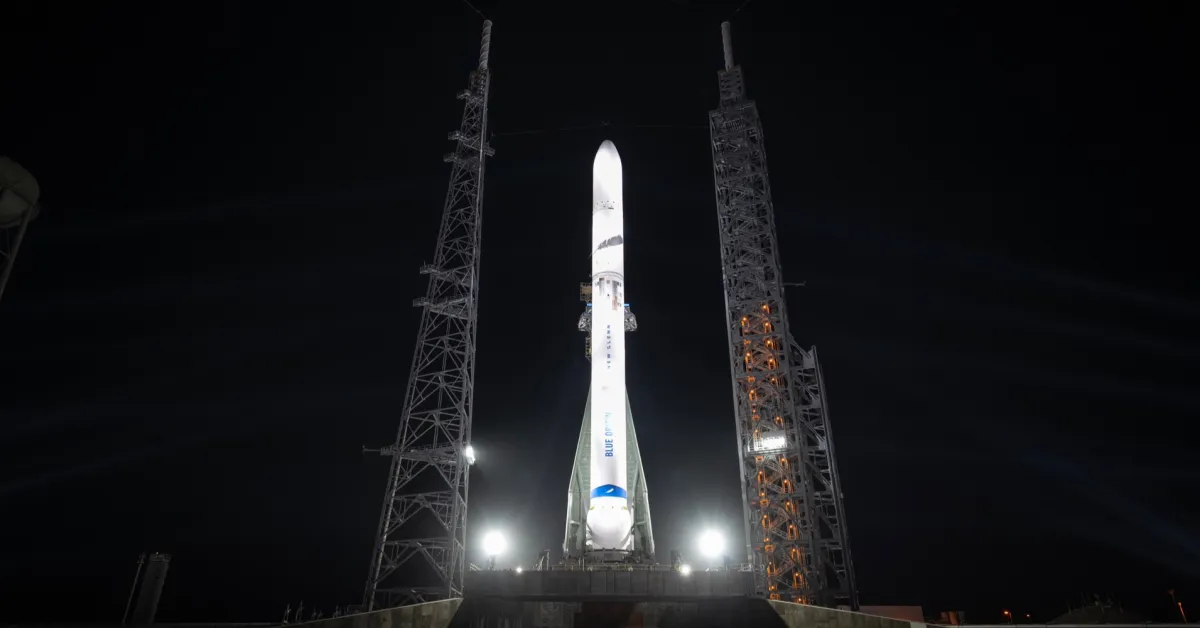
Blue Origin suffered a major blow last month when its New Glenn rocket experienced a catastrophic anomaly during a static fire test at Launch Complex 36 on Florida’s Space Coast. The test was being conducted without its mission payload attached – a batch of Amazon LEO internet satellites that had been scheduled for launch in early June.
Early reports indicate portions of the launch infrastructure sustained substantial damage. The company has not released a detailed damage assessment or timeline for returning the rocket to flight operations. Because the area was cleared for the hotfire test, Blue Origin said all personnel have been accounted for and safe.“It’s too early to know the root cause but we’re already working to find it,” said company founder Jeff Bezos shortly after the May 28 explosion. “Very rough day, but we’ll rebuild whatever needs rebuilding and get back to flying. It’s worth it.”
The timing could hardly be worse. In the days leading up to the incident, NASA had selected Blue Origin to deliver commercial Lunar Terrain Vehicles developed by Lunar Outpost and Astrolab to the Moon later this decade to be used by future Artemis astronauts. These would have been sent via the company’s Blue Moon Mark 1 lander, which is launched by New Glenn.