09 June 2026
New research supports the value of household-level waste separation. But policies must also carefully consider consumer behaviours to maximize the quality of material collected.
You have full access to this article via your institution.
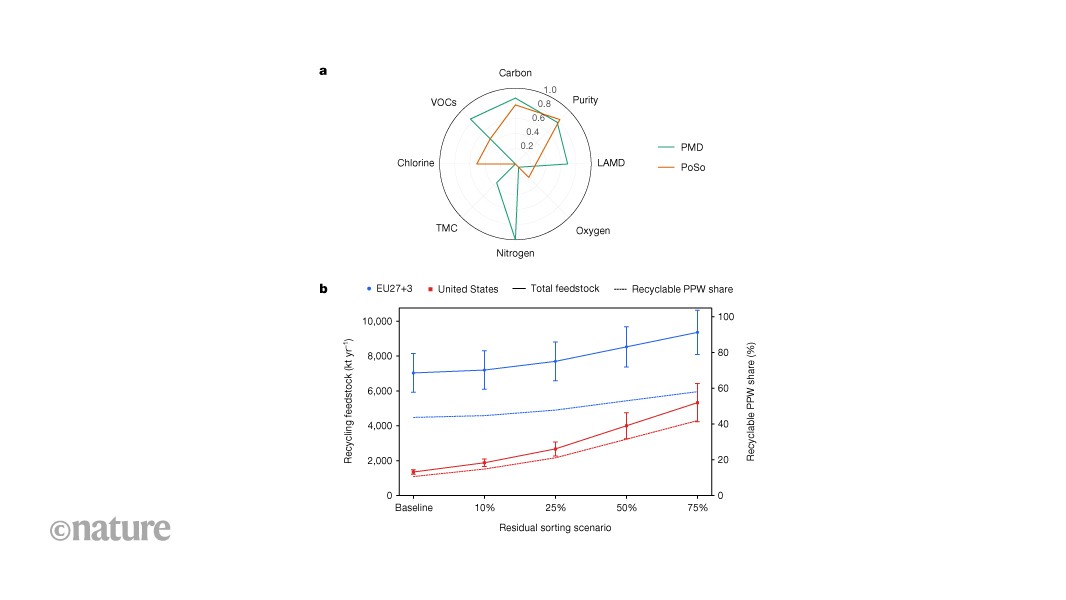
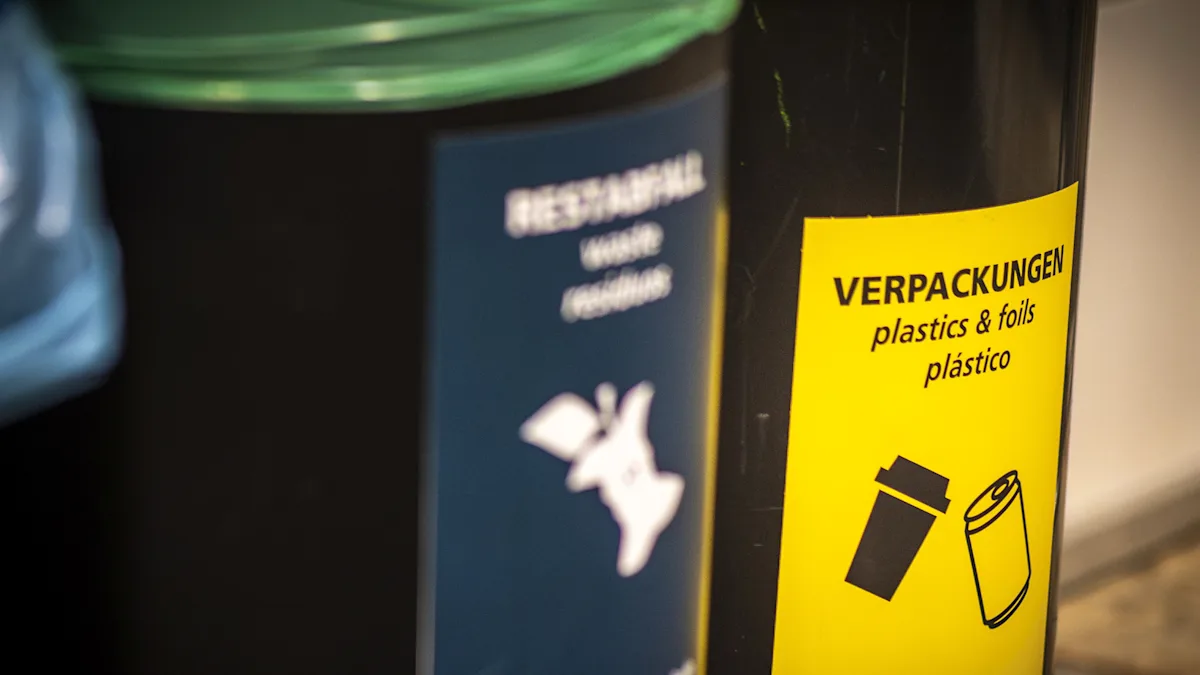
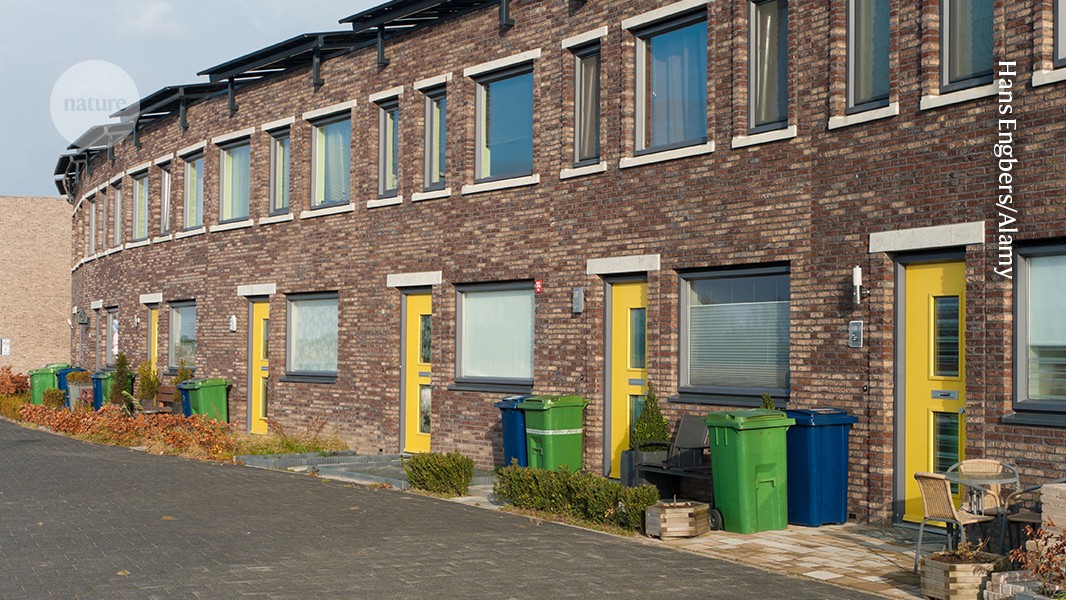
Households in the Netherlands are often asked to separate their waste before it is collected for recycling.Credit: Hans Engbers/AlamyThe world produces more than 400 million tonnes of plastic each year, but less than one-tenth of this is recycled1. That is one reason why stalled talks for a United Nations treaty to end plastic pollution must restart. Substantive progress on the issues surrounding plastic waste and its environmental effects will require coordination within and between sectors, such as product design, consumer-behaviour research and collection, sorting and recycling technologies.Read the paper: Analysis of trade-offs of post-sorting plastic packagingOne study2 in Nature this week shines a spotlight on the comparative benefits of different methods of plastic-waste separation at a local level. It centres on the Netherlands, where municipal authorities must provide separate collection systems for different types of household waste — but are free to decide whether households should separate the waste or recycling plants should do this post-collection. Authorities in the study area make these decisions on the basis of the proportion of high-rise buildings in the area, cost, convenience of collection and quantity of litter. In general, more densely populated areas are more likely to use post-collection sorting.Alexandra Schmuck and Steven De Meester at Ghent University in Belgium, and their colleagues examined the quality of recycling from households that separate plastic waste before it is collected and compared this with unsorted plastic waste that is then separated by a recycling plant close to Groningen in the Netherlands. The plant separates unsorted waste into streams for recycling using magnetic, spectroscopic, weight and density-based methods, as well as manual inspection. Both the households and the plant sorted the waste into the same categories, including low-density polyethylene films and high-density polyethylene rigid plastics. The researchers found that the plastic waste in each case contained between about 70% and 80% polyethylene by weight. But the dirtiest plastic waste separated by households was usually cleaner, meaning less-contaminated, than was the cleanest plastic waste separated at the facility.Some bales of plastic waste sorted at the facility contained partially plastic items, such as toys and electrical items with batteries. And they were found to contain toxic metals, such as lead and cadmium. These bales were also more likely to include medical plastics that contain chlorine, the release of which can corrode sorting and recycling equipment.Recovery of plastic from mixed waste boosts recycling rates but affects qualityThis study, and others (see ref. 3, for example) underscore the value of household-level recycling policies, and the opportunities and challenges to expanding them. Although post-collection sorting has its benefits, less-contaminated plastic waste is easier and cheaper to recycle. Countries where many households separate waste before collection, such as the Netherlands, Belgium and Germany, achieve plastic recycling rates above 50%. Authorities in these countries provide clear guidance on which materials are recycled at both national and local levels, including for households and businesses.By comparison, household waste in other nations, including China, Brazil and Australia, is more likely to be collected from a single bin and then sorted later at a recycling centre. These countries have comparatively low plastic recycling rates, of around 15%. Introducing more household-level waste separation could be the most economical way to improve on this number.People engage in recycling for all sorts of reasons. Some do it because they care about the environment, some because it’s socially expected and others because of habit. If people feel supported, policy can reinforce that motivation, but imposing a complex system can mean they disengage. People are more willing to cooperate when systems seem fair and easy to use, but are less keen when they feel judged, rather than encouraged.Trust and science: the essential elements missing from plastics treaty talksThere are different ways to ensure that households separate their plastic. Many local authorities mandate home recycling and pay for it through a combination of taxes on households and levies on packaging companies. Others, such as those in South Korea, parts of Italy, Germany, Belgium, the Netherlands and Luxembourg, use pay-as-you-throw tariffs, whereby households pay for the volume of residual waste that they discard4.Policies to encourage separation of waste depend to a large extent on households cooperating5. Because of its perceived fairness, pay as you throw can motivate people to go the extra mile; some studies have shown that it can contribute to high recycling rates, such as in Treviso, Italy (see, go.nature.com/4vuvert). But it also comes with concerns that it contributes to or increases illegal dumping6.The easier it is to recycle at home, the easier it is to sustain participation and motivation. It’s of course tempting to treat recycling as the only environmental goal. But, reducing waste and reusing material also matters. Countries must create systems that people are willing to live with and feel part of to prepare themselves for the regular shocks in the fossil-fuel economy, and the transition away from it. Increasing rates of recycling is a key part of that goal and should involve both sorting at home and post-collection — and doing both well.