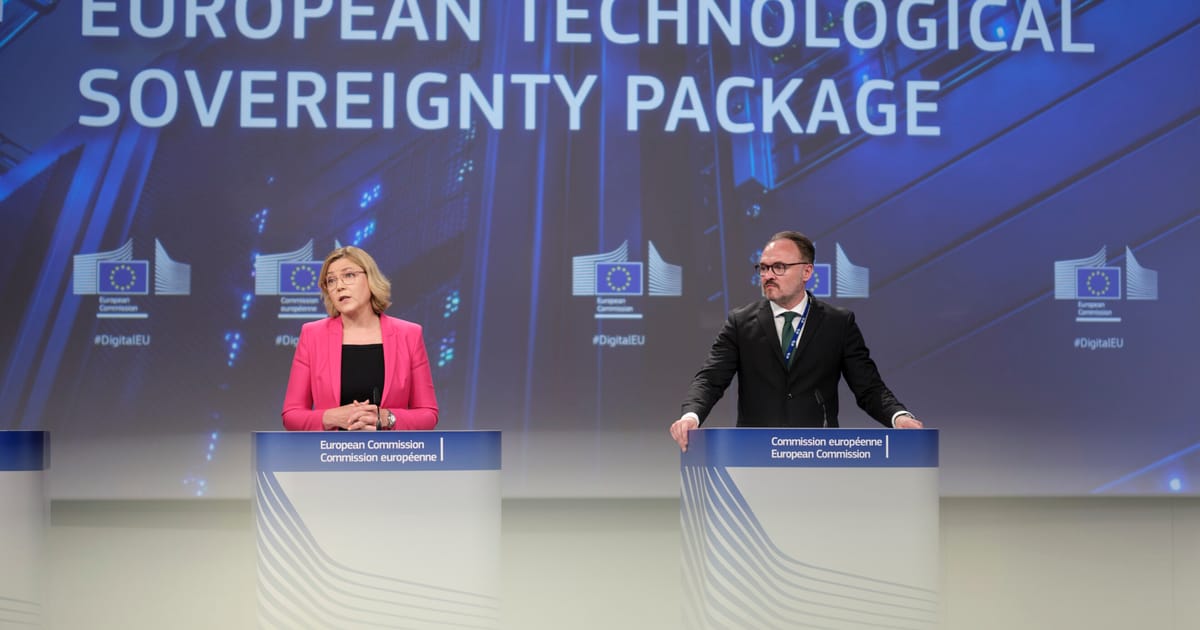
European Union threaten U.S. tech companies with burdensome regulations.gettyThe European Union’s expanding regulatory reach is no longer just a compliance headache for American tech companies — it may be becoming a strategic threat to U.S. innovation itself. From supply-chain mandates to artificial intelligence rules, Brussels is increasingly setting the terms under which American firms can compete, invest, and grow in one of the world’s most important markets.From Compliance Burden to Strategic ThreatWhen I joined Creative Strategies in 1981, it was owned by a global consulting company called Business International. Their clients included major U.S. companies and many U.S. government and military agencies. The second year I was there, I was sent to Geneva to serve as a liaison for our work and for what was proposed to be the eventual EU. So I have been watching the evolution of the EU for decades, with a special eye on how they handle high-tech legislation.How the U.S. Built Its Tech AdvantageThroughout my more than four decades covering the technology industry, I have watched America establish its dominant position in the sector. This was possible thanks to a combination of open markets, democratic governance, and an innovation-friendly culture, allowing American companies to experiment, innovate, and make mistakes until the right solutions emerged. Now, that advantage is threatened, not by Beijing and Tokyo, but by Brussels. And while the EU has always had a knack for developing innovative technologies, today it’s trying to develop a regulatory framework that could fundamentally change how American technology companies operate, invest and thrive.Two Policies Driving the ShiftTo understand why this matters to the American tech industry, let’s look at two documents at the heart of Brussels’ strategy: the Corporate Sustainability Due Diligence Directive (CSDDD) also called the European Supply Chain Legislation, and the recently adopted EU Artificial Intelligence Act (AI Act).Each of these initiatives raises serious concerns, but together they pose a much bigger threat. They are policy preferences of a foreign state imposed on American businesses through regulation as a condition of market access.MORE FOR YOUThis is extremely relevant for the technology industry, and for every American benefiting from it.With its CSDDD, the EU wants American companies operating in Europe to conduct due diligence on potential human rights and environmental violations across their entire value chains, including those committed by suppliers and subcontractors outside the EU. Compliance with this directive comes at considerable cost; we’re talking about extensive legal scrutiny, third-party audits and operational restructuring that go far beyond domestic regulatory requirements. This won't be a problem for large corporations; mid-size businesses seeking to expand internationally could struggle to meet these obligations as they grow.A Question of Democratic LegitimacyWhat makes this situation even more unacceptable is its very nondemocratic nature. Here, European policy preferences are being substituted for democratic decisions made by Americans through their elected representatives in Congress. American companies already work under a complex domestic legislative framework. Instead of imposing yet another regulatory burden, the government in Brussels should allow Congress to set the terms by which American businesses are judged.And then there’s the AI Act. Artificial intelligence is perhaps the most game-changing invention of our generation. Its impact is already being felt across multiple industries, and it’s safe to say that American companies are leading the way in research, development and deployment of these systems. Large language models, foundation models and other enterprise artificial intelligence are tools primarily populated by American businesses. The AI Act adds another layer of bureaucracy to these technologies through additional reporting obligations and compliance requirements, making their legal status uncertain.In the tech industry, uncertainty kills investment. Without certainty about the regulatory conditions for business operations, companies hesitate and take their time, preferring legal scrutiny to actual innovation. The technology sector moves incredibly fast and any added friction in this process comes at a hefty price.Who Gets Hurt Most: Startups vs. GiantsThe problem I see with the increasing regulatory burden imposed by Brussels extends beyond companies struggling to cope. In such a market structure, the largest players tend to adapt relatively easily; after all, they have the financial and legal muscle to do so. However, next-generation challengers may find it difficult to operate and innovate in an increasingly bureaucratic environment.There’s also an often overlooked element of competitiveness in the matter. China is still aggressively investing in research and deployment of AI technologies and isn't stopping to conduct human rights and environmental due diligence as dictated by the CSDDD. While American companies must deal with Brussels' regulatory framework, Chinese counterparts continue advancing and solidifying their dominant positions in artificial intelligence, semiconductors and other emerging technologies crucial to future dominance in the international arena.What’s at Stake for the U.S.America’s ability to compete in international commerce depends on two things—its rich natural resources and creative people. The U.S. technology industry is not simply another commercial sector; it is a pillar of economic power, national security, and global leadership. Software, AI and digital services developed by American companies are among the most valuable exports of our nation.A Call for Policy ResponsePolicymakers in Washington must take this matter seriously and find appropriate solutions in trade negotiations, diplomacy, and, where necessary, policy reciprocity. If the U.S. is serious about maintaining its edge, it must ensure American companies compete on fair terms, not under rules written elsewhere.
The EU’s Regulatory Overreach Is Becoming A Real Threat To U.S. Tech
EU regulations like the AI Act and CSDDD may hinder U.S. tech innovation, burden smaller firms, and give global competitors like China a strategic edge.
880 words~4 min read