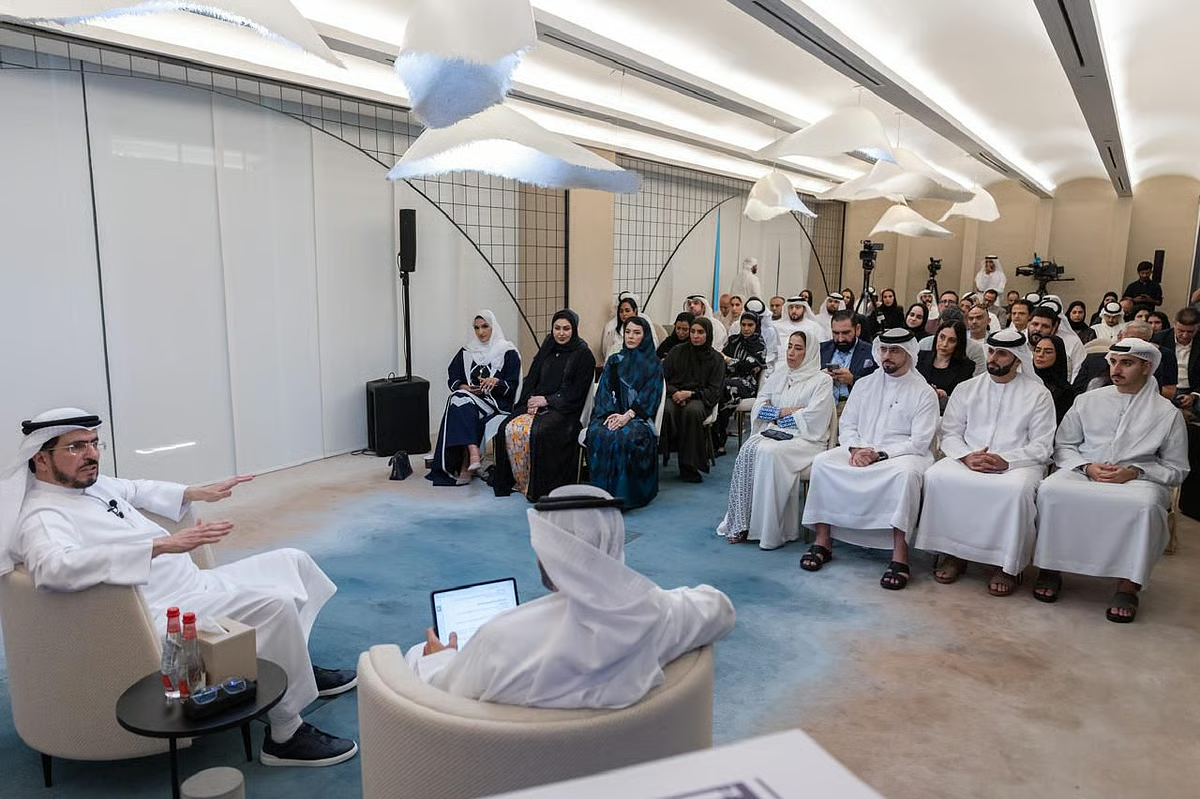
The Middle East Solar Industry Association (MESIA) recently convened an industry discussion examining how Abu Dhabi’s self-supply framework will impact distributed solar deployment, storage integration and future market design.
Abu Dhabi’s new solar self-supply framework signals something larger than a regulatory update. It suggests that the next phase of distributed solar in the UAE will not be defined simply by how much rooftop capacity can be installed, but by how intelligently that capacity interacts with the grid, customer demand, battery storage, and long-term electricity planning.
This was one of the central takeaways from a recent industry discussion hosted by the Middle East Solar Industry Association, which examined what Abu Dhabi’s self-supply framework could mean for distributed solar deployment, storage integration, project economics, and future market design.
For years, distributed solar growth in many markets has been shaped by a relatively simple assumption: install as much solar as possible, export excess generation where allowed, and use tariff savings or net-metering mechanisms to support the business case. Abu Dhabi appears to be moving in a different direction.
The emirate’s self-supply framework points toward a more controlled model, where distributed solar is expected to serve on-site consumption first and operate within clearer technical and regulatory boundaries. That may challenge companies hoping for broad export-driven project economics, but it also reflects a more mature stage of market development.