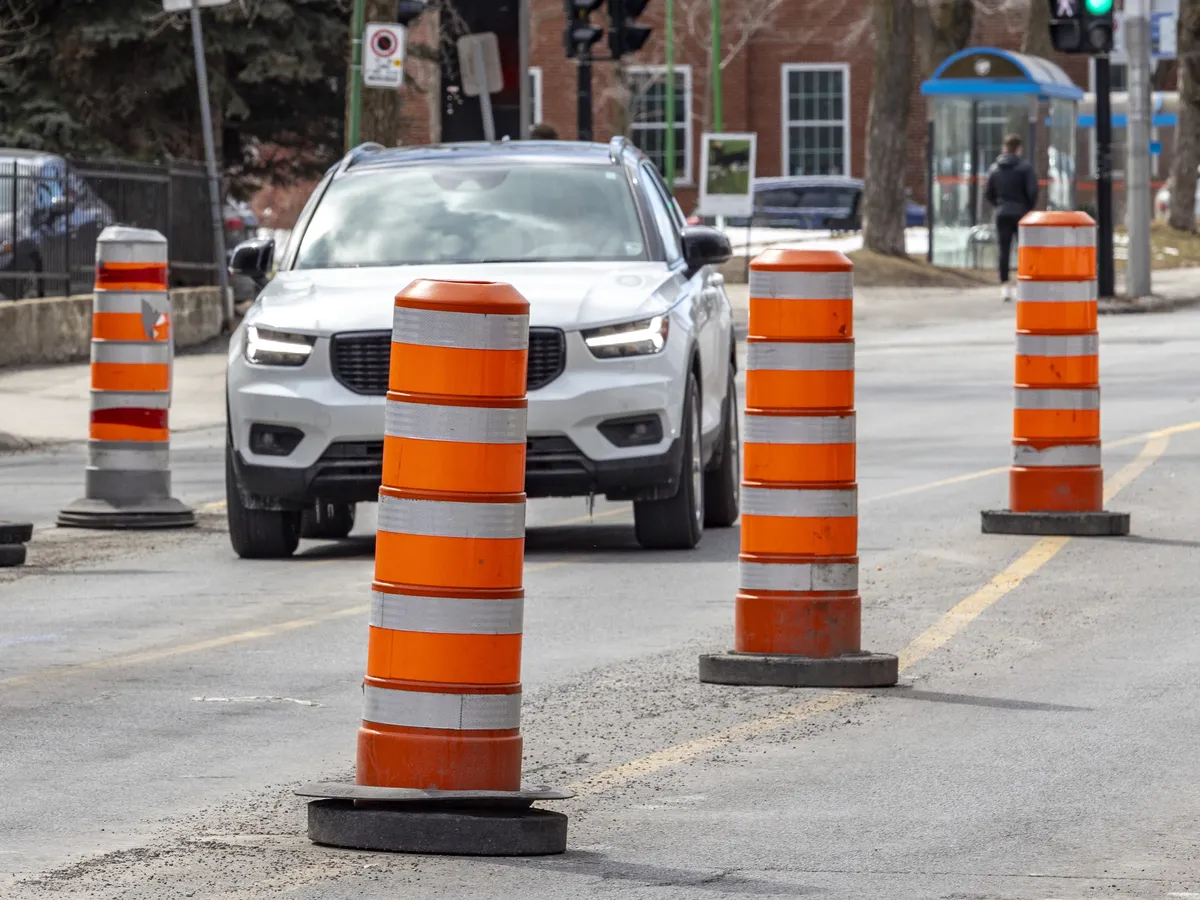
Skip to Content News Archives Economy Energy Oil & Gas Renewables Electric Vehicles Mining Commodities Agriculture Real Estate Mortgages Mortgage Rates Finance Banking Insurance Fintech Cryptocurrency Work Wealth Smart Money Wealth Management Investor Personal Finance Family Finance Retirement Taxes High Net Worth FP Comment Executive Women Puzzmo Newsletters Financial Times Business Essentials More Innovation Information Technology FP500 Podcasts Small Business Lives Told Tails Told Shopping Financial Post Store Obituaries Place a Notice Advertising Advertising With Us Advertising Solutions Postmedia Ad Manager Sponsorship Requests Classifieds Place a Classifieds ad Working Profile Settings My Subscriptions Saved Articles My Offers Newsletters Customer Service FAQ News Economy Energy Mining Real Estate Finance Work Wealth Investor FP Comment Executive Women Puzzmo Newsletters Financial Times Business Essentials HomeFP CommentOpinion: Our time-killing micro-productivity crisisModern life is full of tiny frustrations and complications that steal our attention, creativity and productivity a few minutes at a timeLast updated 1 hour ago You can save this article by registering for free here. Or sign-in if you have an account.What would you do with an extra day per year? Presumably something more productive than sitting in your car as you crawl by an empty bike lane. Photo by John Mahoney/MONTREAL GAZETTEFor years, Canadians have been warned about their country’s declining labour productivity. According to the Bank of Canada, it’s a “break-the-glass emergency” that requires immediate attention. But what about our other productivity crisis — the one of personal, rather than national, proportions?Subscribe now to read the latest news in your city and across Canada.Exclusive articles from Barbara Shecter, Joe O'Connor, Gabriel Friedman, and others.Daily content from Financial Times, the world's leading global business publication.Unlimited online access to read articles from Financial Post, National Post and 15 news sites across Canada with one account.National Post ePaper, an electronic replica of the print edition to view on any device, share and comment on.Daily puzzles, including the New York Times Crossword.Subscribe now to read the latest news in your city and across Canada.Exclusive articles from Barbara Shecter, Joe O'Connor, Gabriel Friedman and others.Daily content from Financial Times, the world's leading global business publication.Unlimited online access to read articles from Financial Post, National Post and 15 news sites across Canada with one account.National Post ePaper, an electronic replica of the print edition to view on any device, share and comment on.Daily puzzles, including the New York Times Crossword.Create an account or sign in to continue with your reading experience.Access articles from across Canada with one account.Share your thoughts and join the conversation in the comments.Enjoy additional articles per month.Get email updates from your favourite authors.Create an account or sign in to continue with your reading experience.Access articles from across Canada with one accountShare your thoughts and join the conversation in the commentsEnjoy additional articles per monthGet email updates from your favourite authorsSign In or Create an AccountorModern life has become full of tiny frustrations and complications that steal our attention and creativity a few minutes at a time, leaving us all less productive.Consider online bill payment. Originally a simple and time-saving process, it now can’t begin without a series of verification hassles such as two-factor (soon to be multi-factor!) authentication, CAPTCHA tests and other mandatory online security procedures.Get the latest headlines, breaking news and columns.By signing up you consent to receive the above newsletter from Postmedia Network Inc.A welcome email is on its way. If you don't see it, please check your junk folder.The next issue of Top Stories will soon be in your inbox.We encountered an issue signing you up. Please try againIn the postal era, you sat down once a month with a stack of bills, your cheque book and a roll of stamps and paid all your bills in one sitting. No need to click on every square with a bicycle or race upstairs to get your verification code before time expires. Today, the process gets longer and more complicated with each new security feature added.The same holds true for other modern time-killers, such as customer surveys, online alerts, useless chatbots and “customer service” phone centres that never seem to answer their phones. Putting a price on these micro-productivity losses may be more difficult than toting up Canada’s national labour productivity crisis. But the lost time is every bit as significant.Traffic congestion is one place where data on personal time costs is easier to come by.In Montreal, for example, orange traffic cones have become a satirical civic emblem, given their role in exacerbating traffic congestion. A 2023 study discovered more than 500 of these cones in one small section of the city. All were originally installed to warn drivers of road work. Yet the study found nearly a quarter had simply been abandoned and were no longer serving any purpose except obstructing drivers. A local newspaper discovered one row of orange cones had been sitting beside a road tunnel for 16 years. According to the most recent traffic cone report, forgotten cones are now just five per cent of the total — which suggests city officials can actually be shamed into doing something about inadvertent congestion.What’s far more insidious is when road congestion is deliberate government policy. In the name of Vision Zero and other efforts to make our streets “safer,” many Canadian cities have adopted policies explicitly intended to make roads less efficient. Among the most common efforts at “traffic calming” are speed bumps, road constrictions and in-road obstacles such as flexible bollards — bendy vertical hindrances placed in the roadway meant to make drivers uncomfortable by forcing them to slalom around them.Once upon a time traffic engineers planned roads so as to get drivers to their destinations as quickly and efficiently as possible. Now they deliberately place obstacles the size and shape of small children in the middle of roads to do the opposite. Making driving more difficult and awkward has become a key policy goal. And this has real micro-productivity consequences for the vast majority of commuters who drive.In 2024, for example, Toronto incorporated many traffic-calming and road-obstructing devices as part of a “Complete Streets” renovation of a 4.7-km stretch of Bloor Street West, a main city artery. The changes included separated bike lanes, signal adjustments and the removal of two lanes of cars. The goal was to increase cycling and pedestrian traffic by making cars go slower.Mission definitely accomplished. According to a city study, average car speeds on Bloor Street fell by as much as 30 per cent, making commutes longer. “When comparing the before-installation period … with interim conditions one year later,” the report calculates, “average increases in motor vehicle times range from 2.4-4.4 minutes eastbound and 1.5-3.6 minutes westbound.” Daily two-way traffic on the road averaged around 20,000 vehicles before the construction and has “remained relatively consistent” afterwards.Drivers taking Bloor Street to work presumably have no better option than the status quo and must therefore absorb the extra time spent as a productivity loss. Cycling advocates have hailed these slower car speeds as a great victory. But the changes should properly be seen as a massive overall loss in personal productivity, given that drivers vastly outnumber cyclists.According to the city’s statistics, average two-way travel times increased by a total of 5.9 minutes per day after the changes. For anyone driving back and forth on Bloor Street five days per week to get to work, that’s a shocking 24.5 hours per vehicle per year. Across the entire cohort of daily commuters, it’s a cumulative 28 years of lost time annually. And for just one small portion of one road.Even if this informal calculation is an overestimate (since some drivers may use the road at night or only travel one way) the cumulative effect is unambiguously large. Small daily inconveniences spread across large populations quickly rise to economy-shaking heights. Whether that lost time comes out of residents’ workdays or leisure hours, it’s a significant loss to the country as a whole. The longer it takes to get things done, the poorer everyone is as a result.What would you do with an extra day per year? Presumably something more productive than sitting in your car as you crawl by an empty bike lane.Peter Shawn Taylor is senior features editor of C2C Journal, where a longer version of this story first appeared. Join the Conversation This website uses cookies to personalize your content (including ads), and allows us to analyze our traffic. Read more about cookies here. By continuing to use our site, you agree to our Terms of Use and Privacy Policy.
Opinion: Our time-killing micro-productivity crisis
Modern life is full of frustrations and complications that steal our attention, creativity and productivity a few minutes at a time. Read on
1,413 words~6 min read