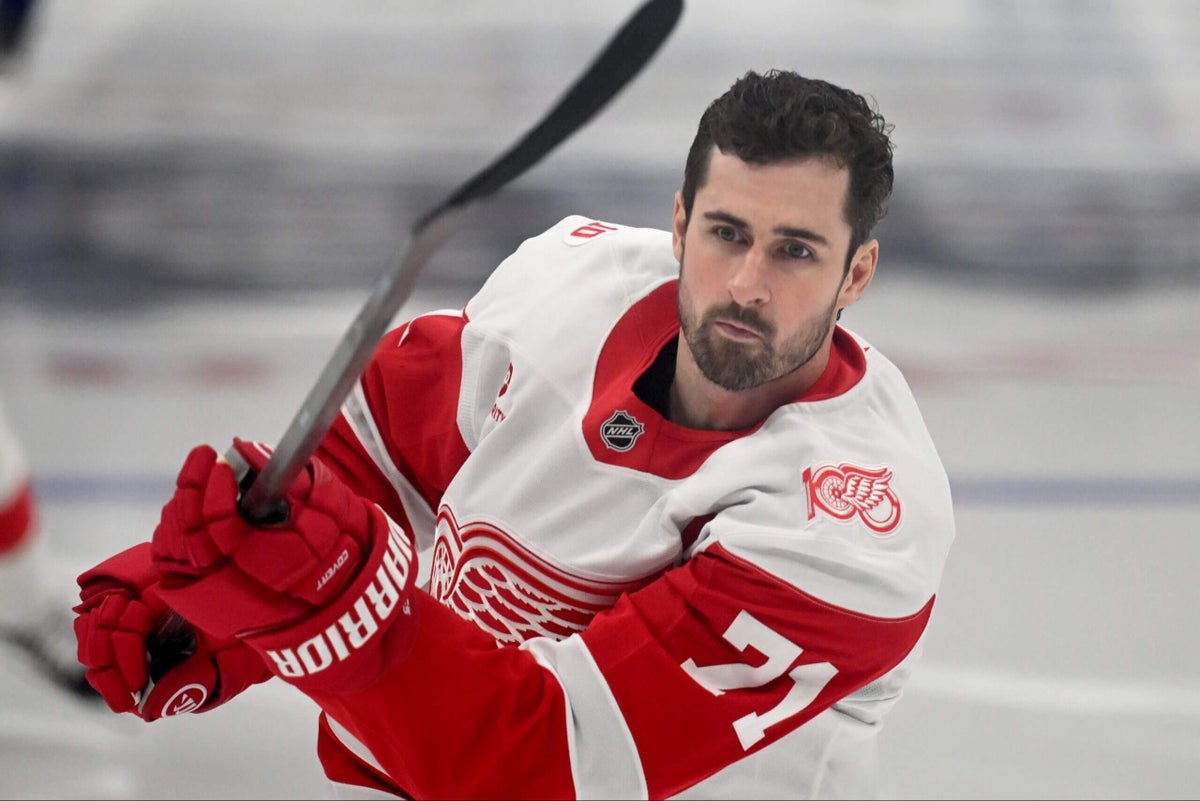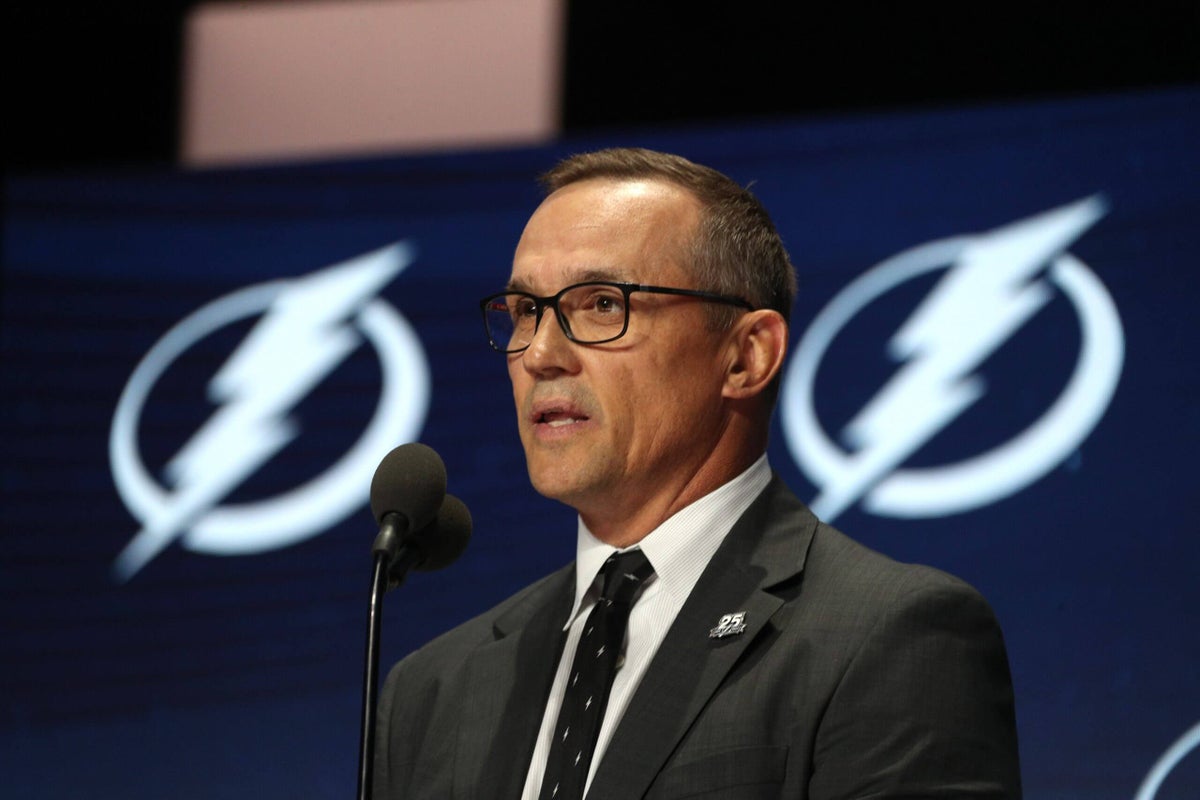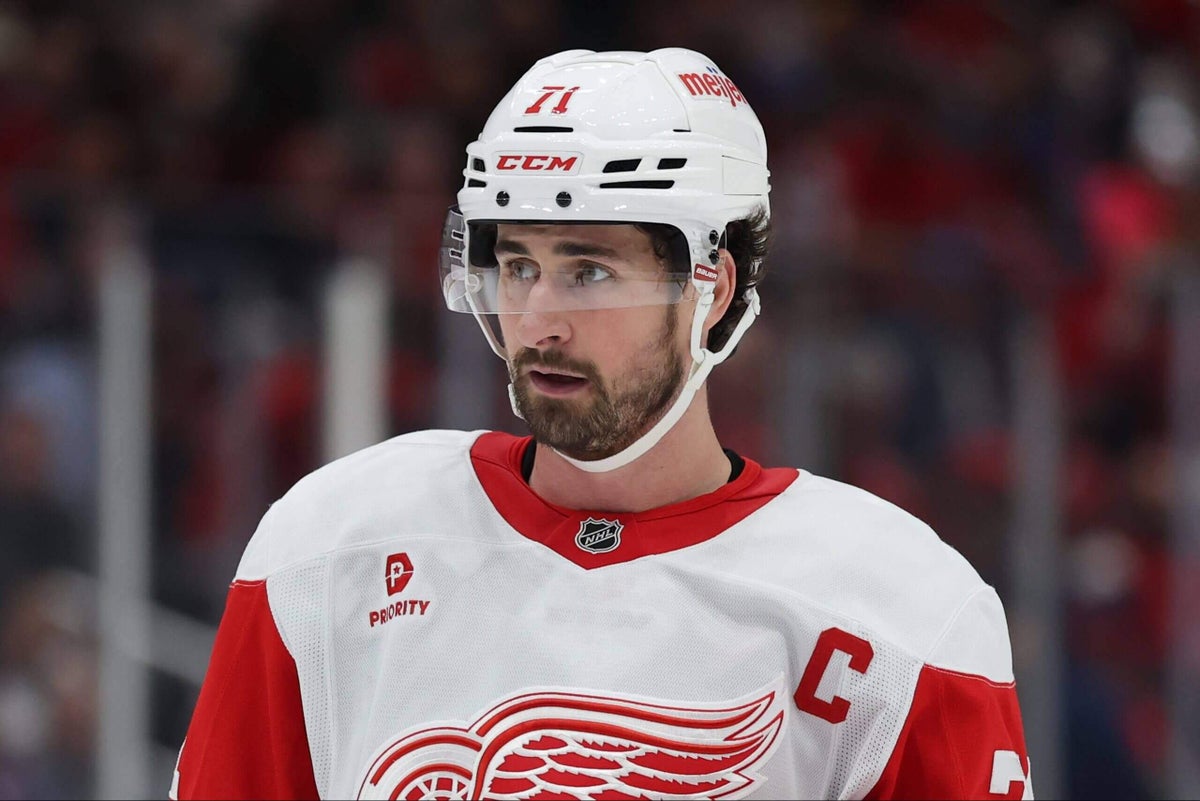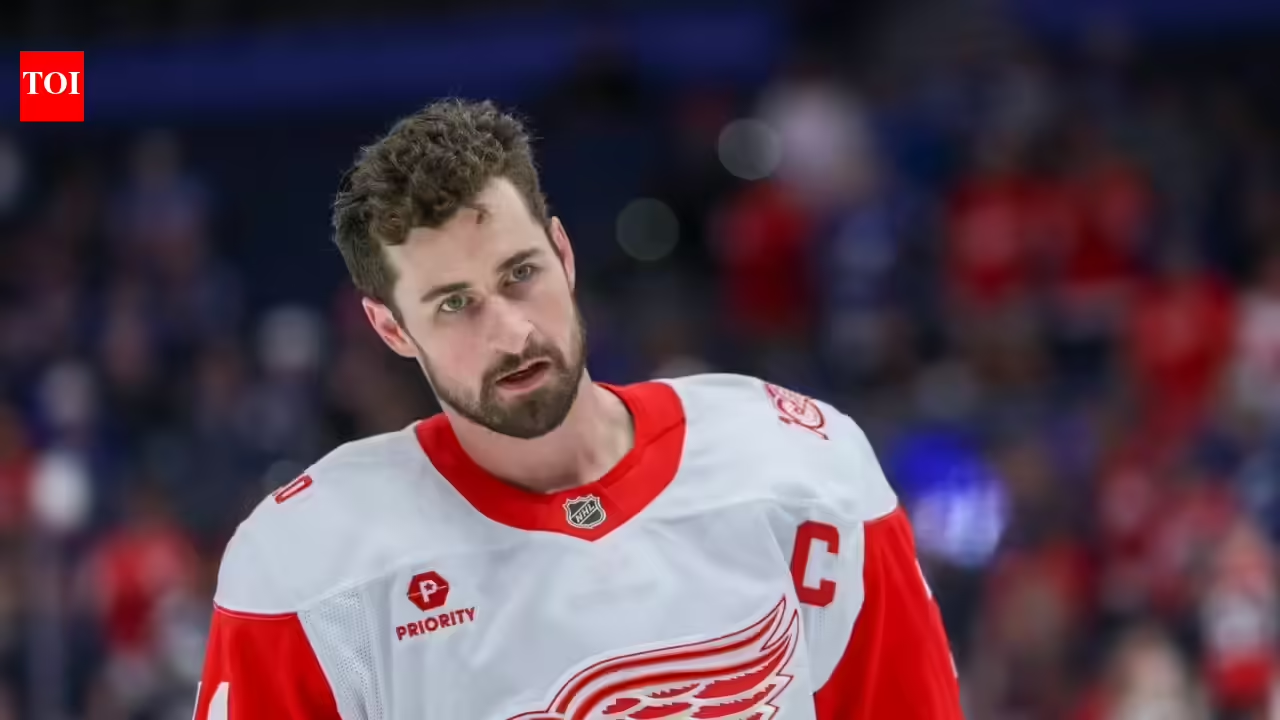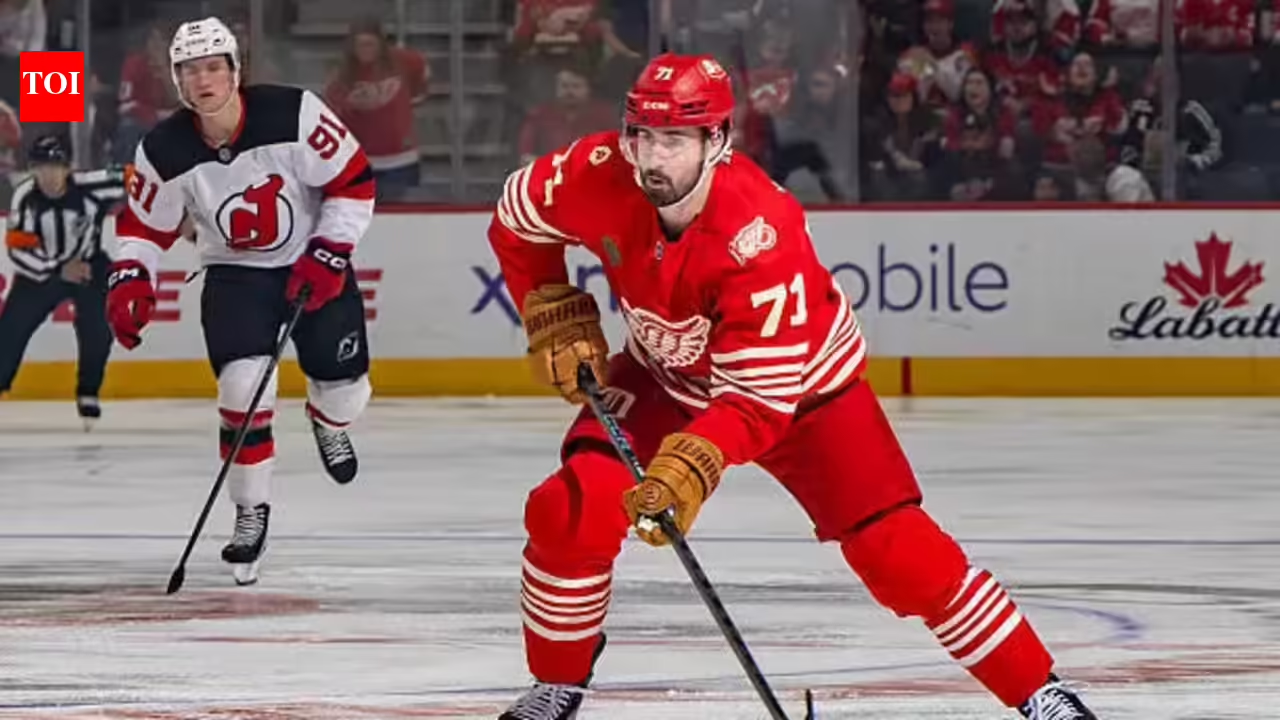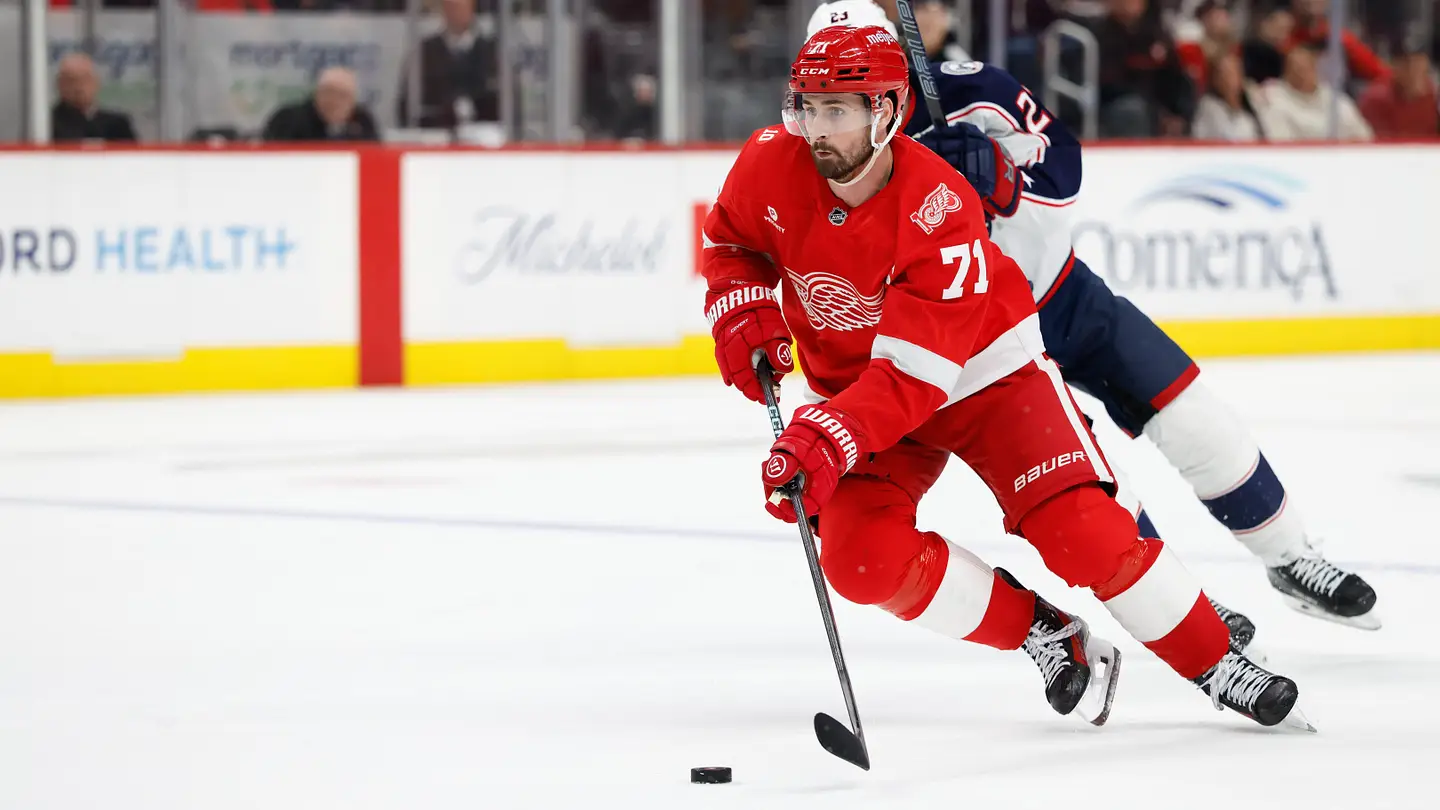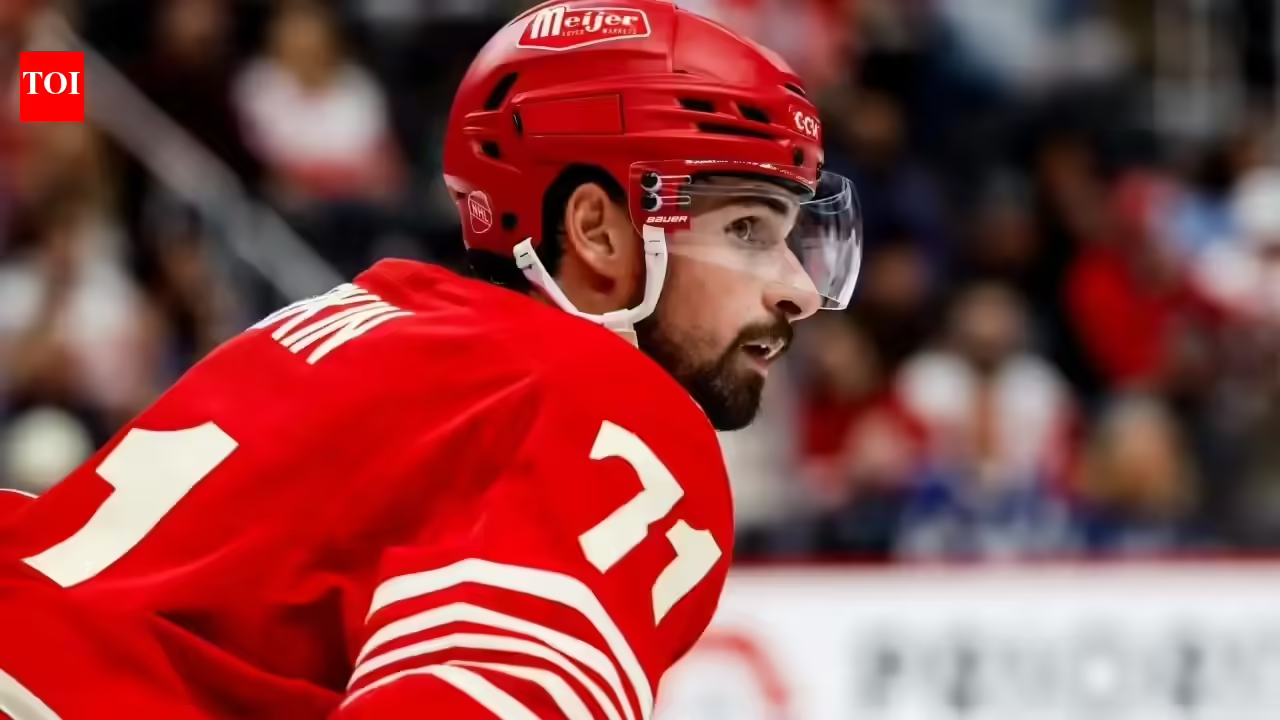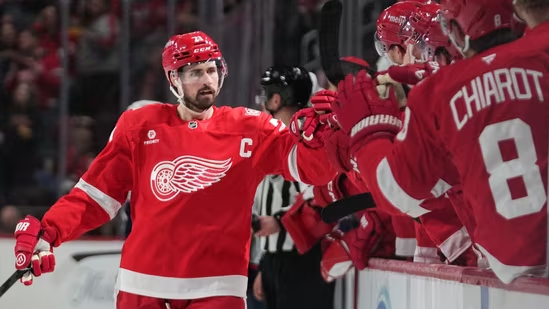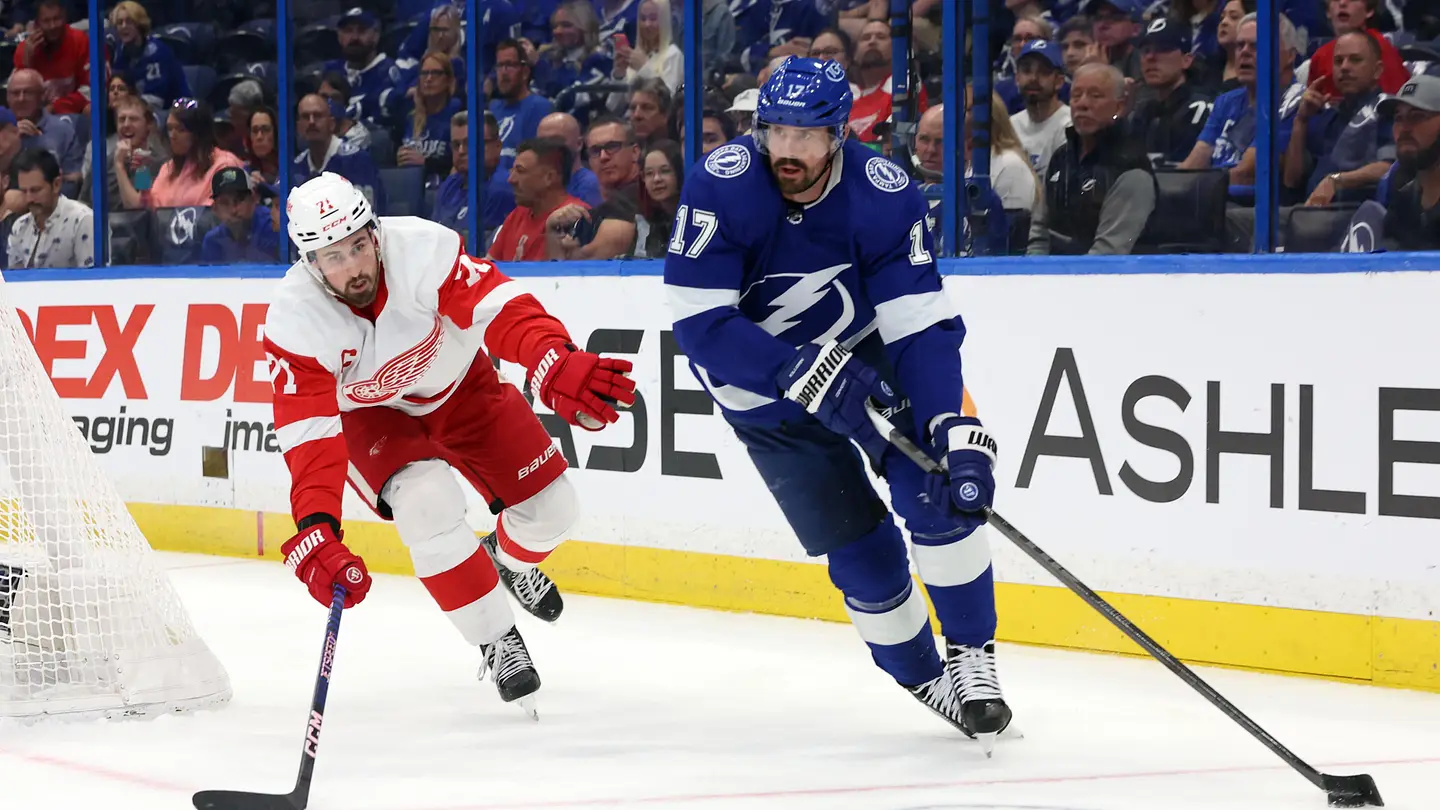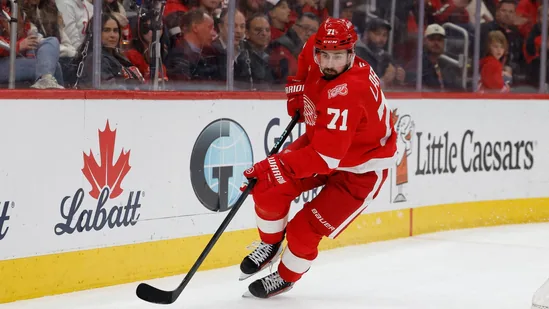
The Detroit Red Wings’ offseason will be defined by how general manager Steve Yzerman handles Dylan Larkin’s trade request. That much is clear.But what Yzerman’s approach will be remains an open — and fascinating — question.Because of Larkin’s no-trade clause, the general manager will not have carte blanche to create a market for his star center. But he still has the power to choose the broader direction he takes in the wake of this franchise-altering move, including how long to let it drag on.Today, we take a deeper look at the three realistic paths Yzerman will have to consider: maneuvering quickly to remain competitive next season, embracing a re-tool and dragging the process out.Scenario 1: Get aggressive to stay competitiveWhy it makes sense: The Red Wings are already in a 10-year playoff drought, with all the angst and frustration that comes with it. This is a proud franchise and fan base, and suffering through a decade of irrelevance has been tough to stomach for all involved. Seven years into Yzerman’s tenure, he has to show results eventually.Larkin’s trade request throws a wrench into that, leaving a hole at one of the most important spots in the lineup. But that doesn’t mean the Red Wings have to throw in the towel on next season.It’s worth noting that the Philadelphia Flyers made the playoffs last year with Christian Dvorak and Trevor Zegras as their top centers, both of whom were acquired at modest prices last offseason. The Flyers are more the exception than the rule on that front, but it can happen.If the Red Wings can assemble the right supporting cast, find the right replacement center — whether it’s long-term or a bridge — and get a big step forward from Marco Kasper, perhaps they could similarly outperform expectations.What it entails: If Yzerman thinks there’s still a path to contention in the Eastern Conference, he will need a center to replace Larkin at the top of the lineup.There’s at least a chance, albeit slim, that replacement comes directly from a Larkin trade. But with centers in short supply around the league, it’s also possible the headliner of a prospective Larkin deal has to come at a different position. If Yzerman prioritizes a “now” player in a Larkin deal, maybe that ends up being a top-four defenseman, a top-six winger or even a goalie.That may not be ideal, but the Red Wings have to enter this situation looking for the best possible return overall, not just the best possible center.If that’s the case, their center will need to come from a separate move. Maybe it’s a similar-aged target like Elias Pettersson. Maybe it’s a veteran “bridge” option like Ryan O’Reilly or Vincent Trocheck. But if Detroit wants to remain competitive in 2026-27, then it will assuredly need to add a center high in the lineup.From there, the Red Wings’ existing needs remain. They need a top-six left wing (ideally with speed, size or both), plus more scoring and toughness in the bottom six. Second-pair left D isn’t a hole per se as there are returning options in place, but an upgrade could nonetheless be helpful.While a Larkin trade in this scenario could address some of that, free agent options can help fill in the gaps, too. Bobby McMann, Mason Marchment and Viktor Arvidsson are among the notable names as top-six winger options, while A.J. Greer and Beck Malenstyn could help add toughness down the lineup.Losing Larkin would make it considerably tougher for the Red Wings to build a playoff-caliber lineup next season, but he’s not the only good center in the league or on the market. And if Yzerman can replace him — even with a slight downgrade — but upgrade elsewhere by filling those holes, then the Red Wings could go into the season with at least a chance to compete.What could go wrong: A lot.First, there’s the reality of Larkin’s no-trade clause, which gives him veto power over potential destinations. If he holds firm to a short list of true Stanley Cup contenders, those teams likely won’t be eager to part with important parts of their lineups.Second, Detroit could pursue win-now options this summer but still end up missing the playoffs — just as it has to this point. In the loaded Eastern Conference, it’s tough to gain ground. If the Red Wings spend even more assets trying to chase immediate success and fail, they could end up even worse off than where they started this summer.Scenario 2: Embrace a deeper retoolWhy it makes sense: You can argue the Red Wings’ path to success in the next few years was already narrow. And from that perspective, trading the near-30-year-old Larkin for some combination of young players, picks and prospects could be seen as a tough but necessary reset.This would require some patience on the part of Red Wings fans, players and ownership — three groups whose patience has already been tested by this rebuild. But if the end result is a longer competitive window, it’s worth exploring.What it entails: Larkin’s trade list looms large in this, but if the Red Wings are able to trade him to prospect-rich destinations like the Montreal Canadiens, Utah Mammoth or Anaheim Ducks, it becomes much easier to construct a viable trade built around futures.Utah could build a deal around one of Caleb Desnoyers, Tij Iginla or young center Barrett Hayton, and has its first-round picks for the next four years, including the 19th pick this year. Montreal has center prospect Michael Hage, winger prospect Alexander Zharovsky and all of its first-round picks to work with. The Ducks have young center Mason McTavish, prospect Roger McQueen, defenseman Stian Solberg and first-round picks from 2027-2029 to offer up.And that’s just the Larkin trade.Embracing a retool could also put some of Detroit’s other veterans in play. The Red Wings’ deadline deal for Justin Faulk, which cost them their 2026 first-round pick, now looks much worse with Larkin asking out. In a retool scenario, perhaps Detroit could try to recoup a first-round pick by trading him to another team in need of a veteran right-shot D. And what about John Gibson, who looked like one of the best goalies in the league from December through early March? There are plenty of contenders in need of a goaltender like him.The big question would surround Alex DeBrincat, the Red Wings’ leading scorer and best forward last season, who has one year left on his deal at age 28. I would argue Larkin’s departure makes extending DeBrincat even more important for Detroit. But if the Larkin saga, and its potential fallout, means DeBrincat has any reservations about extending, it could lead to tough decisions there, too.In a retool scenario, the Red Wings may be looking at another bottom-10 season, though players like DeBrincat, Moritz Seider, Simon Edvinsson and Lucas Raymond could prevent them from truly bottoming out. Still, they’d spend the year living through the growing pains of young players, hope to get lucky in the draft lottery at the end of it, then reassess next summer.What could go wrong: Again, start with Larkin’s trade list, because in order to take this path Detroit would need to be able to work with teams that actually have significant future assets to trade.Among the bona-fide Stanley Cup contenders, the Florida Panthers having the No. 9 pick in the 2026 draft is intriguing (as, of course, is young center Anton Lundell, even if he’s more of a No. 2 center than a No. 1). But among the Tampa Bay Lightning, Vegas Golden Knights and Dallas Stars — popular destinations for players, in tax-advantaged states — there are few true top prospects in those systems. Even the Carolina Hurricanes are thinner on prospects these days.But in the broader sense, what could go wrong is that the Red Wings spend the the next two or three years of Seider and Raymond’s primes the same way they spent Larkin’s: missing the playoffs and hoping for lottery luck that never comes.Serial losing in the NHL is a vicious cycle, and the Red Wings are currently the case in point.Scenario 3: Yzerman drags this outWhy it makes sense: Awkward? Absolutely. Messy? You bet. And those adjectives are probably putting it mildly.But even knowing that, Yzerman can’t trade a player like Larkin for pennies on the dollar. And with the general manager having only a short list of teams to work with so far, there is a very real chance the Red Wings won’t like the offers they get from those teams. If that’s the case, he could simply hold onto Larkin and let this drag on through the summer — and possibly into the season.This approach would put pressure on Larkin to add more teams to his list. It also would be a closely watched development around the league, as more star players seek to control their futures in this manner.Yzerman’s track record suggests he is nothing if not willful (or stubborn, depending on your perspective) and this outcome would certainly fit with that. If this is what it takes to get the most desirable trade partners into the conversation, it could be worthwhile for Detroit.What it entails: It’s hard to imagine Larkin walking this all back and playing out the five years remaining on his contract. I don’t see that happening. But Yzerman waiting this out until he gets something closer to what he wants? That I can envision.What it would look like in practice could take different forms. Do you have Larkin continue to dress and play until a suitable deal can be found? Do you tell him to stay home? Neither is a particularly good situation for either side. But the possibility can’t be ignored.Technically, you could even combine this approach with the other two scenarios, though it would of course muddy the waters of either one.What could go wrong: Unresolved drama and distractions are rarely good for a hockey team, and this situation has the potential to become a cloud over the organization. Players, within the organization and outside of it, would be watching closely, and may not like what they see.Beyond that, Detroit’s offseason plans and flexibility would be affected by not knowing the outcome. Does it limit the players the Red Wings can sign? The trades they can execute? Internal business like contract extensions? All are possible.Eventually, one would have to expect Larkin to expand his list, and Yzerman to find a workable deal. There has to be compromise somewhere. But with a full no-trade clause, Larkin doesn’t have to go anywhere he doesn’t want to. And if both sides dig their heels in, Larkin wouldn’t be the only one left in limbo.This is already a tough situation, and dragging it out could mean it gets worse before it gets better.
Dylan Larkin’s trade request forces Red Wings to choose new path. Which will they take?
Does Detroit get aggressive to stay competitive, or embrace a retool? And how long could Steve Yzerman drag this process out?
1,797 words~8 min read