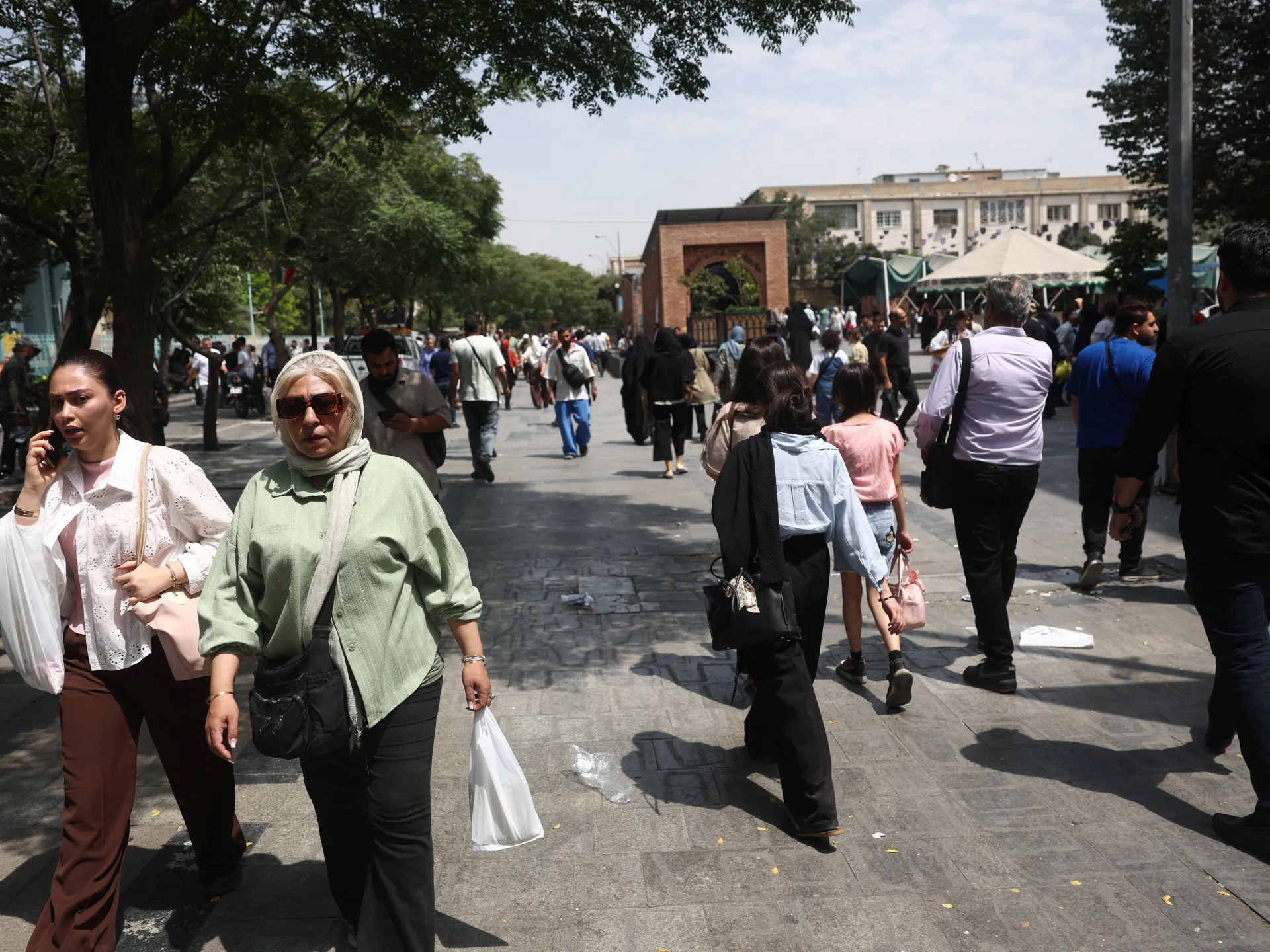
My stroll through Tehran begins at the westernmost end of Mollasadra Street, named after the Islamic philosopher and theologian Mulla Sadra, who died in 1640. After a short uphill walk, the broad pavements invite me to continue.
In many parts of Tehran, particularly where affluent northern districts meet lower-income southern neighbourhoods, public pavements have been swallowed by speculative builders who, through bribery and influence, obtain permission to encroach upon public space. Along Mollasadra Street, however, despite the newly built high-rises and towers that flank it, the pavements remain remarkably intact. Above them, sparrows and, more noticeably, swallows dart across the sky. Their presence owes much to the small man-made forests and the old gardens preserved and revived by Tehran Municipality along the northern and western sides of the street.
Older residents of Tehran remember when swallows were everywhere.
While waiting in line to buy traditional ice cream at Mansour Ice Cream, an elderly man leaning on an engraved wooden cane points towards the sky and says:
“When Tehran was a city of single-storey houses with tin roofs, and when this area was still the village of Vanak, swallows were everywhere from mid-spring until the end of summer.”