Inflation is once again gaining momentum across Europe, but wage growth is no longer keeping pace, leaving many workers with declining purchasing power as the cost of living rises faster than incomes.
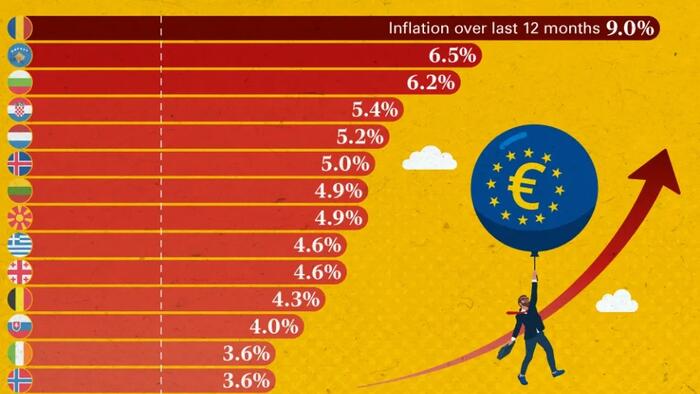
According to an analysis by Euronews based on data from Eurostat and the job platform Indeed, inflation in the European Union reached 3.2% in April 2026, its highest level since January 2024. Preliminary Eurostat estimates indicated that prices continued to rise in May, extending an upward trend that has re-emerged after a period of relative stabilization.
The renewed inflationary pressure comes only a few years after Europe experienced its most severe price shock in decades. In 2022, inflation surpassed 11% annually, largely driven by soaring energy costs following Russia’s invasion of Ukraine. While inflation later eased to below 3%, it has gradually accelerated again since the beginning of 2024.
Analysts point to the latest tensions in the Middle East as an additional factor behind the recent increase. Following the joint US-Israeli strike on Iran and Tehran’s subsequent response in late February 2026, inflation began moving steadily higher. Annual inflation in the EU stood at 2% in January, climbed to 2.8% in March, and reached 3.2% by April.