Story audio is generated using AI
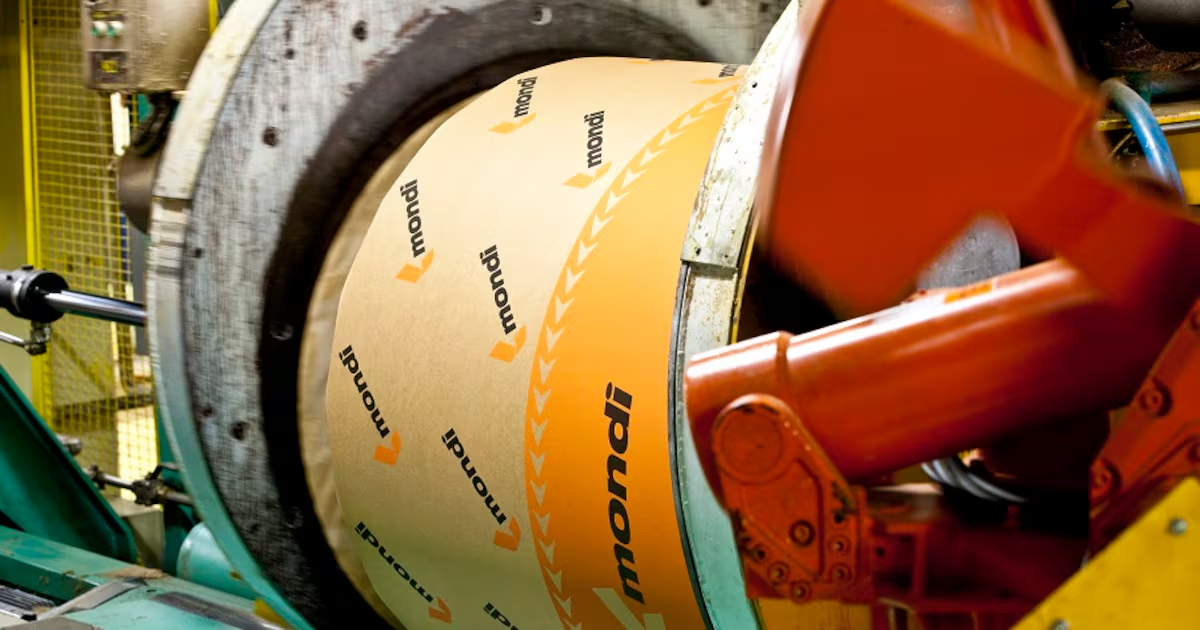
Multinational packaging and paper group Mondi is looking for trade protection from South Africa’s authorities as cheap office paper imports flood the market, eating into its revenue in the country where it was founded 60 years ago.Mondi Rotatrim, which has just undergone a brand refreshing exercise, is one of South Africa’s most recognised premium office paper brands.It is this market position that the England-headquartered Mondi is looking to get protection for via an antidumping tariff. Sappi has come out in support of Mondi’s application to South African authorities.The prospects of Mondi, worth R71bn on the JSE, to secure a hefty antidumping tariff look good after a preliminary investigation by the International Trade Administration Commission (Itac) found imports of office paper were taking market share from domestic producers.To this end, Itac is considering invoking emergency provisions of the World Trade Organisation (WTO) to effect tariffs that shield the local industry from demise.“The applicant [Mondi] alleged and submitted prima facie evidence indicating that it is experiencing serious injury in the form of a decline in sales, net profit, output, market share and employment during the period of surge from January 1 2023 to December 31 2024,” Itac said.“Furthermore, an analysis of the period of investigation from January 1 2023 to December 31 2025 indicates that the applicant has experienced serious injury in the form of declines in sales, output, net profit, market share, capacity utilisation and employment.“On this basis, the commission found that prima facie evidence was submitted to indicate that the Sacu [Southern African Customs Union] industry was experiencing serious injury that could be causally linked to the recent, sudden, serious and significant surge in imports of the subject products.”Itac will not invite interested parties to weigh in on the matter before it arrives at a final determination, a process that is likely to end with antidumping duties slapped on imports of office paper.The broader South African office supplies market rakes in billions of rand annually with paper supplies taking the lion’s share of revenue.However, like other paper-based industries, it is facing an evolving, digital landscape, eating into profits.Mondi’s argument is that persistent global overcapacity has redirected surplus production into open markets, including South Africa, and that the country’s tariff bindings and market-access commitments under the WTO framework have enabled increased imports amid heightened competitive pressure.Mondi also argued that South Africa’s commitments under WTO agreements, which saw it bound to its tariffs on printing and writing paper products at reduced ceiling levels of 20%, limited the country’s ability to adjust tariffs in response to unforeseen import surges. (Dorothy Kgosi) In a separate matter, Sappi has also asked the South African government to impose a 5% tariff on imports of newsprint, in rolls or sheets, arguing that without this protection, the local print industry runs the risk of extinction.Manufactured using virgin wood fibre, Sappi newsprint is a preferred grade among local newspaper printers. It has the required strength and runnability for demanding cold- and heat-set converting used in the manufacture of newspapers and advertising inserts. South Africa’s print industry has been battered by a migration to digital platforms and rising costs of print, which has seen numerous magazines and newspapers shut down or move online.Sappi South Africa vice-president sales and marketing Gareth Cloete said the group feels it is important to support Mondi’s application.“Sappi continues to promote and support fair trade practices and policies which will protect South Africa’s industrial base and importantly, the associated jobs throughout the value chain,” Cloete said.“We believe it is critical that private sector businesses engage with policymakers to not simply seek short-term protection but build understanding for the importance of robust trade policies that will ensure South Africa remains competitive ― both locally and abroad.”