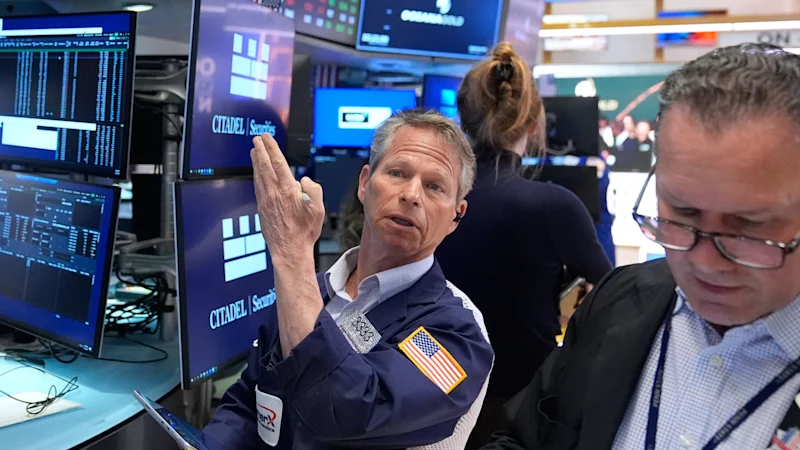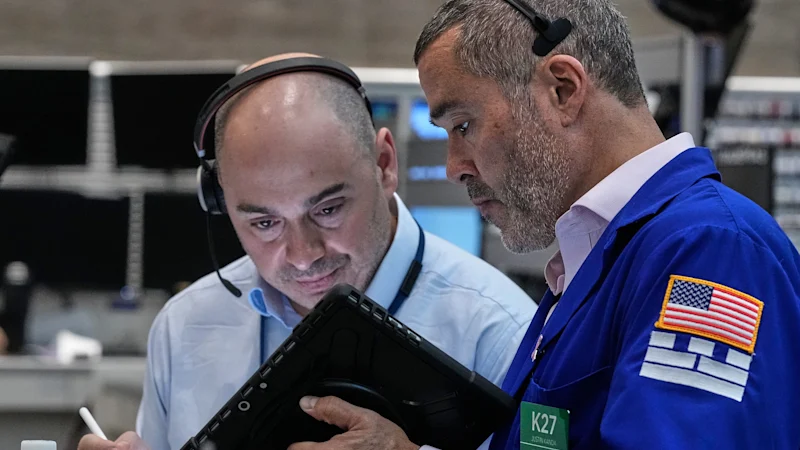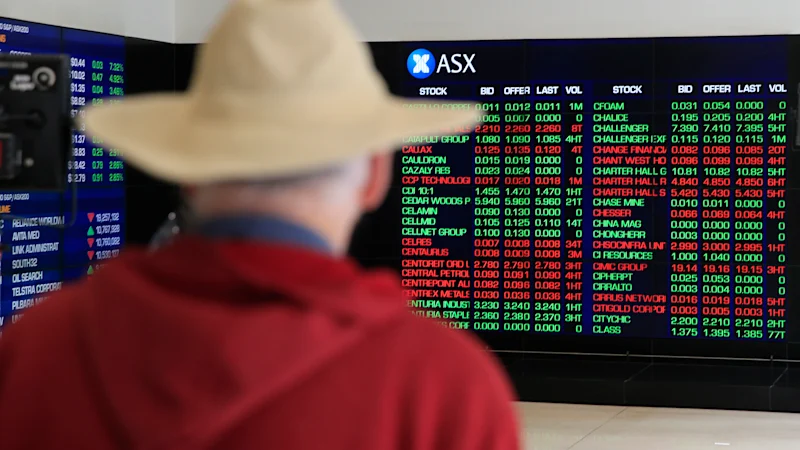
Staff writersUpdated June 9, 2026 — 11:29am,first published June 9, 2026 — 5:20amThe Australian sharemarket opened sharply lower on Tuesday, its first session this week, as local investors caught up with Wall Street’s sell-off on Friday and a flare-up of fighting between Israel and Iran, which threatened to derail efforts to end the war in the Middle East.The S&P/ASX 200 fell 93.9 points, or 1.1 per cent, to 8531.20 shortly after 11am AEST, with miners, banks and tech stocks dragging down the rest of the market. Of the 11 industry sectors, six declined. The local bourse was closed on Monday for the King’s Birthday holiday. The Australian dollar was trading at US70.44¢.While Wall Street regained some of its heavy losses from Friday, the ASX was still catching up.APThe morning’s declines on the ASX came despite a slight recovery in US stocks overnight and easing tensions in the Persian Gulf, with Israel and Iran agreeing to end their attacks on each other after US President Donald Trump appealed for de-escalation.Tech stocks were among the biggest losers in early trade after Friday’s tech sell-off on Wall Street, which had been triggered by a stronger-than-expected employment report for the US economy. The data sparked fears that the Federal Reserve will hike interest rates, raising borrowing costs for the sector at the height of its spending spree to ramp up development of AI.Local software giants Xero, WiseTech Global and Technology One fell 3 per cent, 5.6 per cent and 1.4 per cent, respectively, while AI data centre operator NextDC lost 3.1 per cent.Fears of rising interest rates in the world’s largest economy, which could help unravel the AI boom, also weighed on the big mining and financial sectors, which make up more than half of the ASX.Iron ore giants BHP, Rio Tinto and Fortescue were all lower, falling 3.1 per cent, 2.8 per cent and 3 per cent, respectively. Gold miners slumped after bullion’s year-to-date gains were erased on Friday amid fears the Fed will raise borrowing costs - a headwind for precious metals. While gold prices were steady this morning near $US4320 an ounce, producers fell sharply. Northern Star Resources slumped 4.9 per cent, Evolution Mining plunged 7.4 per cent and Newmont lost 6.1 per cent.The big four banks were also downs in early trade. CBA, the country’s biggest lender, fell 1.1 per cent. Westpac dropped 2.1 per cent. National Australia Bank lost 2.3 per cent and ANZ Bank shed 1.9 per cent.Meanwhile, defensive consumer staples bucked the trend and advanced, with supermarket chain Woolworths up 1.2 per cent and its rival Coles rising 2 per cent.Energy stocks ticked higher as oil prices steadied following Israel and Iran’s de-escalation. Brent held near $US94 a barrel after closing slightly higher on Monday, while West Texas Intermediate was above $US91. A fragile ceasefire remains in place, but the Strait of Hormuz is still effectively closed by a double blockade maintained by Tehran and Washington, choking off supplies of crude, fuels and natural gas to global customers.Local oil and gas giant Woodside rose 1.1 per cent, Santos gained 2 per cent, while refiners Ampol and Viva Energy added 1 per cent and 0.7 per cent, respectively.Outdoor media company oOh!media paused trading after reports of a buyout offer from Bain Capital on Monday night. Bain has officially lobbed a non-binding $663 million offer for the ASX-listed media company, the Australian Financial Review’s Street Talk column reported. The bid, which oOh!media subsequently confirmed, follows two knocked-back offers from Pacific Equity Partners and I Squared last month.Late on Monday, Trump said the US will declare “total victory” in its war with Iran over the next two weeks, according to comments in a virtual campaign rally for South Carolina Republicans. He said that talks are underway with Tehran, and reiterated that oil prices will fall once the conflict is over.On Wall Street overnight, the S&P 500 added 0.3 per cent, coming off a drop of 2.6 per cent from Friday that was its worst since October. The Dow Jones Industrial Average dipped 80 points, or 0.2 per cent, and the Nasdaq composite climbed 0.9 per cent.OpenAI, the maker of ChatGPT, filed confidentially for an IPO, joining artificial intelligence rivals in tapping public markets to fund ambitious growth plans.The Sam Altman-led firm submitted paperwork for an initial public offering with the US Securities and Exchange Commission, the company said on Monday. OpenAI is working with Goldman Sachs and Morgan Stanley on a potential listing as soon as this northern hemisphere autumn, people familiar with the matter have said.Some of the best Wall Street performers were companies that sell computer chips, memory and other products fuelling the AI boom. They had plunged Friday amid worries that their prices had shot too high due to AI euphoria. Such worries dragged South Korea’s Kospi index down 8.3 per cent early Monday, pummelling tech stocks there like Samsung Electronics and SK Hynix.But prices recovered as trading moved westward through Europe to New York. Micron Technology rose 9.9 per cent after sliding 13.3 per cent on Friday for the largest loss in the S&P 500. That resumed a run where its stock has more than tripled so far in 2026.Marvell Technology climbed 9.6 per cent in its first trading after S&P Dow Jones Indices said the semiconductor company’s stock has grown enough to join its widely followed S&P 500 index. Marvell’s stock has also more than tripled so far this year, aided by a 32.5 per cent surge in one day last week. That was its best day since it began trading in 2000, and it came after Nvidia’s CEO, Jensen Huang, suggested at a conference in Taiwan that Marvell could be “the next trillion-dollar company.”That such a comment could add billions of dollars to a company’s value in an instant suggests to critics that AI stocks are running too hot. Chip and memory companies are indeed reaping big growth in revenue and profit because of the AI boom, but their stock prices have been soaring at astounding speeds. A widely followed index of semiconductor stocks surged nearly 85 per cent for the year so far through Thursday, for example.Now, the question is whether Friday’s drop was the start of a downturn or just a pause that helps shake out excessive optimism.Michael Wilson, a strategist at Morgan Stanley, is relatively optimistic. “Markets rarely move in a straight line at the pace seen since the March lows,” he wrote in a report. “In our view, a correction was inevitable and ultimately healthy if this bull market is going to extend into year-end” and pull the S&P 500 to his baseline target of 8,000. That would be an 8.3 per cent rise from Friday’s close.Corning climbed 5.6 per cent after Amazon announced a multibillion dollar deal where Corning will produce optical fibre, cable and other products for its data centres across the country.High oil prices caused by the war with Iran have already sent inflation higher around the world, which increases not only bills for households but also yields in the bond market. High yields recently have threatened to slow economies and undercut prices for stocks and other investments.On Monday, US Treasury yields ticked a bit higher following their jump on Friday. The yield on the 10-year Treasury edged up to 4.56 per cent from 4.55 per cent.In other international markets, indexes edged lower Europe following sharp losses in Asia. Japan’s Nikkei 225 dropped 3.8 per cent, while stocks fell 1.7 per cent in Shanghai and 1.2 per cent in Hong Kong.with AP, BloombergThe Market Recap newsletter is a wrap of the day’s trading. Get it each weekday afternoon.From our partners
ASX falls as tech stocks, banks and miners slump; OpenAI files for IPO
The Australian sharemarket opened sharply lower on Tuesday as local investors caught up with Wall Street’s sell-off on Friday and a flare-up of fighting between Israel and Iran.
1,273 words~6 min read