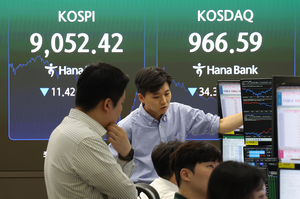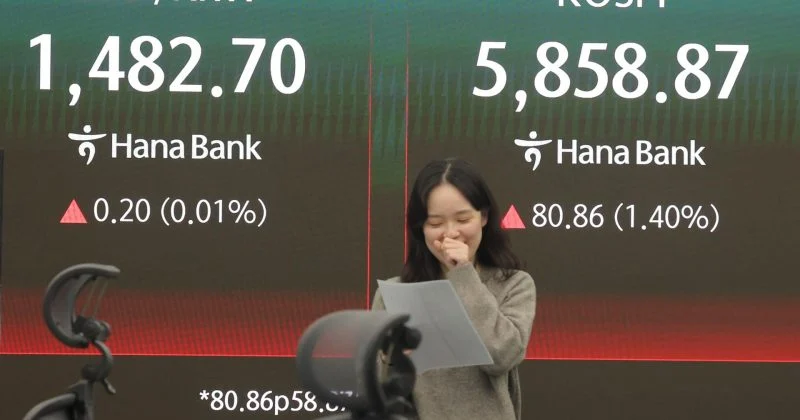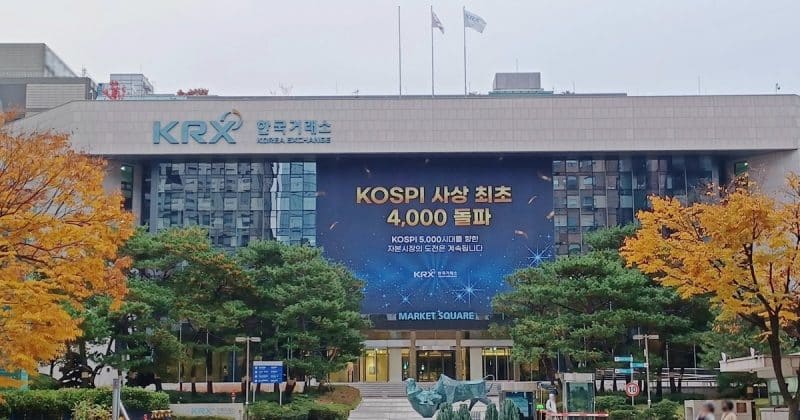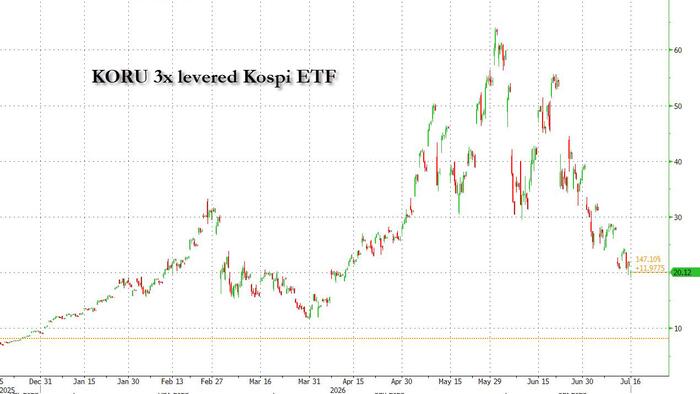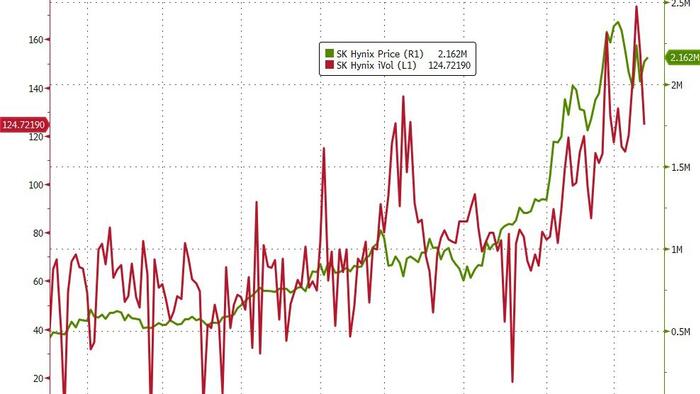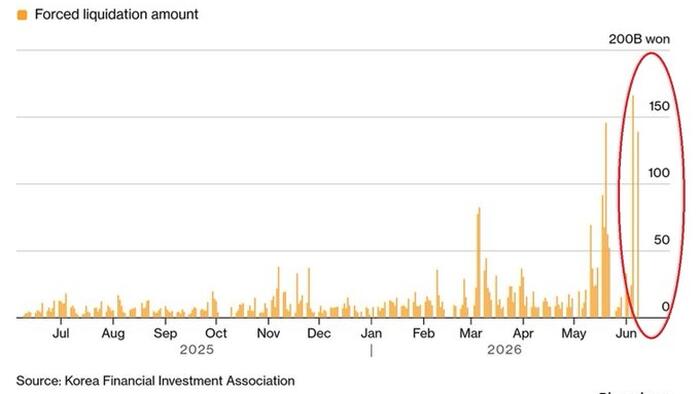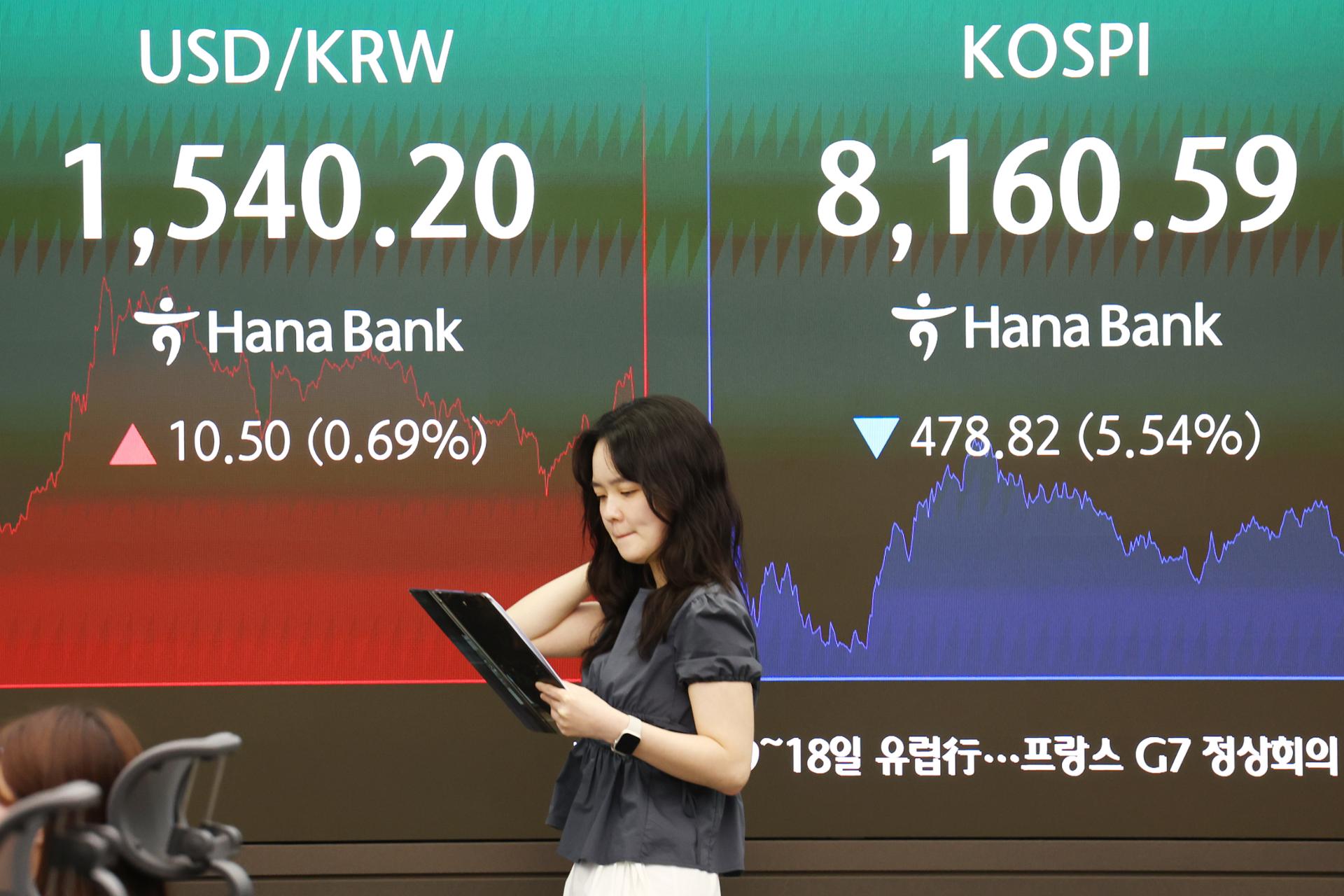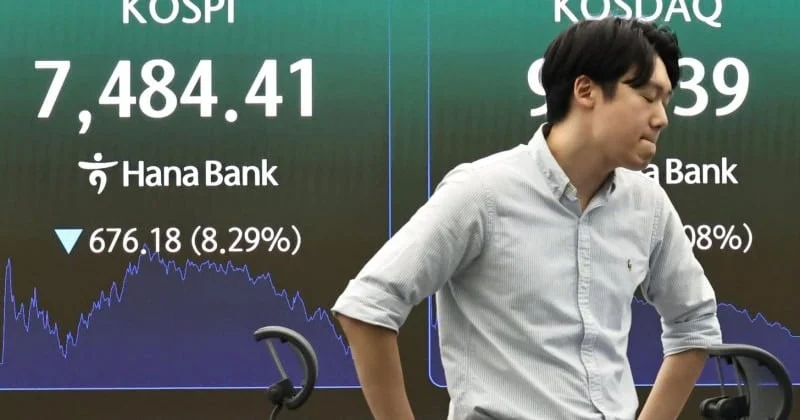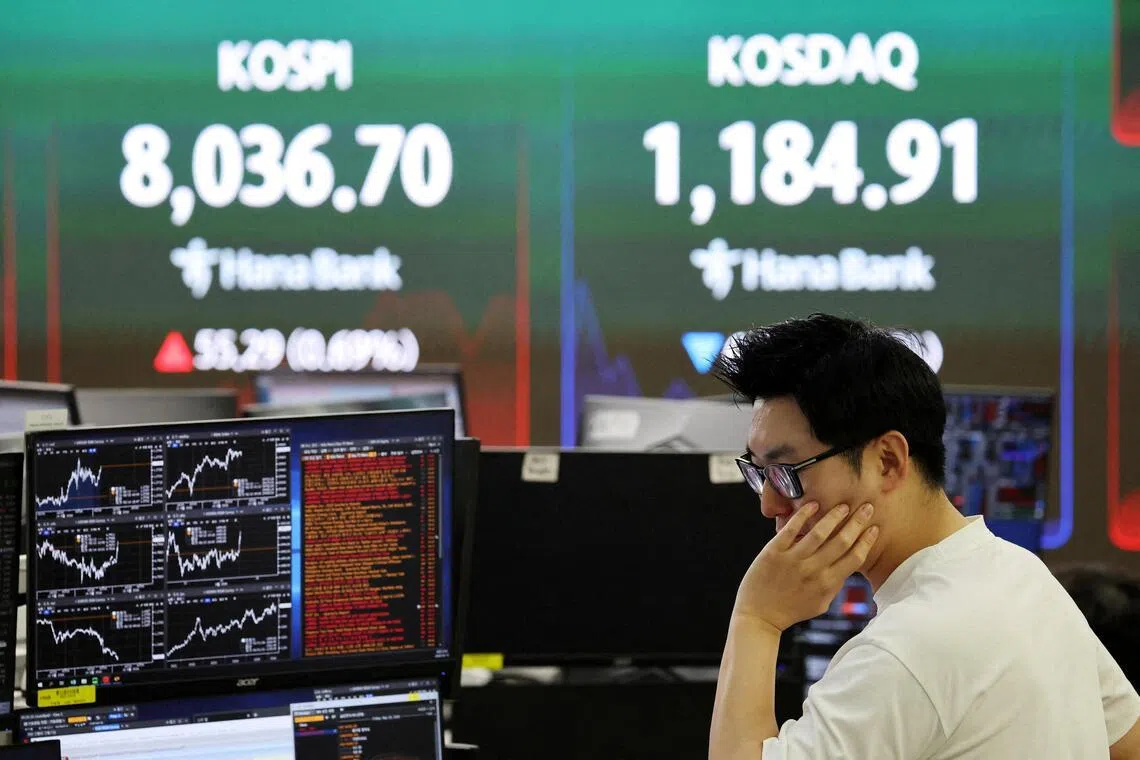
SEOUL - Seoul resident Laura Byun has long preferred US mutual funds over South Korean shares, but the Kospi’s blistering rally changed that and her risk tolerance for debt.Feeling left out by the surge that has propelled the Korean benchmark index to the world’s best performer, Byun tapped a short-term bank overdraft of about 15 million won (S$12,660) to buy a leveraged Samsung Electronics fund, delivering gains of about 20 per cent. Then came the reversal. By the morning of June 8, her position had swung to -17 per cent, she said, after the Kospi plunged by over 8 per cent in the wake of a tech sell-off in US markets.The leveraged ETF tied to the chip giant tumbled as growing bets on a Federal Reserve rate hike snapped Wall Street’s nine-week winning run, wiping out her gains and dragging her into losses. On June 8, South Korean stocks had their worst day in three months.Her experience captures a growing risk in South Korea’s markets, exposing how borrowed bets by a swelling wave of retail investors, known as “ants”, are chasing a runaway stock rally and rattling policymakers wary of sharper volatility and a painful correction.A Bank of Korea (BOK) report on June 4 showed leveraged investment into equities by retail investors topped a record 60 trillion won (S$50.6 billion) as at the end of May, as the Kospi more than doubled in just six months to become the world’s top performer.Powering part of that debt push was the May 27 introduction of South Korea’s first-ever single-stock leveraged ETFs linked to chipmakers Samsung Electronics and SK Hynix - whose profits have soared with the AI boom - that offered investors double the daily return of the stocks.Demand was so strong that the Korea Financial Investment Association’s (KOFIA) website crashed on the first day retail investors were required to complete mandatory training to trade the products, according to applicants such as Byun. More than 350,000 people have since completed the course, KOFIA said.But leverage cuts both ways. The ETFs double losses as well as gains, within South Korea’s cap of twice a stock’s daily move - a feature regulators say many latecomers may underestimate.“Investors should be cautious of amplified market volatility during potential downturns, particularly if late comers to the market increasingly rely on leverage to chase stock surges out of FOMO (Fear Of Missing Out),” the BOK said, adding that the margin loans are concentrated on chip shares.Finance Minister Koo Yun-cheol last week also flagged concerns about rising leveraged stock investments, pledging to manage risks tied to “excessive herd-like behaviour.”Samsung and SK Hynix now make up more than half of the index in terms of market capitalisation and intraday swings of 5 per cent to 10 per cent on the Kospi have become increasingly common.The leverage boom is part of a broader push to draw Korean investors back from US markets, where many have gravitated since the pandemic.The effort has worked - perhaps too well, and ants have been voracious on their return home.Margin-based equity investment jumped 72.5 per cent in 2025 alone, far outpacing 36.3 per cent growth in the United States, 36 per cent in China and 21 per cent in Japan, BOK data show. Daily trading volume hit a record 106.2 trillion won in May, nearly 60 per cent above the averages from January through April, and about four times that of the 2025 average.“I used to trade US equities, but I bought SK Hynix just before the war broke out,” said a 40-year-old housewife in Seoul, who asked not to be named.“Everyone is talking about the leveraged ETFs. SK Hynix had run up too high to buy outright, so I bought the double-leveraged ETF instead. But the volatility is extreme, and it makes me anxious. I’ll probably sell soon.” REUTERS
Chip rout puts South Korea's 'ant' investors to the test as margin debt soars
Leveraged stock investment by retail investors topped a record 60 trillion won (S$50.6 billion) as at end-May. Read more at straitstimes.com. Read more at straitstimes.com.
634 words~3 min read