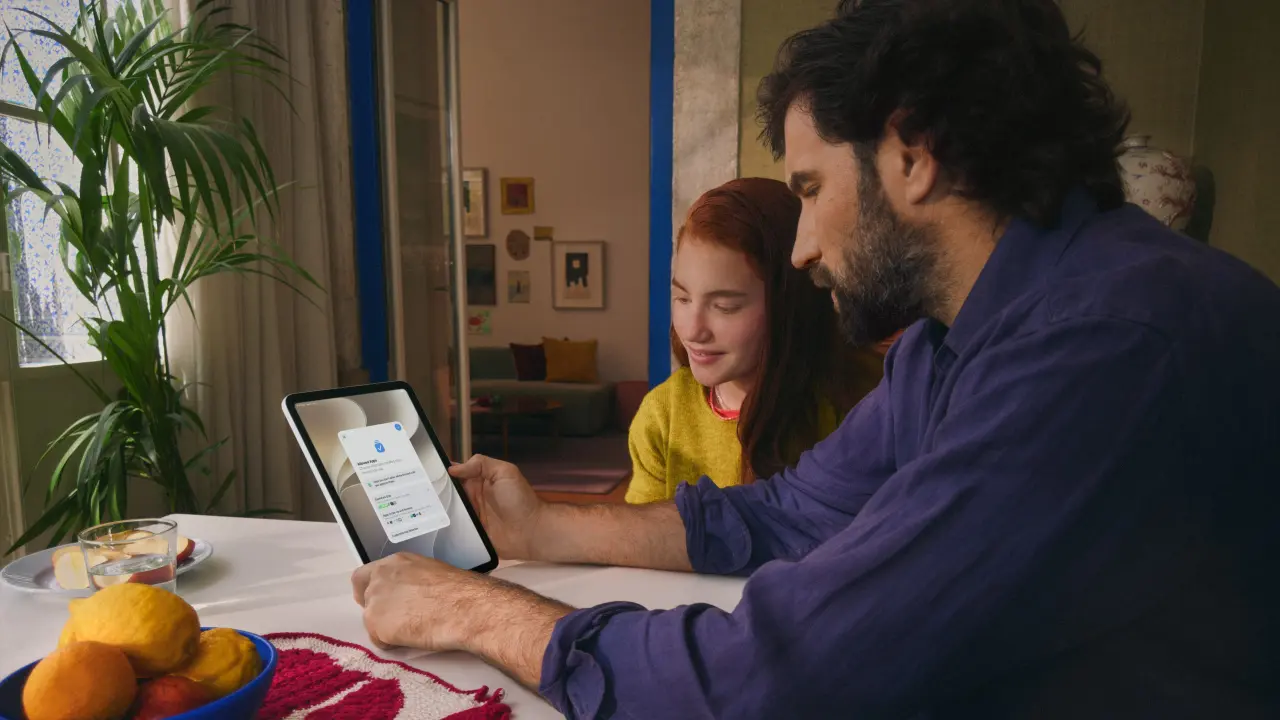
Photo credit: apple.comApple has built its biggest expansion of parental controls in years around a single idea: hand a child more of the digital world a little at a time, with a parent holding the gate. Previewed at the WWDC 2026 keynote on 8 June and arriving this autumn with iOS 27, iPadOS 27 and macOS 27, the new suite lets parents approve the websites their children visit, cap app use by category, vet new contacts before a conversation starts, and read their family’s screen habits from a rebuilt dashboard. It is a serious set of tools. Read a second way, it is also one of the shrewdest moves Apple can make to keep a family inside its garden.Key TakeawaysApple previewed a major expansion of its child-safety and parental-control tools at WWDC 2026 on 8 June, arriving this autumn with iOS 27, iPadOS 27 and macOS 27.A new Ask to Browse feature has children request a parent’s approval before opening a new website in Safari, and it is on by default for children under 13.Time Allowances let parents cap usage by category - entertainment, games and social media - with daily schedules for when apps can be opened.Communication Safety, already on by default for users under 18, expands from blurring nudity to stepping in on gore and violent content in shared images and videos.Parents can require approval before a child connects with a new contact over Messages, FaceTime and Phone.Apple is adapting the American Academy of Pediatrics’ Family Media Plan into a guide for families and has opened a resource hub for parents.What did Apple actually announce? Apple previewed a single connected suite rather than one headline feature. The pieces fit together around graduated access: a child starts with a small, safe set of permissions, and a parent widens them as trust grows. Setting up a child’s device begins with a guided assistant that switches on age-appropriate protections from the first boot - adult-website restrictions, age-based content filtering, App Store limits - and lets a parent start with a handful of essential apps and add more over time. Take the stabilisers off one at a time, in other words, rather than all at once. Apple’s vice president of Health and Fitness, Sumbul Desai, M.D., framed the approach as grounded in “the belief that every child is unique,” which is the company’s way of saying these are dials, not switches.Here is the suite at a glance.FeatureWhat it doesAsk to BrowseChildren request a parent’s approval before opening a new website in Safari; on by default for under-13sTime AllowancesDaily limits set by app category - entertainment, games and social mediaContact ApprovalsParents approve new contacts before a child connects on Messages, FaceTime or PhoneExpanded Communication SafetySteps in on gore and violent content, alongside the existing nudity blurring; on by default under 18Redesigned Screen TimeA clearer usage overview and faster controlsSimpler Child Account setupA setup assistant begins with essential apps and adds more over timeHow does Ask to Browse work? Ask to Browse has a child request a parent’s permission before opening a website they have not visited before in Safari. It borrows the model Apple already uses for app downloads with Ask to Buy, and extends it to the open web: the child taps through, the request lands on the parent’s device, and the parent reviews the site and allows or denies it from wherever they are. The feature works the same across iPhone, iPad and Mac, so the rule holds whichever device a child picks up. The detail the early write-ups missed matters most to parents of younger children - Ask to Browse is switched on by default for under-13s, so the gate stands closed until a parent opens it, rather than waiting to be found in a settings menu. It is the web equivalent of a fenced garden with a latch a child has to ask you to lift.What changes for who children can talk to? Parents gain a say over who their children can reach before the first message is sent. A parent can require approval whenever a child tries to add a new contact across Messages, FaceTime and Phone, and can seed the circle with trusted people - grandparents, relatives, close family - so a new name now waits on a parent’s yes. The point is to let a child’s world of contacts grow outward by degrees rather than all at once.The graver half of this is the expansion of Communication Safety, and it carries no metaphor. The feature already blurs nudity when it detects it in Messages and FaceTime, and stays on by default for everyone under 18. This year it widens from explicit imagery to violent and graphic content, stepping in when gore is detected in shared images and videos. The detection runs on the device itself, so the analysis happens on the child’s phone rather than on Apple’s servers. It is a meaningful widening of scope at a moment when a single prompt can manufacture a disturbing image in seconds.Screen Time and Time Allowances get a rebuildScreen Time has been redesigned around a clearer at-a-glance view. A parent now sees average daily use and the apps a child reaches for most, and can make changes quickly rather than digging through nested menus. Access can be shut during meals, school hours or family time, and a parent can grant a temporary extension when a child needs longer to finish a task.The new lever is Time Allowances, which sets daily limits by category - entertainment, games and social media - rather than app by app. Apple says the recommended figures come from expert research and shift as the science and a family’s own feedback evolve, and a parent can tune them to taste. It is closer to tending a garden than policing it: set the conditions, then adjust as the season changes.Why is Apple doing this now? Because child safety has become a regulatory and competitive battleground rather than a niche setting. Governments across several markets are debating stronger age-verification rules and tighter social-media safeguards, while parents worry about screen habits, the content their children meet and the strangers who can reach them. Apple’s answer spreads across apps, web access, communication and time rather than landing as a single feature, and the company says it built the tools with child-development experts, health specialists and online-safety researchers. It is adapting the American Academy of Pediatrics’ Family Media Plan into a guide for Apple households and has opened a dedicated resource hub for parents. Developers get new frameworks too, with tools to flag inappropriate content, support parental approval for new contacts, and deliver age-appropriate experiences while working from an age range rather than a child’s exact birth date.India sharpens the point. The country has written this exact anxiety into law: the Digital Personal Data Protection Act and its 2025 rules require verifiable parental consent before any platform processes the data of someone under 18, and they ban tracking, profiling and targeted advertising aimed at children, with penalties reaching Rs 200 crore - a stricter line than the GDPR’s or America’s COPPA. Apple did not design these controls for India. They arrive, though, in a market whose own regulator is pushing every platform towards precisely this posture, which turns the case for a tightly governed device from a marketing line into something nearer compliance comfort.Could safety become a reason to buy an iPhone? Quite possibly, and that is the quieter strategy beneath the safety language. Abhilash Kumar, an industry analyst at Smart Analytics Global (SAG), argued that stronger parental controls could lift “user stickiness within the Apple ecosystem,” because parents who feel they have real visibility and control tend to stay put. Over time, he added, that pull could shape the purchase itself - tilting a family weighing an affordable Android handset against an iPhone towards the iPhone as the “safer and more controlled” choice, and for households that can stretch to the premium, towards Apple by default.That is the walled garden turned inside out. For years Apple’s high fences have drawn the complaint that they trap a customer; aimed at an anxious parent, the same fences read as the selling point. A device that makes it straightforward to see what a child sees, slow down who reaches them and shut the gate by default is a device a worried parent keeps buying - for the next child, and the next tablet, and the laptop after that. Safety has become a place where phone makers compete, and Apple has turned its tightest constraint into its pitch. In India, where a vast young population is coming online under a law that already demands this much, that pitch lands on the readiest audience Apple could ask for.Frequently Asked QuestionsWhat are the biggest child safety features Apple announced? The main additions are Ask to Browse website approvals, category-based Time Allowances, parental approval for new contacts, an expanded Communication Safety that intervenes on violent and graphic content, and a redesigned Screen Time, alongside a simpler child-account setup.How does Ask to Browse work? A child requests a parent’s approval before opening a website they have not visited before in Safari, and the parent reviews and allows or denies it from their own device. It works across iPhone, iPad and Mac, and is on by default for children under 13.Can parents control who their children communicate with? Yes. A parent can require approval before a child connects with a new contact through Messages, FaceTime and Phone, and can pre-approve trusted people such as grandparents and relatives.What is changing in Communication Safety? Communication Safety already blurs nudity in Messages and FaceTime and stays on by default for users under 18. It now also steps in on gore and violent content detected in shared images and videos, with the analysis running on the device.How is the new Screen Time different? The redesigned Screen Time gives a clearer view of average use and most-used apps, faster controls, daily schedules for when apps can be opened, and Time Allowances that cap usage across categories such as entertainment, games and social media.Which devices get the features, and when? The new tools roll out across iPhone, iPad and Mac through iOS 27, iPadOS 27 and macOS 27. Apple says they arrive this autumn, with the wider release expected around September.end of article
Apple Expands Child Safety Tools Across iPhone, iPad and Mac With iOS 27
Find latest technology news, gadgets reviews & ratings. Popular & latest gadgets specifications, features, prices, photos & videos. Trending mobile phone comparisons, slideshows, how tos and videos for latest mobile phones, tablets, technology news updates.
1,718 words~8 min read