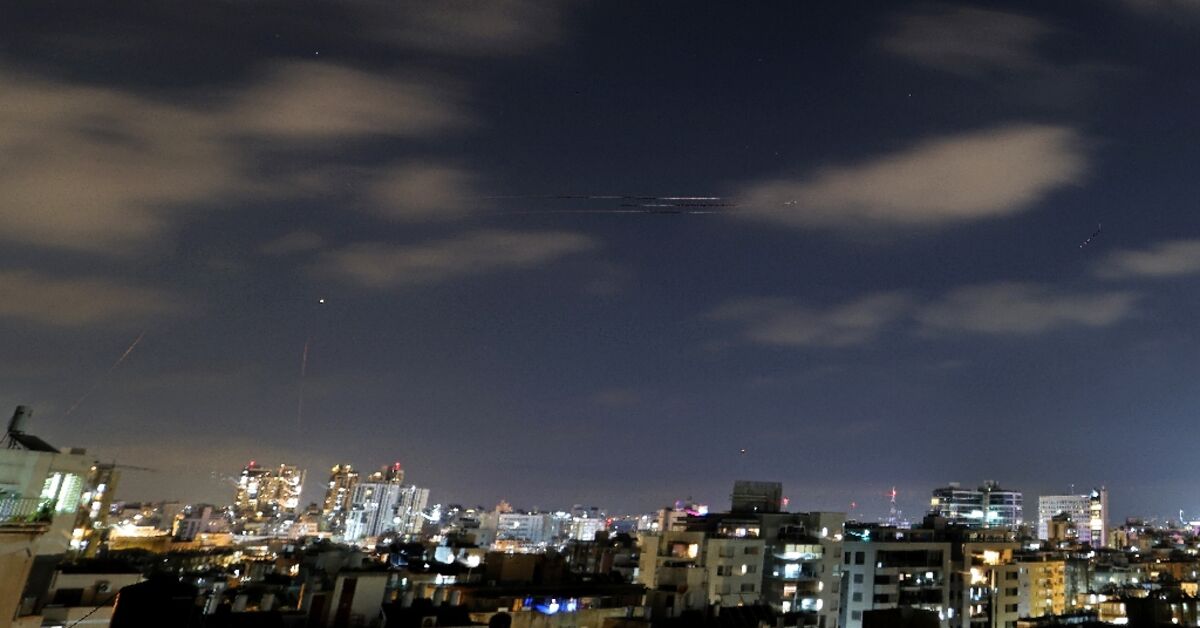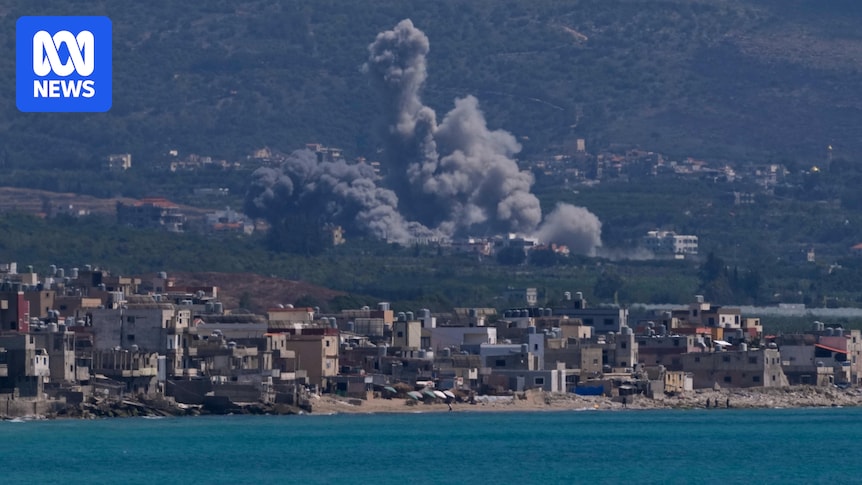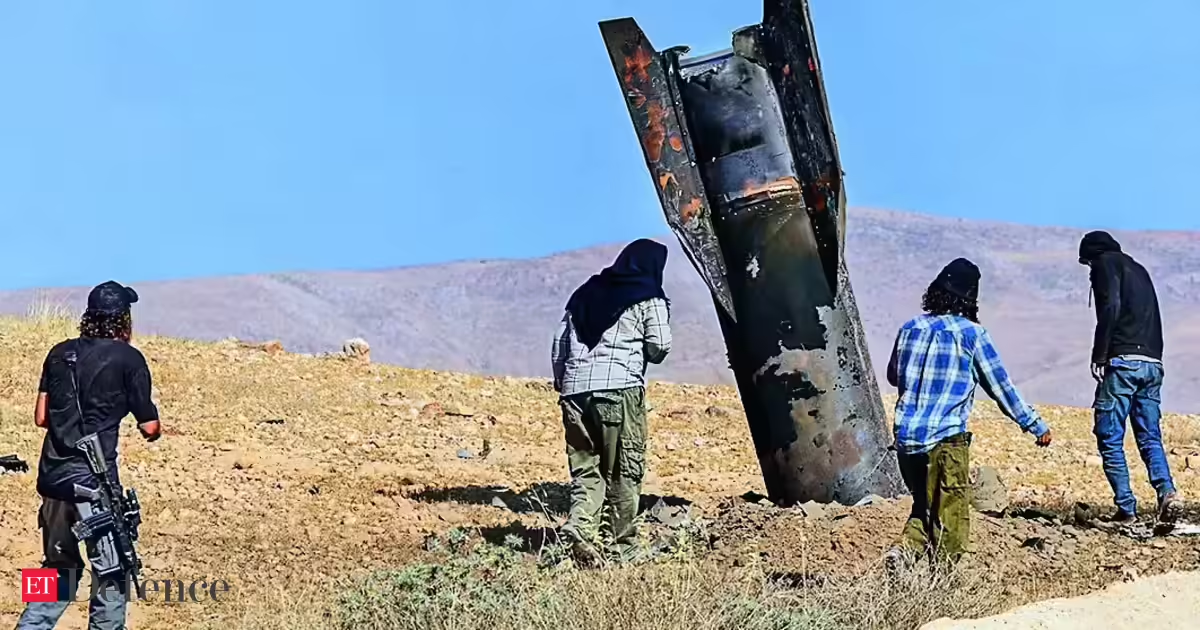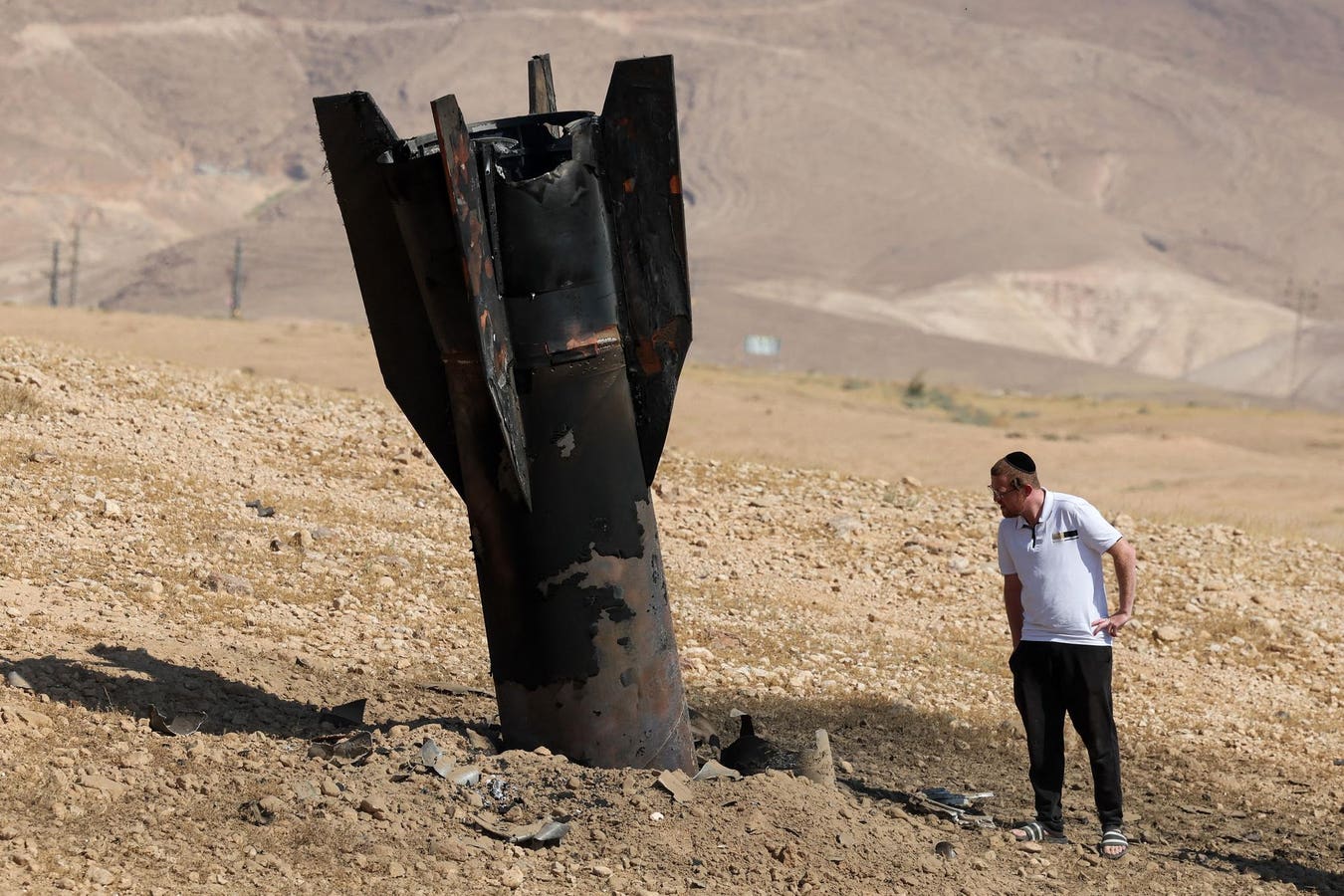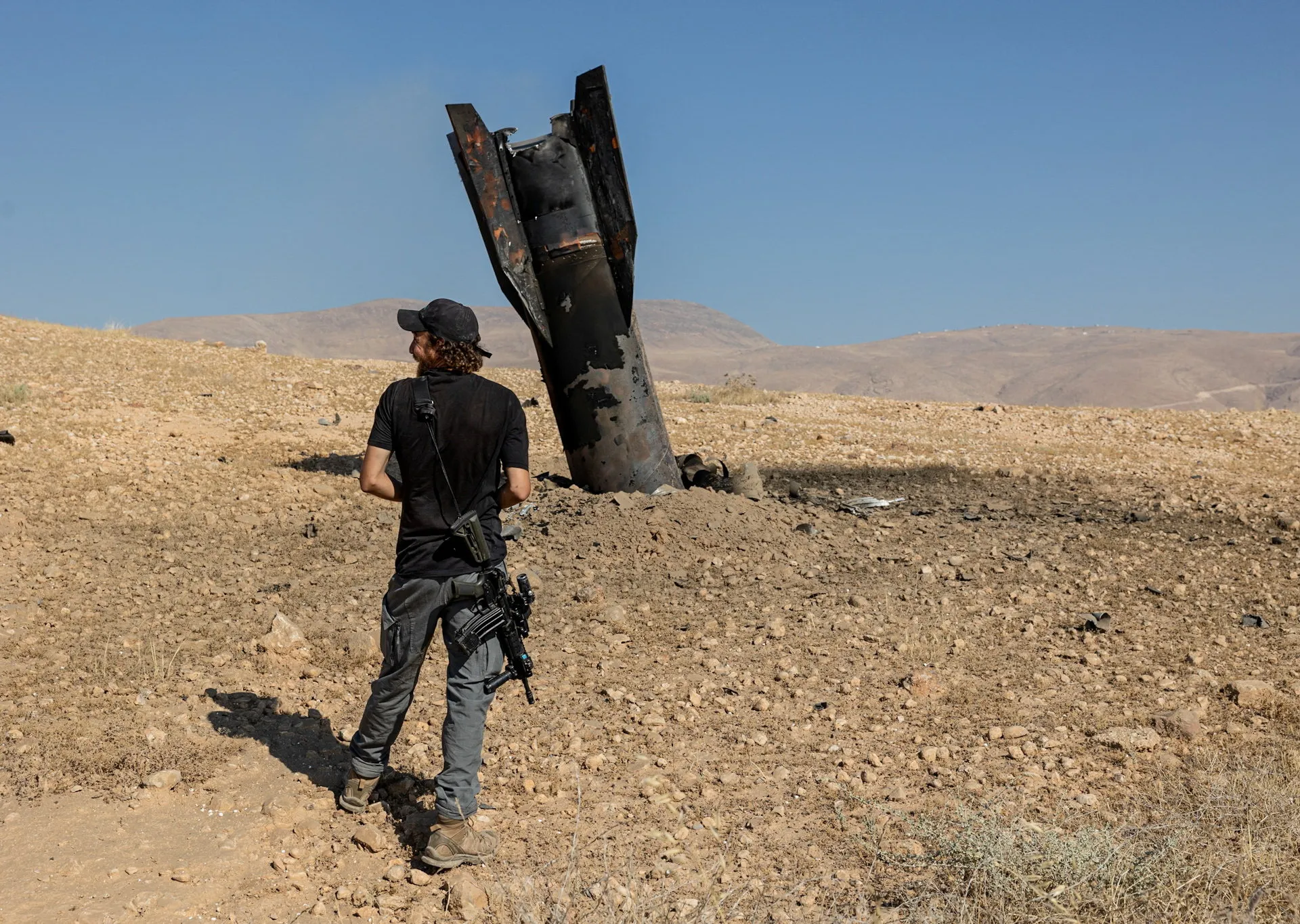
ByYONAH JEREMY BOBJUNE 8, 2026 21:23For the first time since the April 7 ceasefire, Israel and Iran traded repeated blows on Sunday night and Monday until US President Donald Trump imposed a new ceasefire on the sides late in the afternoon.Although the Islamic Republic demanded that the new ceasefire include all of Lebanon, including the southern part of the country currently controlled by the IDF, Hezbollah and the Israeli military continued to exchange attacks even at press time, with the future implications being unclear.Iran broke the ceasefire first, firing ballistic missiles at the Israeli North late Sunday night.The IDF responded on Sunday morning around 4:07 a.m., saying it had completed extensive attacks on Iran's newly installed air defenses in the Tehran and western Iran areas.Since the April 7 ceasefire following Israel having attacked the Islamic Republic in June 2025 and early 2026, the regime has rushed aggressively to rebuild its air defenses.A screengrab taken from a handout video released by the Israeli Military says to show a strike on an aerial defence system in Iran at an unknown location, video released on June 8, 2026. (credit: Israeli Military/Handout via REUTERS)The latest IDF attacks further reduced these newly restored air defenses, enabling the air force to attack more freely within Iran if the current round of fighting were to continue.IDF sources throughout the day did not explain why the air force did not directly target any of Iran's ballistic missiles or launchers, though undoubtedly attacking air defense radars and long-term ballistic missile production sites are also of some importance.Attacking actual ballistic missiles and launchers would have been the most immediate way to reduce the number of missiles Iran might fire on Israel.IDF expected conflict to last few daysPrior to the ceasefire, at midday on Monday, the IDF said the newest conflict with Iran was expected to last at least a few days, and could still heat up into a return to full-blown war.As of 11:30 a.m., Iran has fired three salvos, which cumulatively have reached between 22 and 24 ballistic missiles at Israel, while the Houthis in Yemen have fired two missiles.One of the Houthi missiles fell short of Israeli territory, while the other was shot down by the Israeli air defense.All of the Iranian missiles were either shot down or fell short.At midday, in two waves of air force attacks, fighter jets had struck nine different Islamic Republic air defense and radar systems as well as a petrochemical complex, including three separate facilities there.Some of these facilities assist with the process of producing ballistic missiles.In addition, certain mid-senior-level Hezbollah commanders responsible for launching drones were assassinated by the IDF recently. This attack was connected to a video that surfaced on social media late Monday morning, with incorrect rumors about having killed a top Iranian official.US-Israel still coordinating defenseIDF Chief of Staff Lt.-Gen. Eyal Zamir had spoken to US Central Command (CENTCOM) Chief Adm. Brad Cooper three times between the start of the latest conflict and midday Monday, said the IDF.The IDF said that while the US military stayed out of offensive attacks on Iran, it had already assisted in shooting down missiles fired at Israel.US sources confirmed that American forces had likely shot down a couple of Iranian ballistic missiles.According to the IDF at midday, Iran was trying to define the current narrative as its chance to regain its gravitas as the defender of its proxy Hezbollah in Lebanon, while also pressuring the US into better terms in the ongoing standoff between the countries.Some IDF officials believed that until these further rounds of fighting wrapped up, Iran's regime was simply not ready to sign a deal along the lines currently proposed by the US.For example, if Iran makes nuclear-related concessions to the US, it will now be able to make other claims – true or not – about having intimidated the US and Israel in the most recent brief round of fighting.On Monday afternoon, IDF Chief Spokesman Brig. Gen. Efi Deffrin added that to the extent the current fighting would continue more than a day or so, the IDF's goal would not merely be to restore the ceasefire, but to further destabilize and weaken the Islamic regime, which, to date, has held fast to its current control of Iran.The IDF criticized much of the global media for presenting the current round of conflict as if Iran and Israel were equal provocateurs.Rather, the IDF stated that it has been fighting with Hezbollah, but had not attacked Iran since April 7.The IDF said that the media and the world must clearly understand that it was Iran that unilaterally broke the bilateral ceasefire between the countries.IDF sources indicated that while there were plans in place for any scenario involving Iran, many top officials clearly did not believe that the Islamic Republic would break the ceasefire as it has. This delayed the Israeli response by hours, in addition to the three- to four-hour flight time.However, this answer by IDF sources also exposed that the IDF and the US no longer had sufficient air coverage nearby to preemptively bomb Iranian missile teams before they would launch, as they did sometimes during Operation Roaring Lion.Later in the afternoon, but when the ceasefire situation was still hazy, defense sources told the Post that Israel had a long list of targets to strike in Iran if the situation did not return to a ceasefire framework.Within less than an hour of Iran saying that it would stop firing on Israel if the IDF stopped attacking it, there were reports in Lebanese media about the IDF striking Hezbollah at Tyre and Hezbollah firing three rockets at IDF soldiers in southern Lebanon.Originally, it was unclear if the Hezbollah attackers were acting without Hezbollah higher-ups' or Iranian authorization or were acting with authorization and anticipating that fighting would continue in southern Lebanon, even if they might stop firing on Israeli civilian northern towns.There were also sirens about drones at Misgav Am and Metula, but later the IDF claimed that the sirens had been false alarms.In addition, the IDF at press time had strangely not taken credit for the attacks on Tyre, with speculation that the military was trying to act against threats, but without fully antagonizing Iran and Hezbollah.In a speech, Prime Minister Benjamin Netanyahu indicated that the IDF would not stop its actions in southern Lebanon, and Defense Minister Israel Katz issued a statement seconding that position.Katz also said that any attack on Israeli northern villages would lead to an attack on Beirut – an act which led Iran to break the ceasefire in the first place.Meanwhile, leading up to an expected IAEA Board of Governors condemnation of Iran for a variety of nuclear violations, IAEA Chief Rafael Grossi demanded that the Islamic Republic restore access to its nuclear sites for his inspectors.Grossi said that since the June 2025 Israel-Iran-US war, IAEA access has been nearly nonexistent.Even prior to that war, Iran had continually cut back IAEA access to its nuclear facilities, going back to 2021 when the agency started pressing the Islamic Republic for more answers about evidence it was violating its nuclear obligations.Further, the IAEA had caught Iran trying to enrich 60% enriched uranium up to 84% in one facility, which would essentially have been up to the 90% weaponized level.Follow us on Google
Israel, Iran trade blows before ceasefire as conflict with Hezbollah continues | The Jerusalem Post
The latest IDF attacks further reduced these newly restored air defenses, enabling the air force to attack more freely within Iran if the current round of fighting were to continue.
1,215 words~6 min read