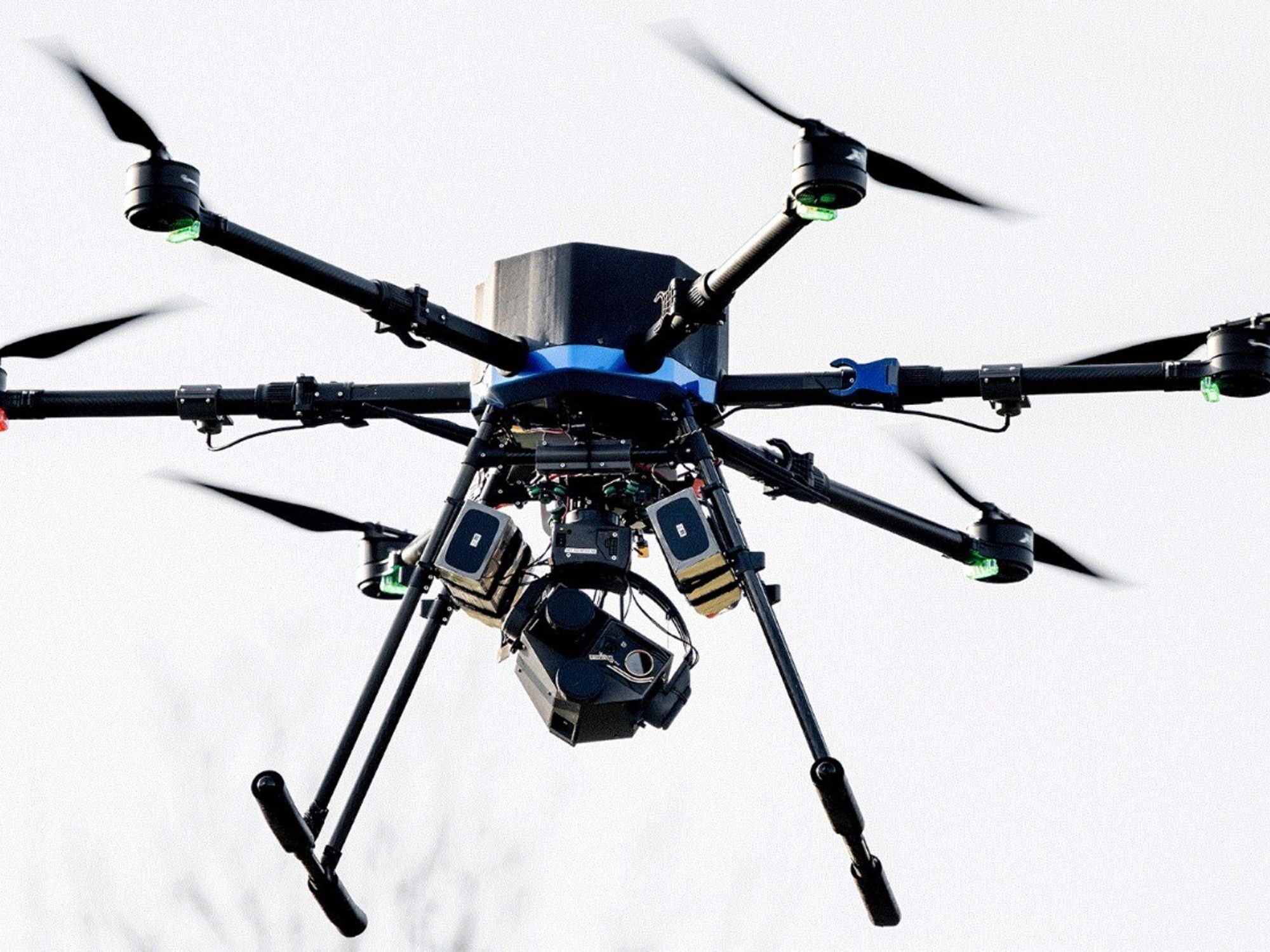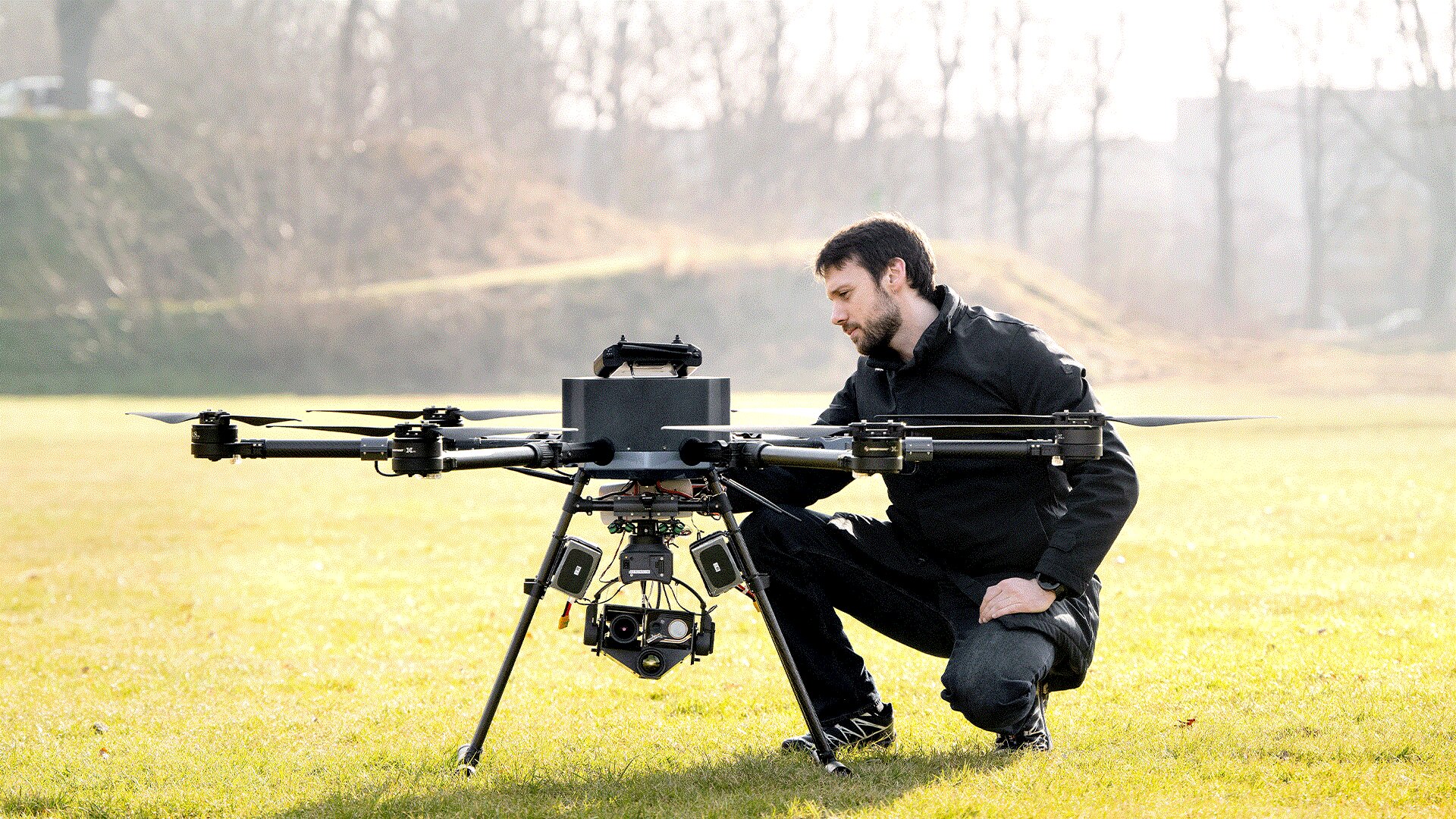
Ph.D. student Dimosthenis Angelis has built a drone that can take off quickly and autonomously search in the most likely locations where a person who has fallen overboard may have ended up. Credit: Bax Lindhardt
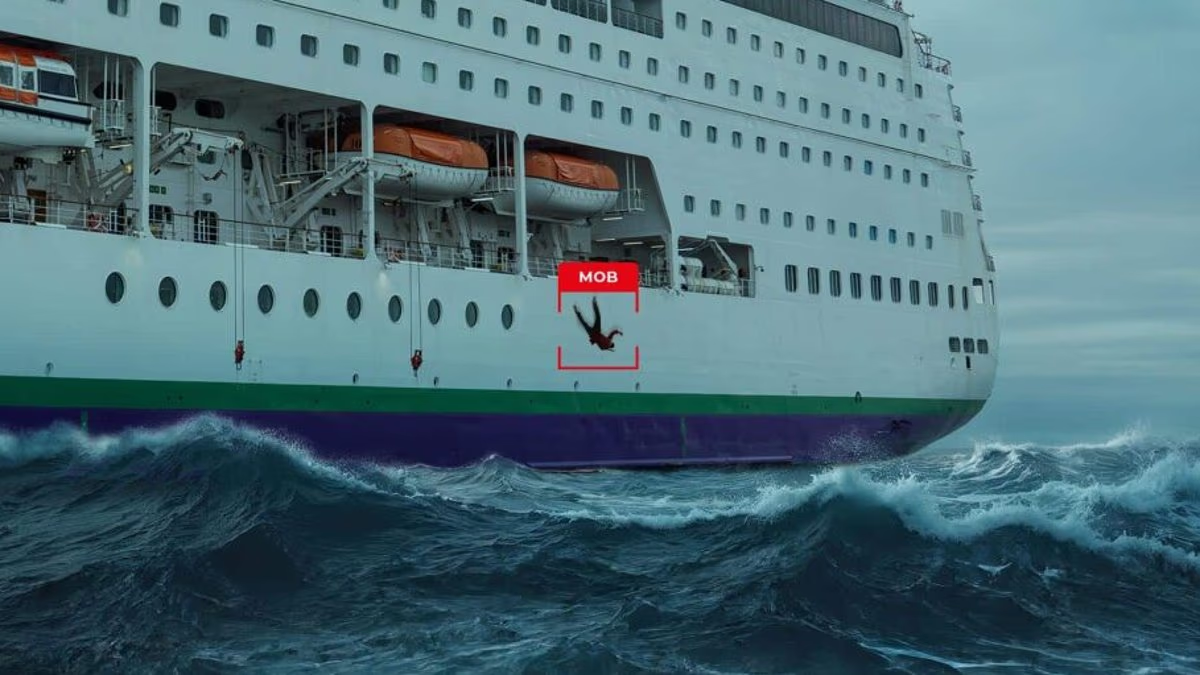
It's a race against the clock when someone falls overboard: People's chances of being found before they drown from exhaustion or freeze to death dwindle by the minute. Rescue efforts are often hampered by the time it takes a vessel at full throttle to halt so a rescue boat can be deployed and start searching for the person, who is by now far from the ship.
The data paint a grim picture: Figures from, for example, the Cruise Lines International Association show that more than 70% of people who fell overboard between 2009 and 2019 died.
Researchers at DTU are working to improve these odds by developing a prototype for a fully automated drone that can be dispatched automatically from a moving ship as soon as such a man overboard event is confirmed.
The drone has three types of cameras so it can see at night and spot body heat, enabling it to identify a person in the water. Once it is fully developed, the drone will carry an inflatable life jacket that sends a GPS signal.