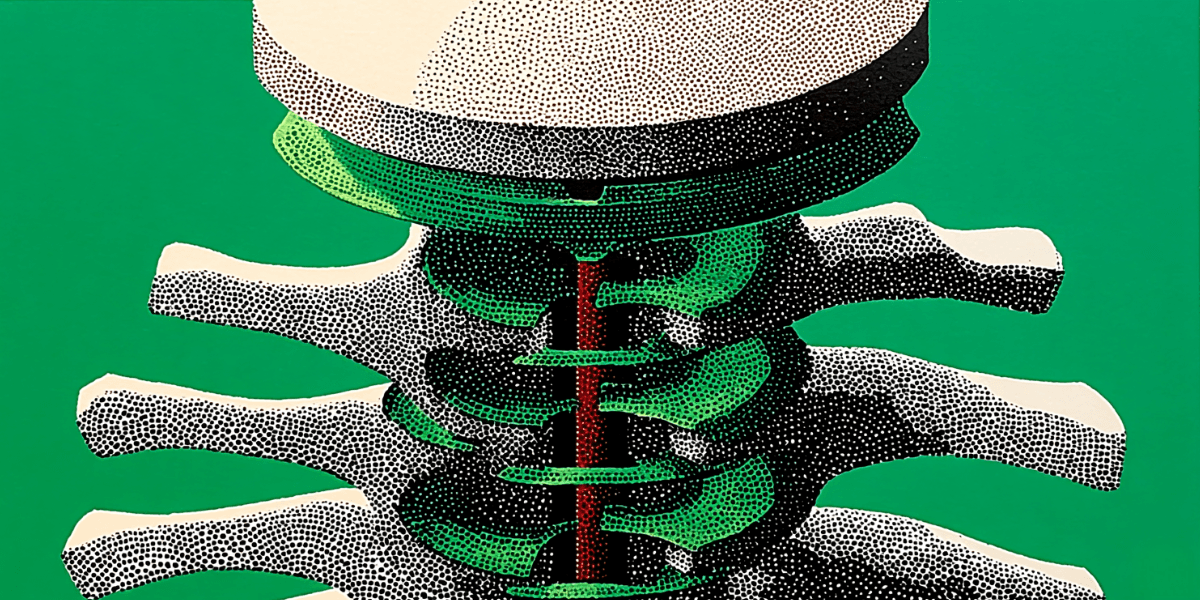
A group of Viterbi students designed a spinal disc model almost exactly like its biological counterpart. (Image / Midjourney)
Studying the human body is an ever-evolving process. As we continue to advance our understanding of how the body functions, a group of students at the Alfred E. Mann Department of Biomedical Engineering at the USC Viterbi School of Engineering has developed a new model to help medical professionals.
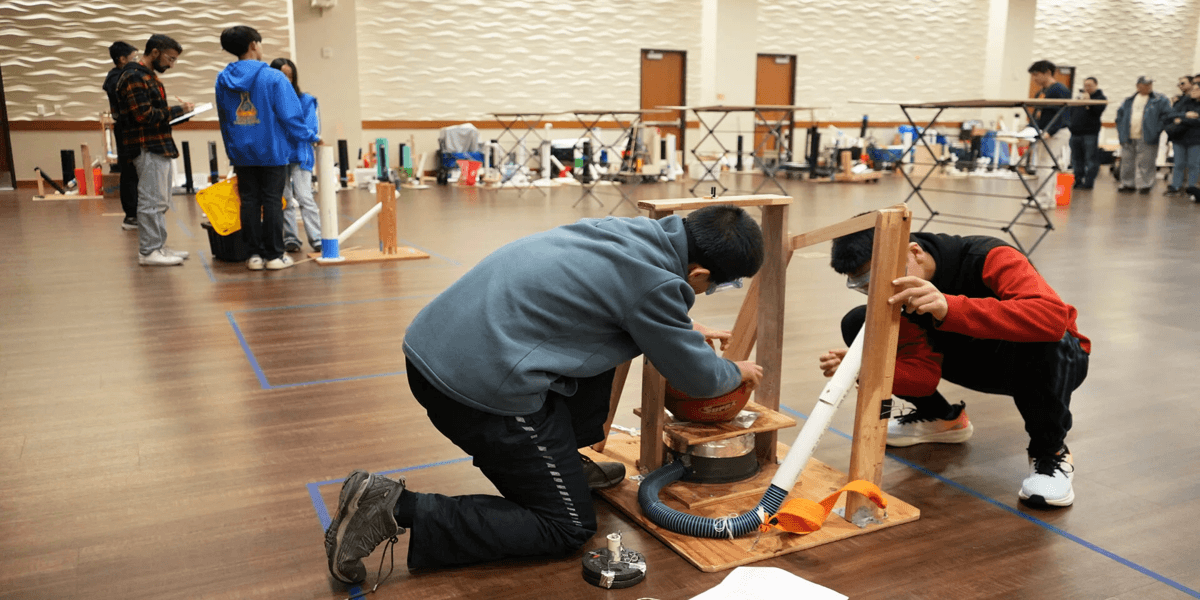
The project began at the 2025 USC “Make-A-Thon” hosted by the Associated Students of Biomedical Engineering at USC last March. After the event, Dr. Joseph Derian, an assistant professor of clinical physical therapy at the USC Division of Biokinesiology and Physical Therapy, approached students Arjun Karnwal, Nicholas Dorgan, and Anson Li. He asked them to build out an initial prototype with the hypothesis that this spinal disc model could significantly improve understanding of the spinal anatomy and bring new innovation to the physical therapy space.
“I was inspired by how the biomedical engineering students were so innovative and excited to learn about developing new prototypes in a physical therapy-minded space,” Derian said.
The need was clear. In physical therapy classes, it’s typically much easier to analyze mobility in joints like knees and shoulders using humans as test subjects. Internal structures like spinal discs — which sit between the vertebrae, allowing the spine to flex, bend, and twist while also functioning as shock absorbers — are far harder to examine when teaching students.