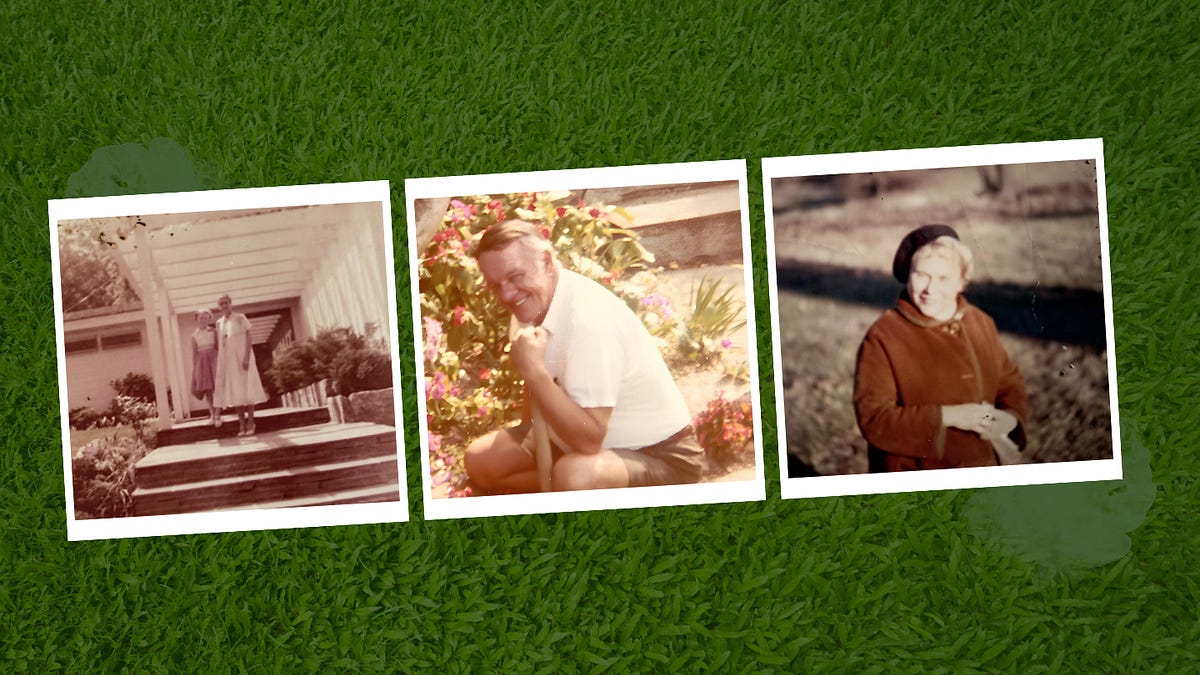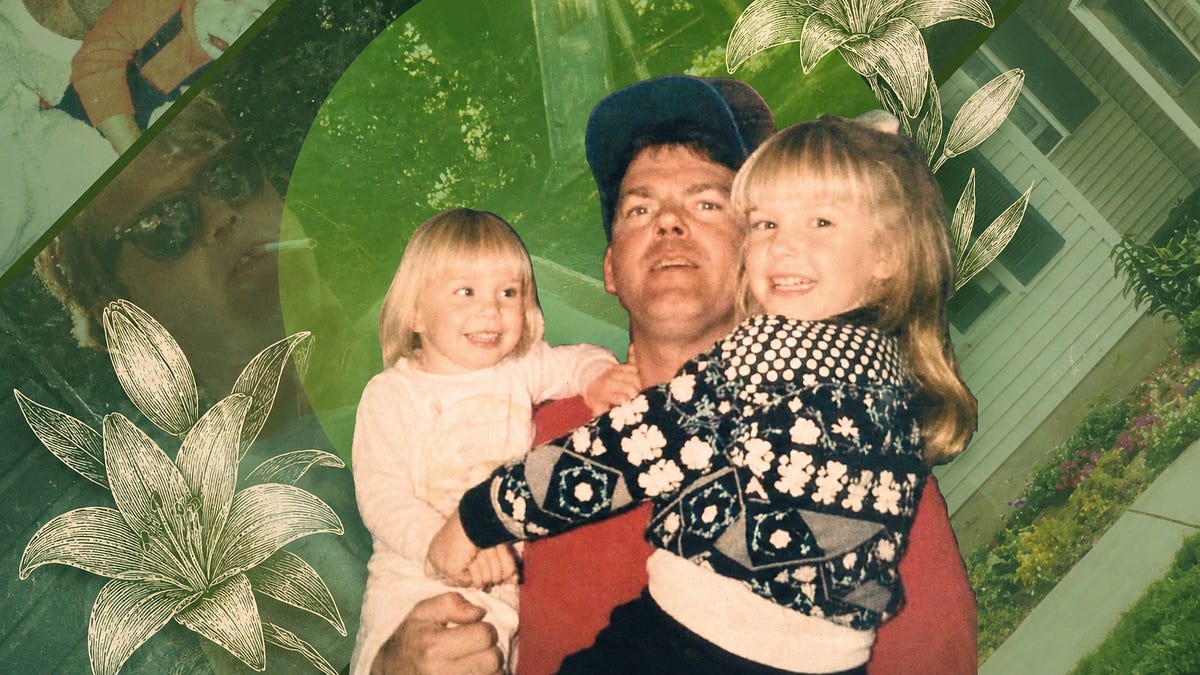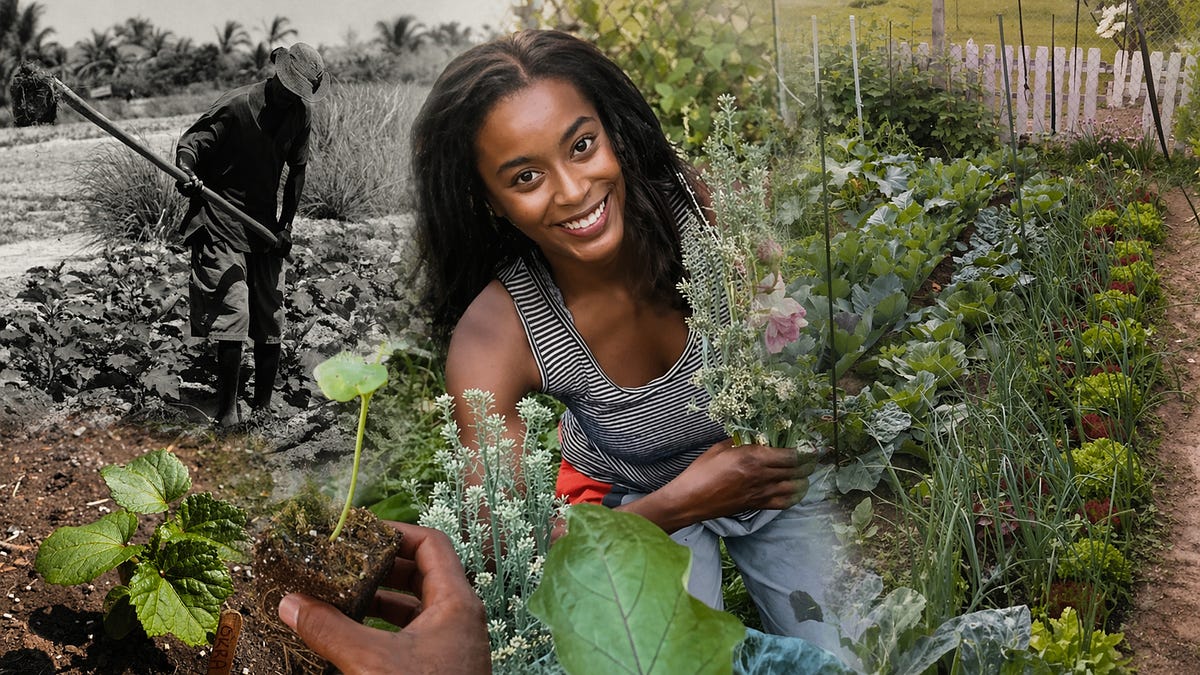
Photos courtesy Amanda WatsonThis story is part of our ongoing series From the Ground Up, a collaboration between Narratively and ScottsMiracle-Gro exploring the lives, memories, and connections rooted in the yards, fields, and green spaces we call home.The tin was a rusted Maxwell House canister, the kind with the blue lid that hasn’t been manufactured in decades. I found it tucked behind a stack of 1990s Detroit Free Press bundles in the far corner of my grandfather’s basement, right under a leaky pipe that had turned the floor into a map of salt and calcium deposits.I had to use a flathead screwdriver just to pry the lid off, the metal screeching against metal in the quiet of the empty house. I expected old screws, or maybe some loose change, the kind of junk a man keeps because he can’t bear to throw a good container away. Instead, I found shriveled little envelopes made of yellowed parchment. Inside were seeds. There were pole beans, their skins wrinkled like old leather, and dried okra pods that rattled when I shook them. He had brought them up from the Georgia red clay when he moved here in the ’50s, and for reasons I’ll never truly know, he’d just... kept them.The author’s grandfather, in the garden she later inherited.Standing in that damp basement, I felt like a ghost in my own family history. I knew my grandfather’s name, sure. I knew the stories about him working the line at Chrysler, and I knew the way he smelled of Old Spice and sawdust. But I didn’t know his hands. Not the part of his hands that knew how to talk to the earth. I’d spent my entire adult life in the city, thinking of “nature” as something you saw on a screen or a park you drove past on your way to somewhere more important. To me, dirt was just a nuisance. It was the stuff you wiped off the kitchen counter. It was something to keep off the carpet.That spring, I decided to pay a debt I didn’t know I had. I moved into his old place on Detroit’s East Side, a house that had stood through the city’s riots, its bankruptcy, and its slow, aching recovery. The backyard was a disaster area. It wasn’t a garden; it was a 4x4 patch of sun-scorched clay, choked with gravel, bits of old brick from a collapsed chimney, and the skeletal remains of weeds that had survived a decade of neglect. I didn’t have a plan. I just figured I’d make those seeds grow or die trying.By late April, I was failing miserably. I was out there every morning on my knees, clawing at ground that felt like sun-baked concrete. Detroit clay is a special kind of stubborn. It doesn’t want to be moved. It holds onto the past with a grip that can break a cheap plastic trowel, which I learned the hard way about 20 minutes into my first day. My palms were a mess of raw blisters that eventually turned into thick, ugly calluses. My back was shot, a constant knot of heat between my shoulder blades. Nothing was growing. Not a single green shoot.I’d retreated to the East Side after a decade away, trading a glass-and-steel life in Seattle for a house that still smelled like my childhood. I was hollowed out; a bad breakup and a job that disappeared overnight had stripped me down to the studs.Staring at that gray, dead Detroit dirt, I felt like a total fraud. I wasn’t a gardener. I was just a city kid playing in the mud, looking for a man who’d been gone for years and hoping some of his strength would rub off on me through the soil. Then, on a Tuesday when the heat was already rising off the asphalt at ten in the morning, a shadow hit the dirt.“You’re fighting it too hard,” a voice said.I looked up, squinting against the sun. It was Mr. Henderson. He’s lived next door since 1974, back when this block was full of kids and working cars. He’d been watching me struggle from his porch for weeks, probably getting a kick out of how little I knew about the land I was standing on. He walked over real slow, his gait heavy but deliberate, carrying a weathered spade with a handle smoothed by years of use and a heavy bag of dark, wet soil.“You’re treating the ground like an enemy,” he said. He dropped the bag of soil, and it hit the clay with a solid, wet thud that felt more productive than anything I’d done in a month. “It’s not an enemy. It’s just thirsty. Same as you.”He didn’t give me some grand, poetic speech about the “majesty of nature.” He just knelt down, his knees making a loud pop that made me wince, and showed me how to mix the new life into the old. He taught me that you can’t just throw seeds at a problem; you have to prepare the bed. You have to listen to what the ground is telling you. If it’s hard, you soften it. If it’s sour, you sweeten it.Right then, the garden stopped being a solo mission of grief. It became a bridge.Over the next three months, that chain-link fence between our yards became a water cooler for the neighborhood. We didn’t talk about the news or the headlines. We talked about how stubborn a bean vine can be and the weird, annoying patience you need to watch a seed do its thing in the dark.Mr. Henderson always told me that “the best fertilizer is the gardener’s shadow.” You have to show up. Every day. You have to stand there and look at it, even when it feels like a total waste of time, even when the sun is beating down on the back of your neck and you’d rather be anywhere else.One afternoon, while we were leaning against the fence, Mr. Henderson pointed to a spot where the bricks were still piled up. “Your granddaddy used to grow tomatoes there,” he said. “Best in the city. He used to trade them for my wife’s peach cobbler. The dirt remembers him, even if you don’t.”That hit me harder than the physical labor. When those Georgia beans finally broke the Detroit clay in mid-June, it wasn’t some cinematic, slow-motion moment. It was just a relief. I woke up, walked out with my coffee, and saw a tiny, curved neck of green pushing aside a pebble. I wasn’t just growing dinner. I was growing a version of myself that finally had roots. I was becoming someone who stayed, rather than the kind who ran when the soil got too hard.The yard used to be a “no-go” zone of weeds and trash that the city would fine you for. Now, it’s where neighbors actually stop their cars to talk and connect. They ask about the okra. They tell me stories about what used to be on this corner. The “good” didn’t just grow in the dirt; it grew in the space between us. My grandfather didn’t just leave me seeds in a Maxwell House tin; he gave me a reason to walk out the back door and meet the people I live next to. He gave me a way to belong to Detroit, rather than just live in it.Nature didn’t just fix the yard that summer. It fixed the fracture in my own history. In a place like Detroit, where the world is always talking about what’s gone or what’s “blighted,” I found out that as long as you’ve got a handful of heirloom seeds and a neighbor with a spade, you’re never really starting from zero. You’re just continuing a story that started a long time ago.
The Inheritance of Dirt
Reclaiming a family legacy in a 4x4 Detroit plot, with the help of an old-salt neighbor.
1,299 words~6 min read