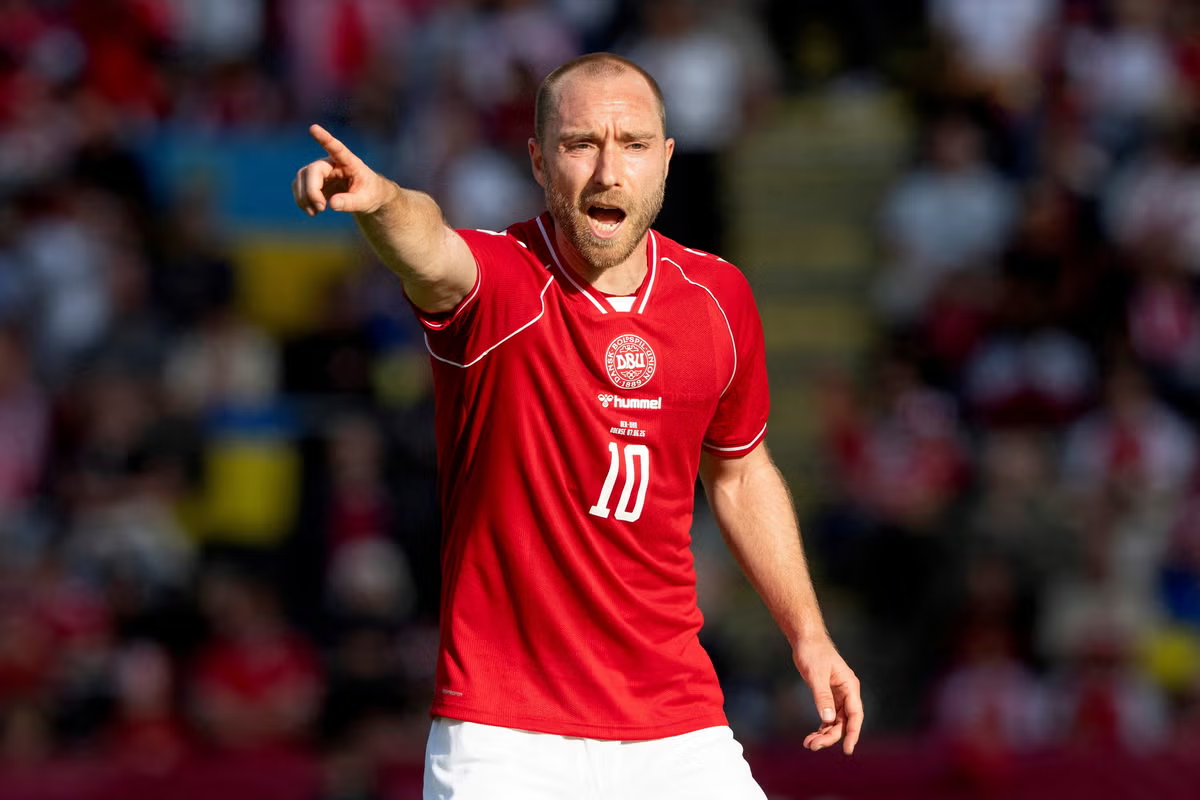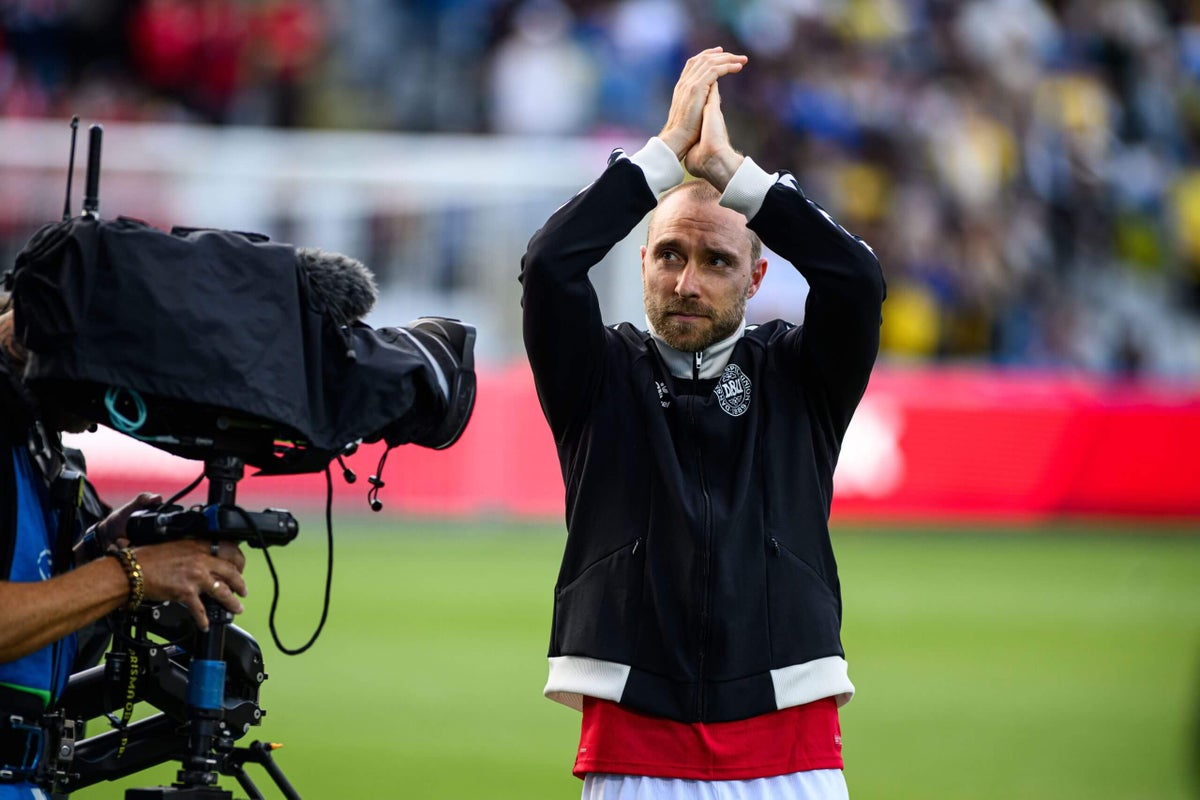
Christian Eriksen is recovering well after collapsing on the pitch during a friendly against Ukraine on Sunday.The Denmark and Wolfsburg midfielder spent the morning with family in hospital in Odense, where the Ukraine game was being played, and is expected to be discharged soon.The incident came five years after he suffered a cardiac arrest during Denmark’s Euro 2020 fixture against Finland. Then, Eriksen received emergency treatment for 13 minutes, during which time he was resuscitated and defibrillated.Within days it was announced Eriksen would be fitted with a ‘heart starter’ — an implantable cardioverter defibrillator (ICD) — a decision described by Denmark’s team doctor Morten Boesen as “necessary due to rhythm disturbances”.Though many feared Eriksen would never play football again, he went on to play for Brentford, Manchester United and is now with Wolfsburg in Germany.The Athletic explains the science behind playing with an ICD and what happens when it is triggered.What happened to Eriksen on Sunday?Eriksen was playing in a friendly match for Denmark against Ukraine at the Odense Isstadion when he collapsed in the 65th minute. Footage showed him appearing to grab his chest before falling to the ground. Players from both teams quickly formed a ring around Eriksen while he was attended to by medics.Following treatment on the pitch, the 34-year-old, who had started the game, was able to walk to a waiting ambulance, which took him to hospital for further tests. The match was abandoned.Denamrk and Ukraine players shield Christian Eriksen as he attended to by medics (Bo Amstrup / Ritzau Scanpix / AFP via Getty Images)After the incident, Boesen issued an update saying that Eriksen was “briefly unconscious, but regained consciousness very quickly. He will undergo further examinations at the hospital to determine what caused the incident.”Boesen also said that “the pacemaker responded as it should”, referring to the heart starter device that Eriksen had fitted in 2021.What is an ICD?An implantable cardioverter defibrillator is a small device, usually inserted below the collarbone, on the left side, with wires connected to the heart.Professor Guido Pieles, a sports cardiologist looking after athletes with cardiac disease and who has worked with Manchester United for 10 years, explains that they are implanted in order to prevent a full cardiac arrest.“That means that an ICD senses when the heart is in the wrong rhythm, and rather than wait until the wrong rhythm leads to the heart not providing enough blood for the brain, muscles and other organs, and so having a full cardiac arrest, the ICD kicks in and changes the abnormal rhythm into the normal rhythm, so the heart can work properly.”ICDs are set up to detect these abnormal heart rhythms, which are usually fast heart rhythms. But Pieles explains that sports cardiology specialists have to adjust the settings when implanted in athletes because their heart rates can go higher, so that they don’t go off wrongly all the time. “This has improved a lot, so most shocks from ICDs are shocks that are really necessary.”Sometimes the ICD restores normal heart rhythm by briefly sending out a controlled burst of impulses (called “overdrive” pacing). Other times, a brief shock (defibrillation) resets the heart rhythm if needed to prevent sudden cardiac arrest. An ICD also records and stores information about your heart rhythm and treatments delivered by the ICD for medical professionals to review.
Christian Eriksen: How do ‘heart starter’ ICDs work? And are athletes more at risk?
Explaining the technology which corrects abnormal heart rhythms and what causes a 'shock' to be delivered
1,540 words~7 min read