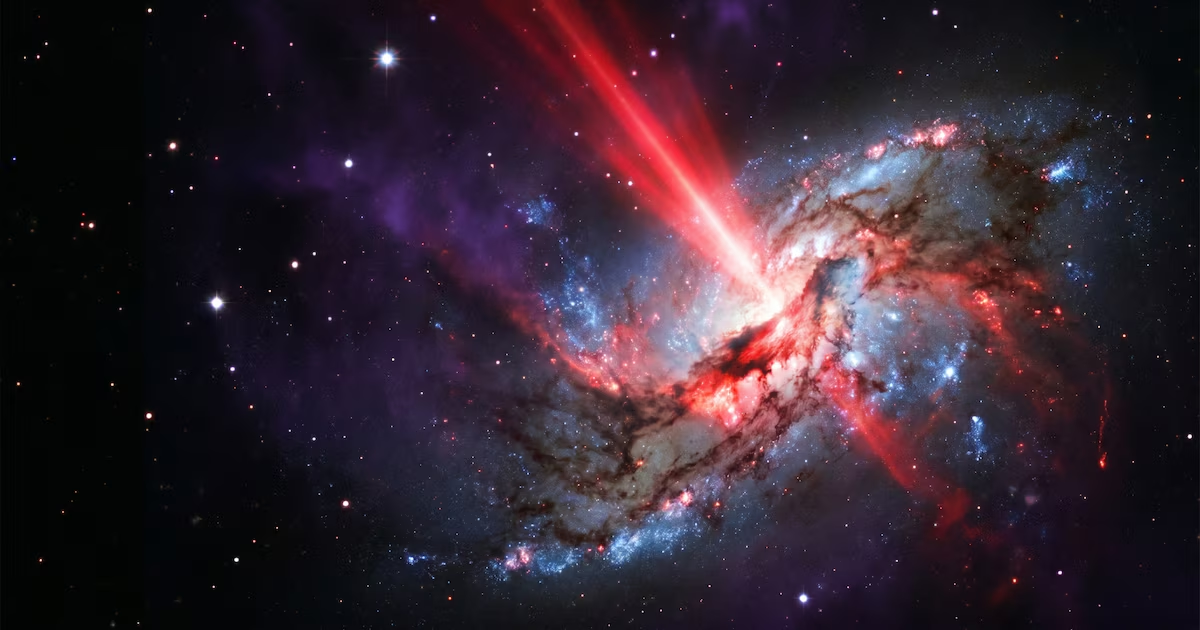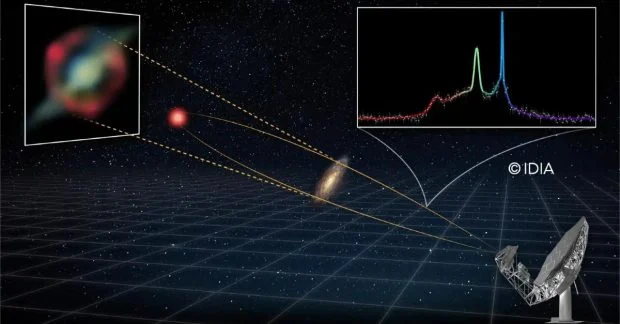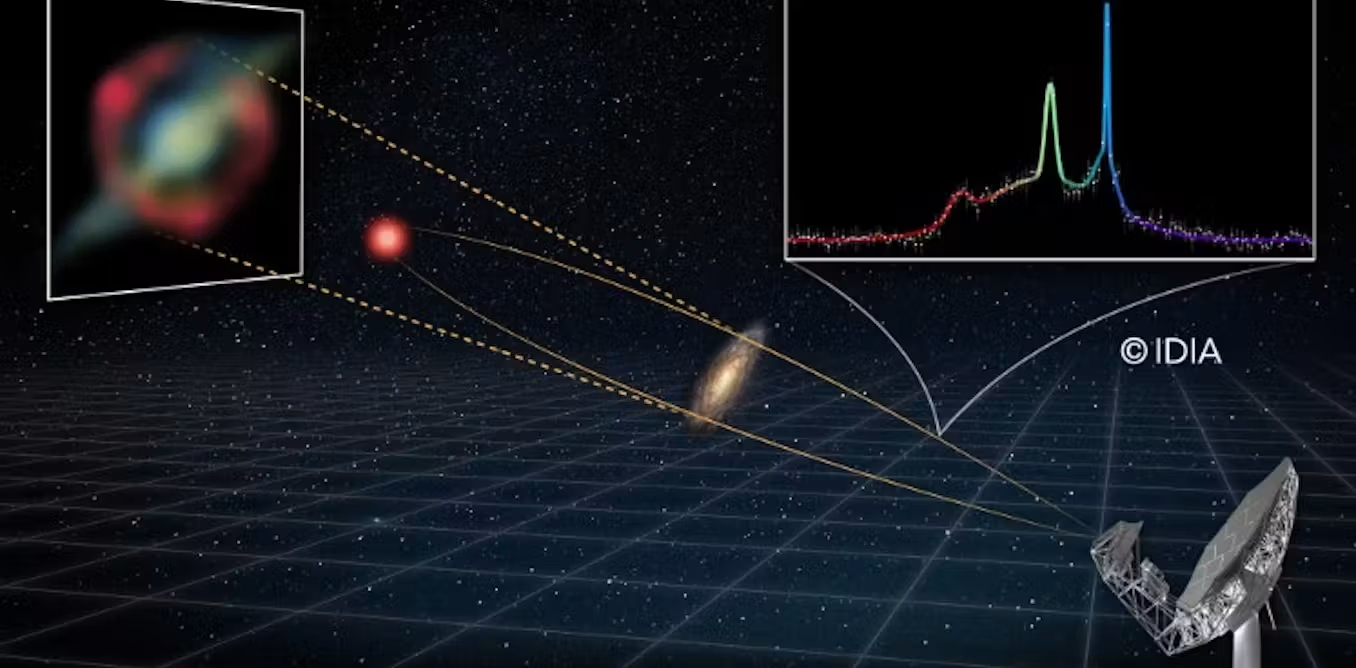
Astronomers using the MeerKAT radio telescope in South Africa have discovered the most distant hydroxyl megamaser ever detected, opening a new radio astronomy frontier. A hydroxyl megamaser is a natural space laser, and this one is located in a violently merging galaxy more than 8 billion light-years away.
We spoke to the astronomers, Thato Manamela, a postdoctoral researcher at the University of Pretoria, and Roger Deane, director of the Inter-University Institute for Data Intensive Astronomy and a professor at the universities of Cape Town and Pretoria, about their study.
What you’ve found has been described as a ‘new frontier’ in space research. Why is it extraordinary?
This discovery is extraordinary because of the record distance at which we’ve detected it, over eight billion light-years away. That places it deep into the early universe. This means that we aren’t seeing the galaxy as it exists today. We are seeing it as it was 8 billion years ago. Since the Big Bang happened about 13.8 billion years ago, we are looking at a “toddler” version of the universe. At that stage where the maser signal was transmitted by the host galaxy, galaxies were much more “chaotic”, they collided more often and were much more active than the stable, mature galaxies we see nearby today.