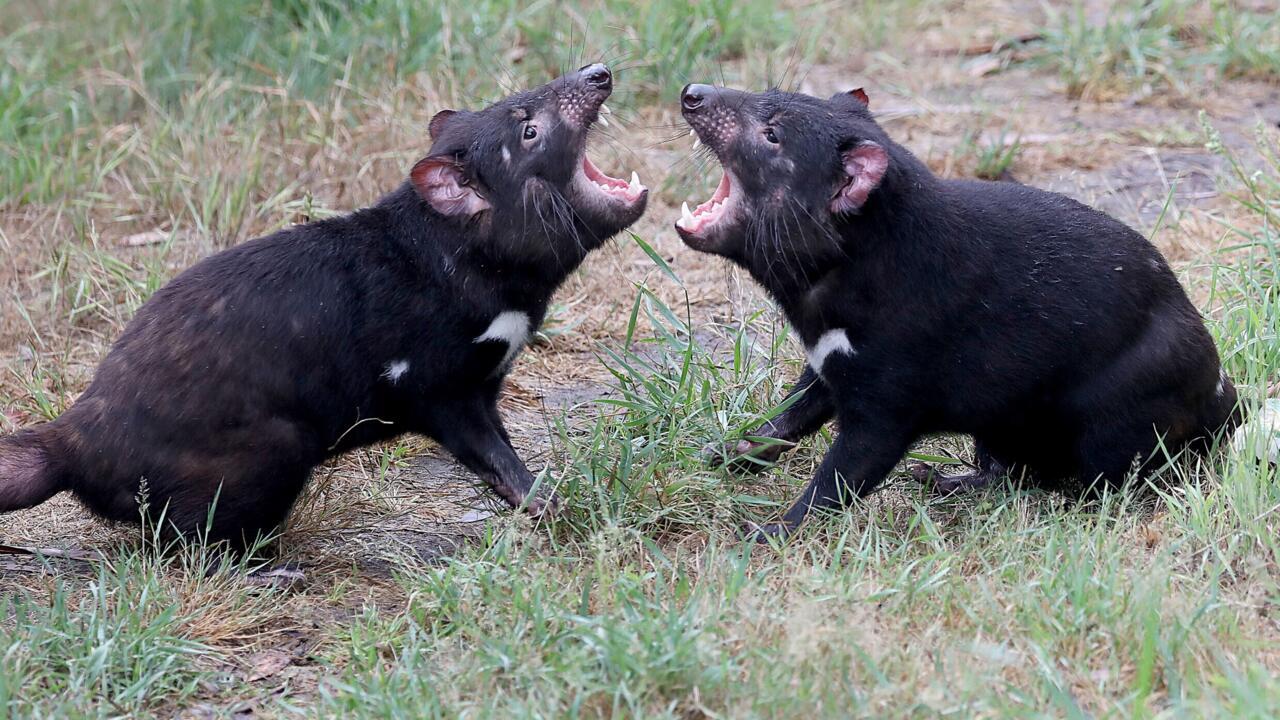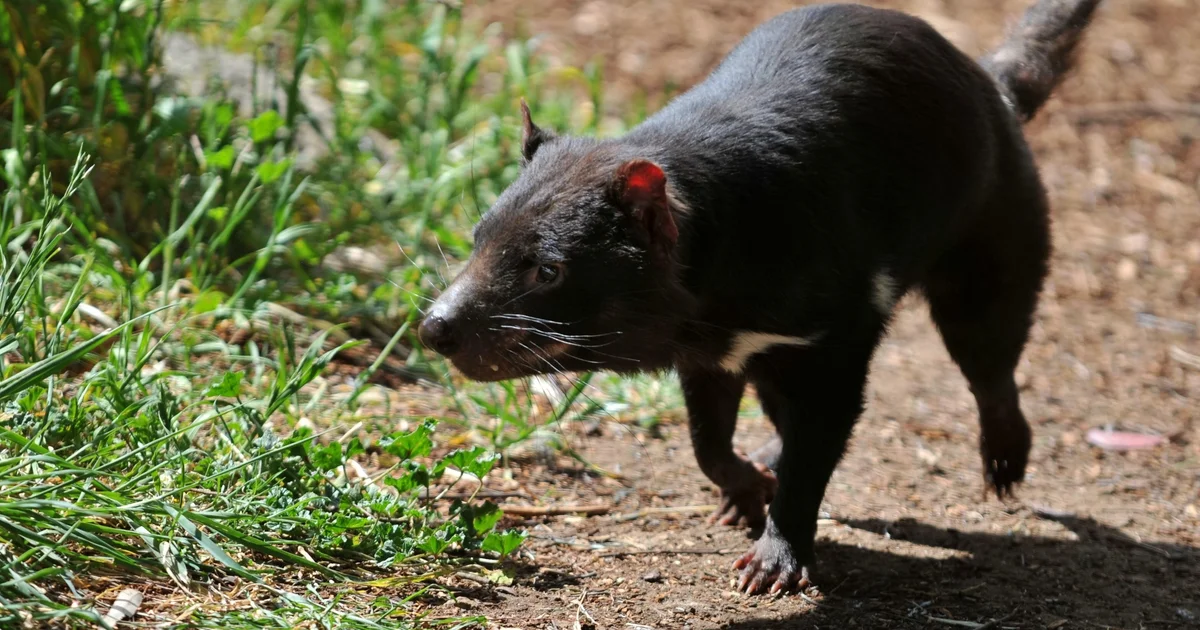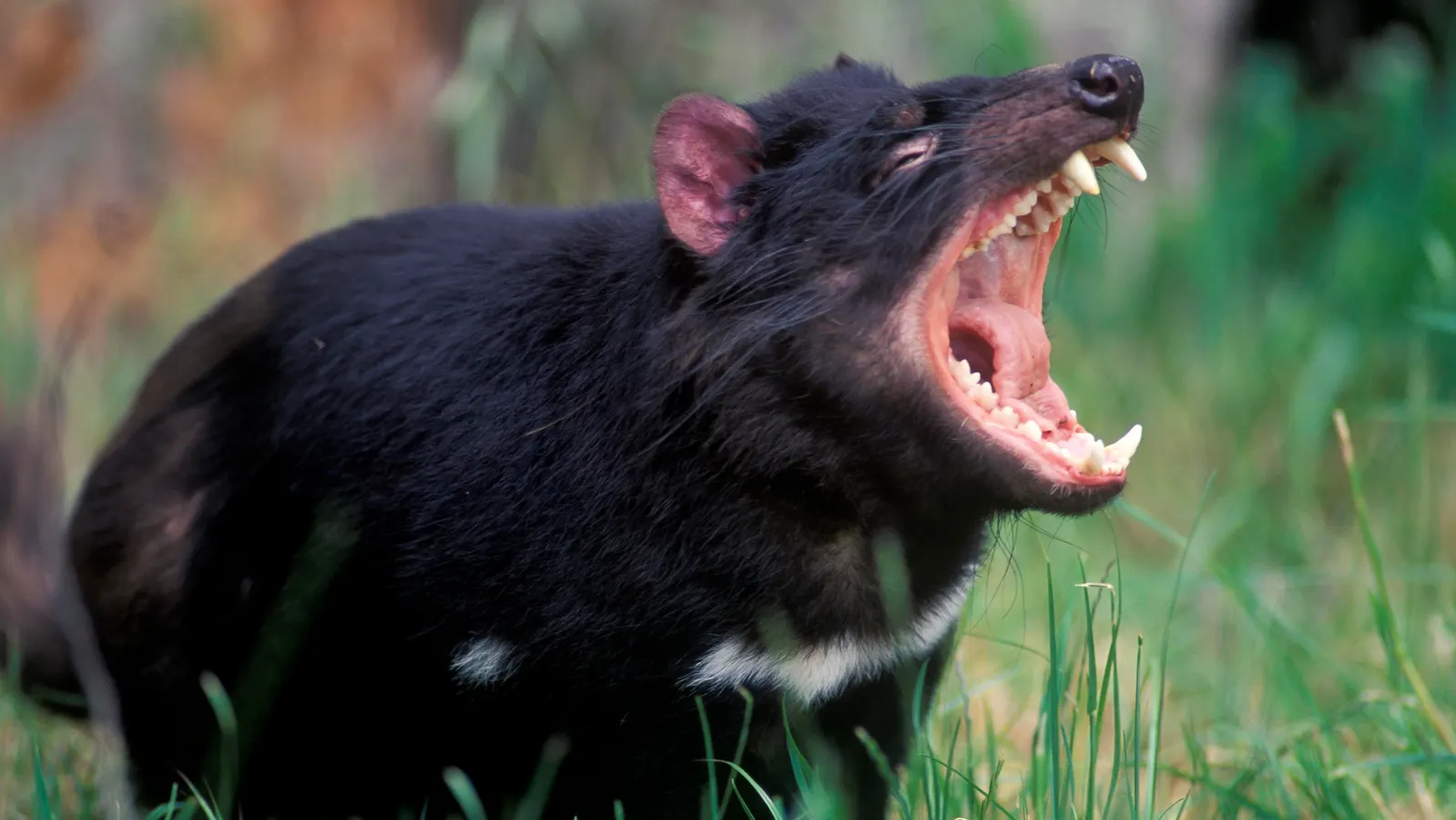
The Tasmanian devil is far from being the biggest predator on Earth, but its astonishing bite force places it in a league of its own.gettyIf you know the Tasmanian devil at all, chances are you know it through a cartoon. The animal has been immortalized for generations as a spinning, snarling tornado of chaos that barrels through the landscape with little regard for physics or common sense. Of course, the real version of the animal is considerably less frantic. But in one respect, the cartoon did get one thing right: they’re incredibly powerful.Tasmanian devils (Sarcophilus harrisii) don’t look like record-holders. Even as the largest living carnivorous marsupial, they only stand at around 30 centimeters tall at the shoulder, and they typically weigh between 6 and 12 kilograms (13 to 26 pounds) — about the size of a small dog. But atop that stocky frame is one of the most formidable sets of jaws in the animal kingdom.Scientists have found that the Tasmanian devil possesses the highest bite force relative to body size ever measured in a living mammalian carnivore — recognized by Guinness World Records. In other words, pound for pound, its bite is stronger than that of lions, tigers, wolves, bears and hyenas.The obvious question is why. Why would a relatively small animal evolve a bite capable of pulverizing bone? And what exactly does the devil do with all that power? The answers reveal a species shaped by an unusual evolutionary history and one of nature’s most efficient scavengers.The Study That Crowned The Tasmanian DevilComparing the bite strength of different animals has been a historically difficult task in academia. We know, for instance, that a lion will naturally bite a lot harder than a fox, but we also know that lions are vastly larger. Comparisons like these illustrate the problem: raw bite force measurements alone tell us little about how powerful an animal is relative to its size.MORE FOR YOUIn 2005, researchers Stephen Wroe, Colin McHenry and Jeffrey Thomason tackled this exact problem in a study published in Proceedings of the Royal Society B. They developed a metric known as the bite force quotient, or BFQ, which adjusts bite force for body mass. In turn, we get a standardized measure of how hard an animal bites compared to what’s expected for its size. Think of it as the jaw-powered equivalent of comparing strength across weight classes in boxing.When the researchers analyzed a broad sample of living and extinct mammals, one species emerged as the clear champion among living carnivorous mammals: the Tasmanian devil.Its BFQ was calculated at approximately 181. By comparison, larger predators like lions, tigers, leopards and wolves scored substantially lower — 112, 127, 94 and 136, respectively — despite their having far greater absolute bite forces. This is because these animals certainly generate much more overall force. But relative to their body size, none came close to matching the devil.The findings also revealed an interesting pattern: species with exceptionally high BFQs were either those that consume prey larger than expected for their size, or those that process unusually tough food items. The Tasmanian devil excelled at both. Its skull is remarkably robust, its jaw muscles are disproportionately large, and its teeth are built for crushing and shearing. Together, these traits allow the animal to generate forces far beyond what someone would predict based on its modest stature. In practical terms, the Tasmanian devil is the equivalent of a compact hatchback hiding the engine of a heavy-duty truck.Tasmanian Devils Are Bone-Crushing SpecialistsA powerful bite is only useful if an animal has a reason to use it — and for Tasmanian devils, that reason is food. Although devils are very capable hunters, they’re best known for their role as scavengers. In fact, they are Australia’s only large marsupial scavengers, occupying an ecological niche that demands the ability to exploit carcasses with extraordinary efficiency.A 2021 study published in Australian Mammology examined the prey-processing behavior of Tasmanian devils and documented just how thorough they can be when feeding. The researchers found that devils are capable of consuming virtually every edible component of a carcass. Just about everything in the body becomes food to them:SkinMuscleConnective tissueInternal organsBone TeethEven relatively hard structures that many carnivores leave behind can be broken apart and ingested.This ability stems directly from their powerful jaws and specialized dentition. Unlike the sharp, slicing teeth seen in big cats, Tasmanian devils’ teeth function more like a combination of shears and bone crushers. When feeding, they anchor themselves against a carcass and apply tremendous force to tear away chunks of tissue or fracture skeletal elements. As such, little of the carcass goes to waste, if anything at all.From both an ecological and evolutionary perspective, this efficiency proves invaluable. Carcasses represent concentrated packages of energy, but they’re also highly contested resources. Multiple scavengers are competing for the same food source, and decomposition begins immediately. Any species capable of extracting calories that others can’t access as quickly will gain a substantial advantage.The Tasmanian devil’s bite allows it to reach those hidden reserves. Bones, for example, contain fat-rich marrow and residual nutrients that many predators struggle to access. By cracking and consuming skeletal material, they can exploit portions of a carcass that would otherwise be unavailable or wasted.But perhaps most importantly, their feeding behavior is also an ecological service. By rapidly consuming carrion, Tasmanian devils remove dead animals from the landscape and recycle those nutrients back into the ecosystem. In a sense, their jaws serve as both a feeding adaptation and a cleanup tool.Why Evolution Gave The Tasmanian Devil Such Powerful JawsThe Tasmanian devil didn’t evolve their extraordinary BFQ simply because stronger is better. Powerful biological traits come with costs. More specifically, their enlarged jaw muscles require energy to maintain, and their heavily reinforced skulls also demand developmental resources. For natural selection to favor such an extreme adaptation, the benefits had to be substantial. One likely pressure was competition over carcasses. Tasmania has historically lacked many of the large carnivores that occupy scavenging niches elsewhere in the world. Without hyenas, jackals, wolves or vultures competing for carrion, devils became the dominant terrestrial scavengers on the island.This created an opportunity for a species capable of extracting maximum value from every carcass it encountered. And over many generations, individuals that could crack tougher bones, consume more of a carcass and access nutrients hidden within skeletal tissues would have enjoyed a consistent advantage.Body size may also have played an important role. The 2005 BFQ study found that relatively small predators often benefit disproportionately from enhanced bite force. This makes sense, as a stronger bite allows an animal to process larger food items and exploit prey resources that might otherwise be beyond its physical capabilities.Rather than evolving into a much larger carnivore, the Tasmanian devil simply followed a different evolutionary path. It stayed relatively compact and instead invested more heavily in its jaw performance. The result was a predator-scavenger capable of punching far above its weight class.There’s also some evidence that marsupial carnivores as a group tend to exhibit unusually high bite forces relative to similarly sized placental carnivores. The Tasmanian devil is likely the most extreme expression of a broader evolutionary trend, shaped by the unique anatomy and evolutionary history of Australia’s mammals.Whatever combination of pressures drove its evolution, the outcome is still remarkable. The Tasmanian devil isn’t the largest carnivore. It’s not the fastest. It’s not even the most efficient hunter. But when it comes to bite force relative to body size, it sits in a category of its own; it’s an animal capable of reducing an entire carcass to little more than memories and fragments. Considering that it inhabits a world where every single calorie matters, that may be one of the most impressive superpowers evolution has ever produced.How would you react if you encountered a Tasmanian devil in the wild? Explore your comfort level with animals with this science-backed test: Fear of Animals Scale
Meet The Tasmanian Devil — The Animal With The Most Powerful Bite On Earth
The Tasmanian devil is far from being the biggest predator on Earth, but its astonishing bite force places it in a league of its own.
1,320 words~6 min read