personal tech
Ofqual says smart glasses, hidden earpieces, and AI tools are creating a new generation of cheating headaches
England's exams watchdog is warning that the next generation of school cheating may arrive not in a student's pocket, but perched on their face.In a new podcast, Ofqual chief regulator Sir Ian Bauckham said advances in consumer technology are creating fresh headaches for exam authorities, with smart glasses, hidden earpieces, and other connected gadgets raising the prospect of increasingly sophisticated cheating during exams."We shouldn't underestimate the challenge involved here," Bauckham said, warning that regulators will need to move quickly as technology evolves.
Students smuggling phones into exam halls is hardly a new phenomenon. According to Ofqual, mobile phones and other smart devices were involved in 2,225 malpractice cases during 2025 exams, accounting for 44.3 percent of all student malpractice incidents. Device-related offenses have been the largest category of student malpractice every year since 2018.
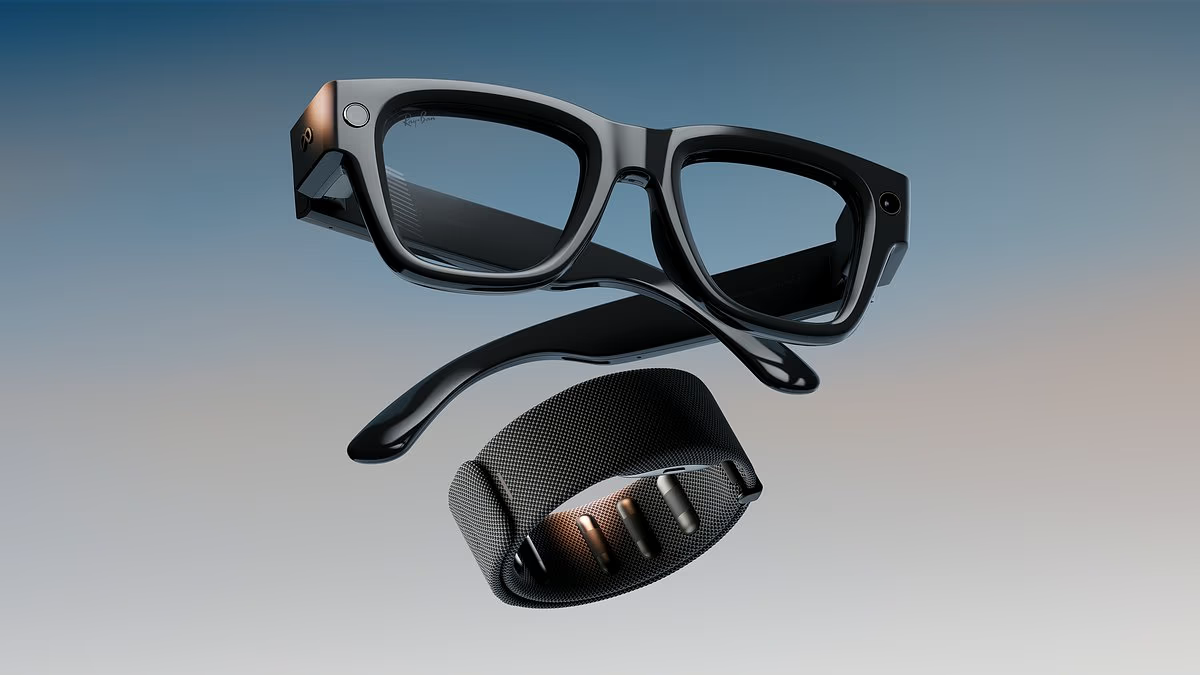
What appears to be keeping regulators awake at night is what comes next.A smartphone hidden in a blazer pocket is one thing, but a pair of ordinary-looking glasses quietly displaying information to the wearer, or a near-invisible earpiece feeding them answers from elsewhere, is harder to spot from the back of an exam hall.The concerns arise as consumer technology companies continue to cram cameras, microphones, AI assistants, and internet connectivity into an ever-growing range of wearable devices. What starts life as a gadget for checking messages or translating languages can easily become something more useful when sitting a three-hour mathematics exam.Bauckham also suggested artificial intelligence poses a separate challenge outside the exam hall. Ofqual is examining ways to ensure coursework remains authentic as AI-generated submissions become harder to distinguish from student work.