South Africa's economy is suffocating under the weight of compliance with hundreds of laws, the writer says. A new approach, inspired by international precedents, could ignite growth and prosperity.
A bookkeeper I know runs a small practice on the East Rand. Her clients are the businesses that quietly hold this country together: a panel-beater, two spaza shops, a small construction outfit that lays kerbs for the municipality. She spends more of her week helping them survive compliance than helping them grow. Registrations. Returns. Re-registrations. The paperwork multiplies. The businesses do not. She is not unusual. She is the median reality of the South African economy.
Two Numbers that should not sit together
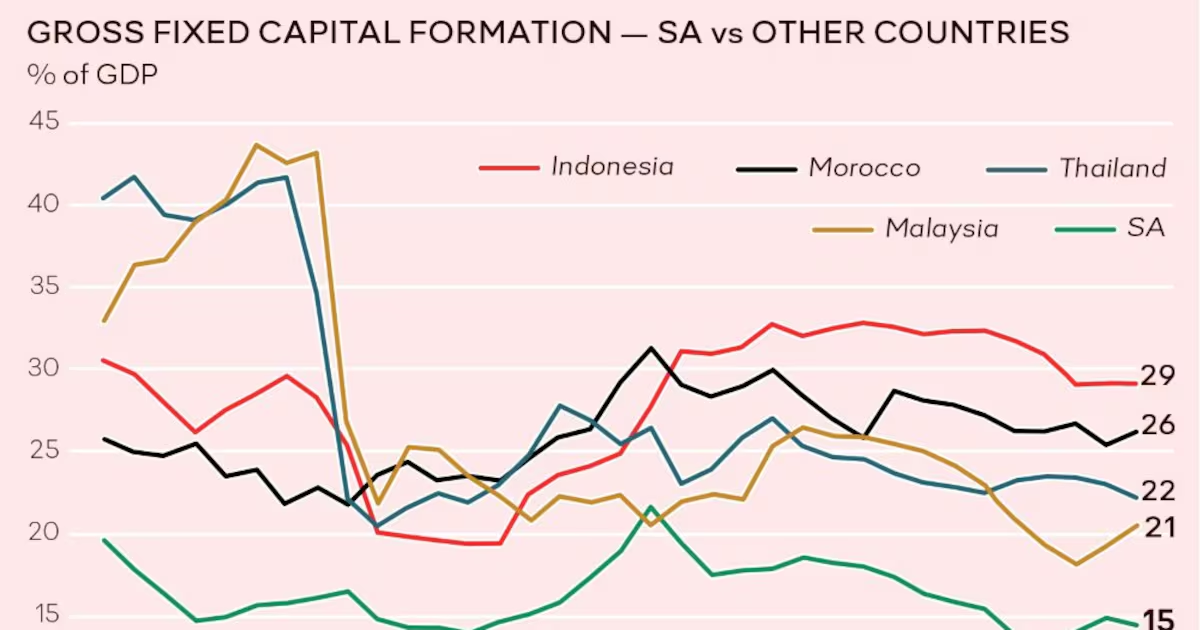
Between 1960 and 1980, with somewhere between 75 and 225 Acts of Parliament on the books, South Africa grew its economy by an average of 4.6% a year. Between 2010 and 2024, with more than 620 Acts in force, we managed 1.1%. We now carry eleven times more legislation than in 1960. And the average South African is poorer, per person, than they were in 2013. I know that correlation does not mean causation, and I will not pretend otherwise. But a pattern this stark demands a question, and it is not the one we usually ask. The answer is not fewer laws; South Africa needs many of them. It is laws with someone, at last, accountable for what they cost in growth.