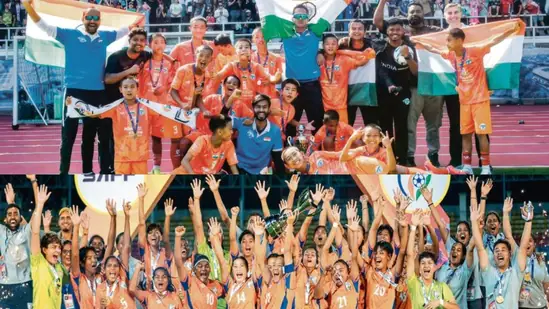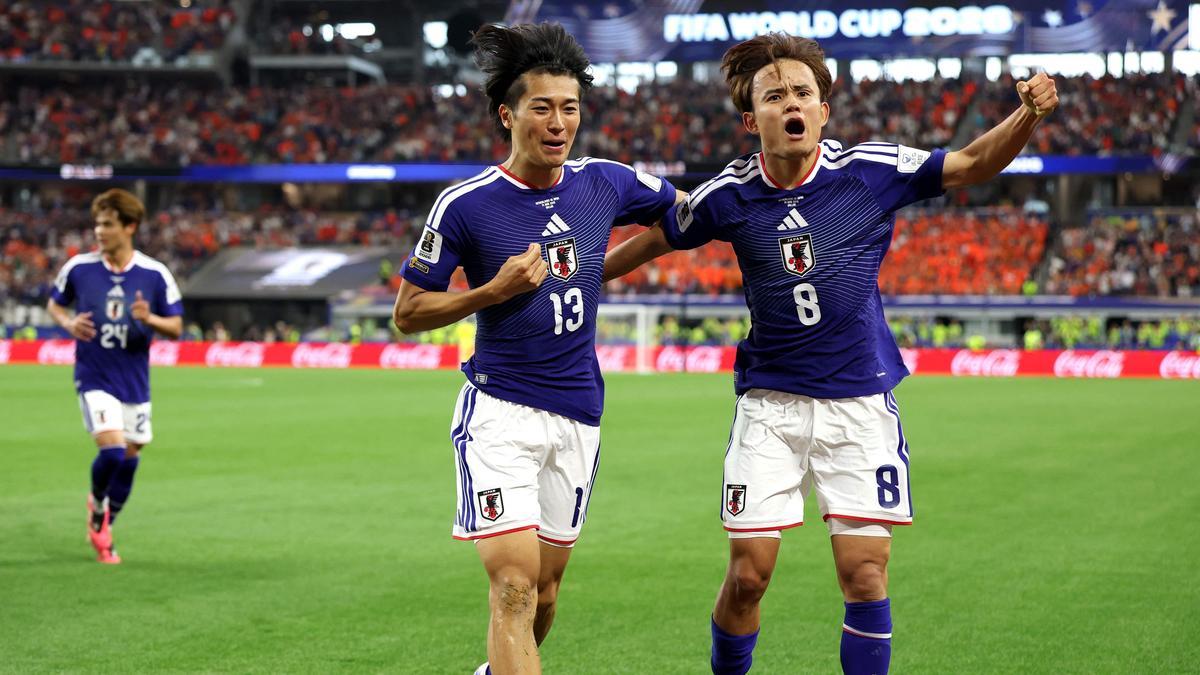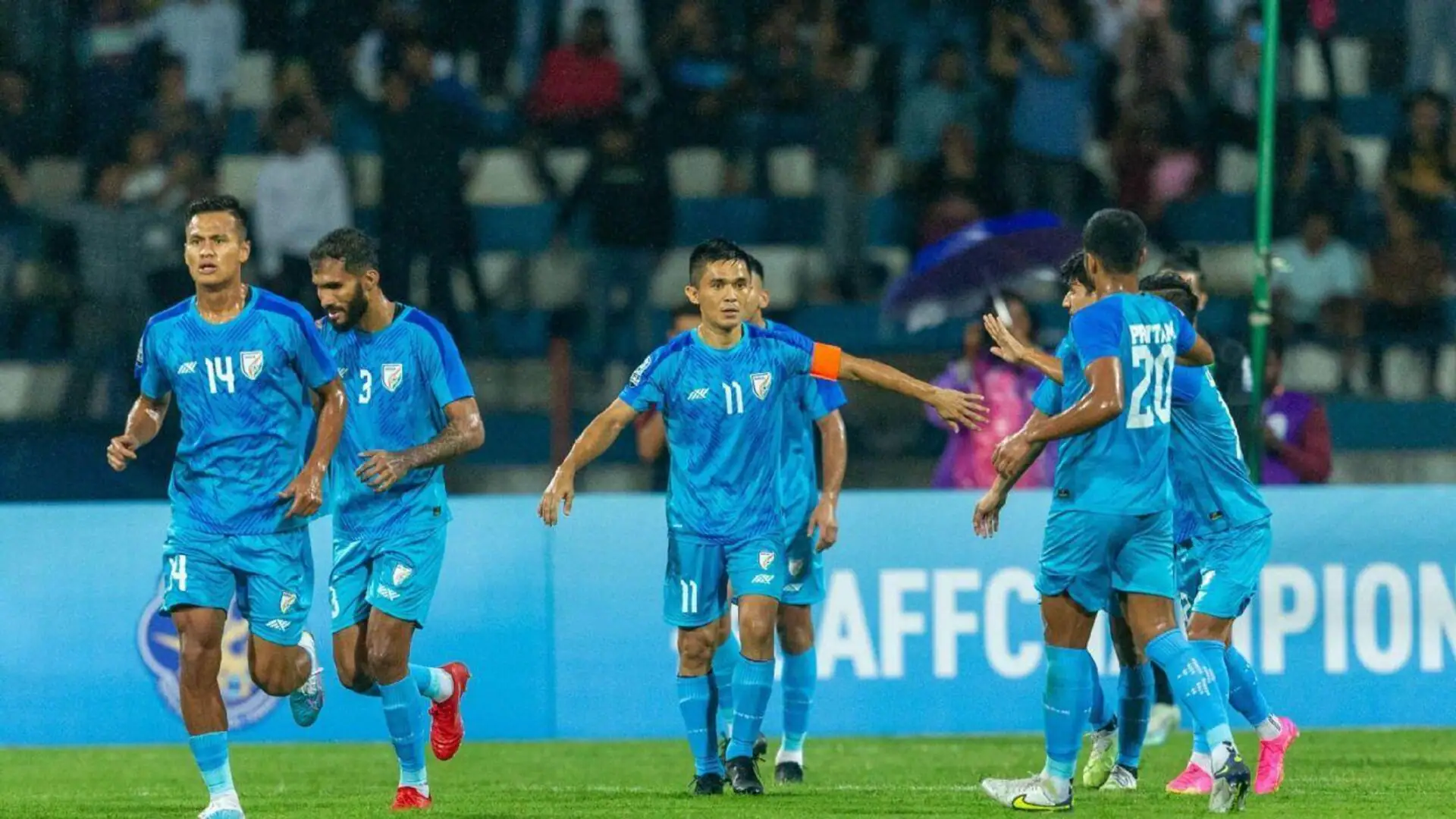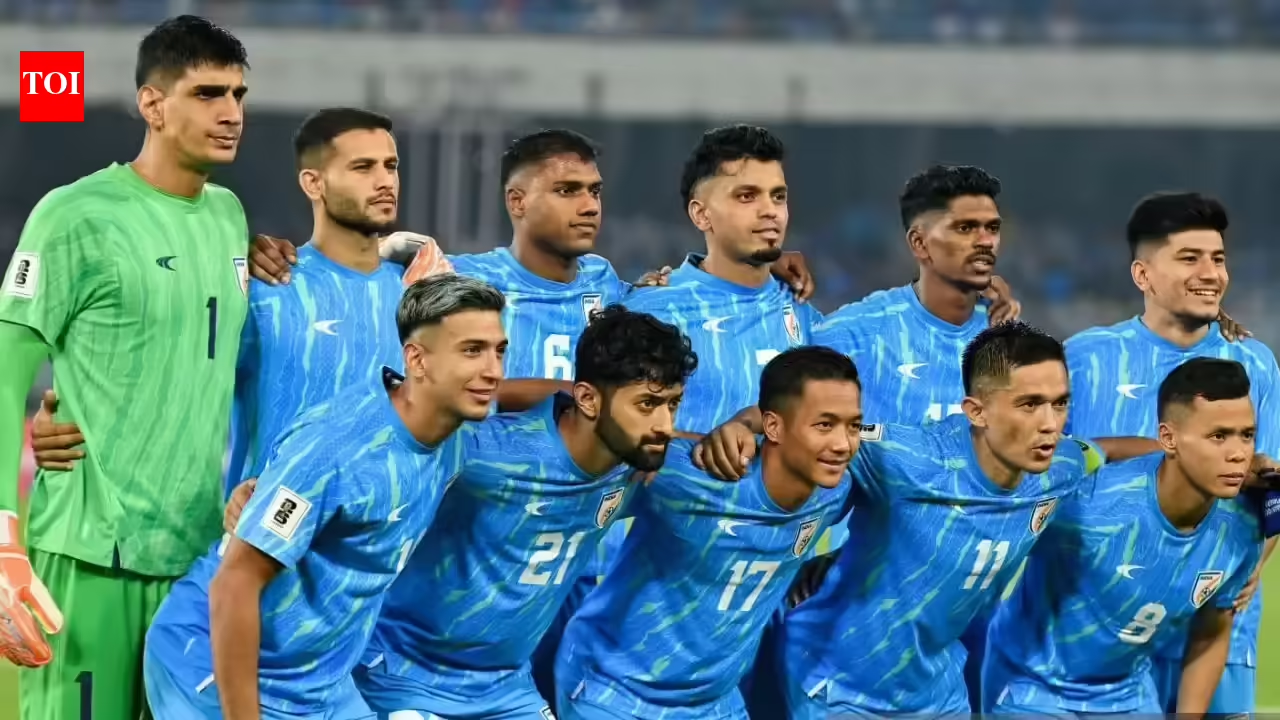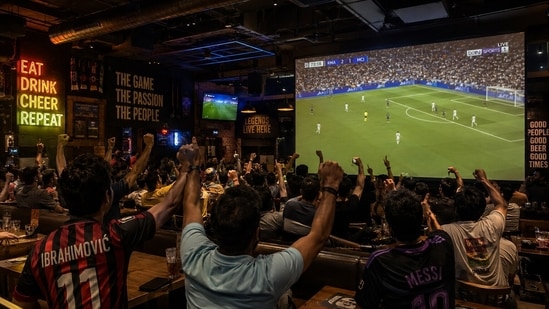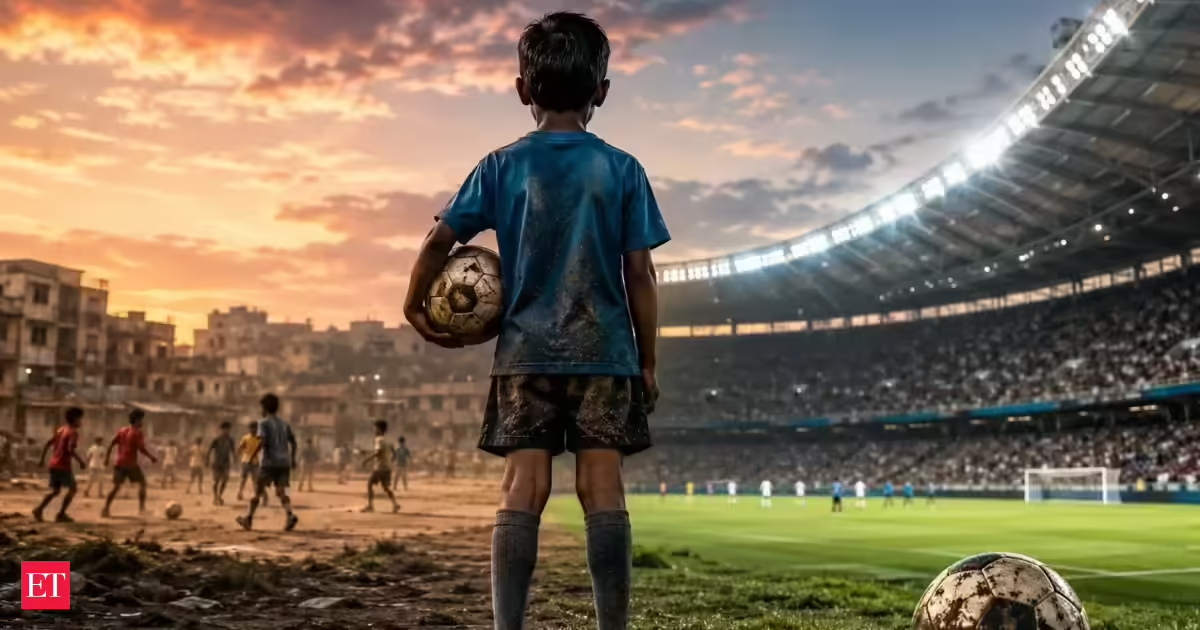
On October 9, 2017, when India faced Colombia in the FIFA U-17 World Cup at New Delhi’s Jawaharlal Nehru Stadium, Jeakson Singh etched his name in history by scoring India’s first-ever goal in a FIFA World Cup. The stadium erupted in celebration. However, the joy was short-lived, as Colombia equalised almost immediately and eventually went on to win the match 2–1.But that fleeting moment of ecstasy, when the whole stadium burst into euphoria and there was deafening applause, felt more like a big IPL match or any other major cricket fixture in India. In the crowd, countless fans cheered for the Indian team, many wearing the team’s T-shirts. The moment felt surreal, as India was playing in the FIFA World Cup. But nearly a decade on, where do we stand now? In a nation of over 1.4 billion people, why have we still not been able to qualify for the FIFA World Cup, even as the tournament now features 48 teams?Like every FIFA World Cup cycle, the question returns to the forefront as excitement builds across living rooms, social media and TV studios. The debate reignites as fans spin hopeful scenarios, while those who have played football at some level offer a sobering view that many of these hyperactive pundits will fade once the tournament ends.Even with the World Cup expanded to 48 teams, India’s path still looks far from straightforward. At times, Indian football feels stuck in time. The passion, grassroots academies and leagues exist, but the overall standard remains well behind Asia’s best. There may be no single answer to this, but there are fundamental flaws that must be addressed first.Former All India Football Federation (AIFF) General Secretary Shaji Prabhakaran believes the problem begins with inconsistency in engagement itself. “We have to be in top nine in Asia by the next World Cup. For the next World Cup, the qualification process starts within the next year or 18 months. We have the potential, but based on where we currently are, it looks very challenging.”“We can keep dreaming like we always have. But this conversation only comes up every four years, during World Cups and the Olympics," Shaji told ET Online.“And that is the problem. We only discuss once in four years. We need to do the fundamentals right. That is how we can get there. If you ask me how much time it will take, I would say 12 to 16 years,” he added.Also Read |FIFA World Cup 2026 cash surge: Prize money soars nearly 50% from 2022A system that fails to produce top playersWhile talking about why India's system is not producing top-level footballers, Prabhakaran offers a blunt diagnosis. “We need to do sincere work, honest work by involving all the stakeholders and improving our governance. But the problem is, unless we start producing high quality players, our system will keep suffering. The simple reason why we don't qualify is that our system is not able to produce players who can compete at that level."Grassroots: The real weak link?Contrary to popular belief, infrastructure is not India’s biggest hurdle. “We have enough infrastructure. Infra is not our fundamental problem. Our primary problem is the lack of an organised, structured grassroots ecosystem,” Prabhakaran said.He further underlined how early-stage development remains deeply flawed: “There is a lot of interest, no doubt. But then there is no structure. The structure is not robust … enough children are not able to play from a very young age in a guided, organised manner.”“If you're not going to a proper school, you cannot think of getting entry into IIT or IIMS,” he added.ET OnlineTalent without a systemIndia’s population gives it a natural edge in discovering talent, but not in nurturing it. “But then, you know, they need a platform, they need a stage, they need the environment, they need the culture. We don't have a culture of excellence.” Prabhakaran said. "Excellence is a culture; you can't just scout 24 players and make them world-class."Also Read | World Cup by the numbers: 104 matches, 48 teams and 3 countries make this the largest everFunding exists, but trust doesn'tAccording to Prabhakaran, the issue is not lack of money but lack of credibility. “Funding definitely is there but gap is also there. But that gap is because of one reason… the governance side.”“Money is there everywhere. But what it really needs is a collaborative form of a transparent environment.”He added that administrative instability continues to derail progress. “That is 100%… stability, good leadership, teamwork… it is necessary. It is not a choice.”A severe coaching shortageIndia faces a massive gap in coaching infrastructure. “We only have around 20-25,000 coaches in India. We need more than 3 lakh coaches in our system.”“But we need foreign coaches definitely in key areas… they are better experienced… their learning is far higher," Prabhakaran added.Ground reality check from the dugoutFormer Indian football player and coach Jo Paul Ancheri echoed concerns from the grassroots level. “The grassroot level development is going good to a certain extent, but after that, we are not protecting the players.”On progress through leagues, he told ET Online: “When ISL came, only then India got a proper recruitment system. We have the potential… we can fight it and get it back.”Comparing eras of his playing days with the current scenario, he noted: “Now they're getting good accommodation and scientific training, but technically, we still have to find out a little more.”The hard truth about competing globally, he said, is simple: “We have to sacrifice. We have to fight hard. Otherwise, we cannot do that.”“Even you just think about Italy, which has actually failed to qualify for three consecutive World Cups as teams are getting better and better,” Paul added.A veteran’s reality checkFormer India captain Pradip Choudhury, who led the national side in the 1970s and played against Pele’s New York Cosmos, does not mince words. “The way things are moving, I don’t see anything in the near future, at least for the next 10 years,” he says. “Maybe after 20 years… but only if there is proper planning.”“We have talent, no doubt, in the country. But our main problem is the physique of the players. The average weight and height are much less than required. Not only nutrition, but development has to start from the grassroots level… From the school level, there should be inter-class football tournaments, inter-school football tournaments, and inter-area football. Everywhere there should be football and icons,” he told ET Online.“Physically, if you are strong and if you regularly watch good football like the EPL, World Cup matches… you will understand the development process,” he added.A fragmented ecosystemDr. Kanishka Pandey, sports researcher and Chairman of the FICCI Sports Sub-Committee (UP Chapter), highlighted deeper structural issues. “The biggest structural gap in Indian football is the absence of a truly integrated and systematic football ecosystem… stakeholders often work in silos rather than as part of a coordinated talent development structure.”“There is no clearly defined and trusted talent pipeline… in a transparent and merit-based manner,” he added, pointing to lack of continuity beyond school-level football.“Football is still not viewed as a serious long-term career pathway… coaching standards need stronger quality control… and most importantly, India still lacks a deeply embedded football culture. Without culture, structures alone cannot sustain long-term football development.”On interest versus output, he noted: “Interest alone does not create elite players… A child may play exceptionally well in school tournaments, but what next? In most cases, the answer is no.”Comparing global models, he said: “The biggest difference… is culture and long-term planning… their systems are patient, structured, and consistent over decades. In India… efforts are rarely sustained through a unified long-term vision.”On policy gaps, Pandey added: “Indian football often appears reactive rather than strategic… To become internationally competitive, development must be approached with continuity and institutional stability over 15–20 years.”He concluded with key milestones: “India must first focus on building strong foundations… a nationwide grassroots structure… and deep integration with schools and universities.”A dream in search of structureIndia’s World Cup dream demands a systemic overhaul to come true. Whether it is governance, grassroots-level development, or the upliftment of coaching and competition standards, all these issues are deeply interconnected. Passion is there, but the absence of a consistent, transparent and long-term system is the main hurdle.
From roaring crowds to FIFA World Cup absence: What’s holding India back from football’s biggest stage?
India's FIFA World Cup aspirations remain distant. Despite widespread passion, the nation struggles to produce elite footballers. Experts point to a lack of structured grassroots development, inconsistent governance, and a severe coaching shortage. A long-term, transparent system is crucial for India to compete globally. Building strong foundations and integrating football into schools and universities are key steps forward.
1,377 words~6 min read