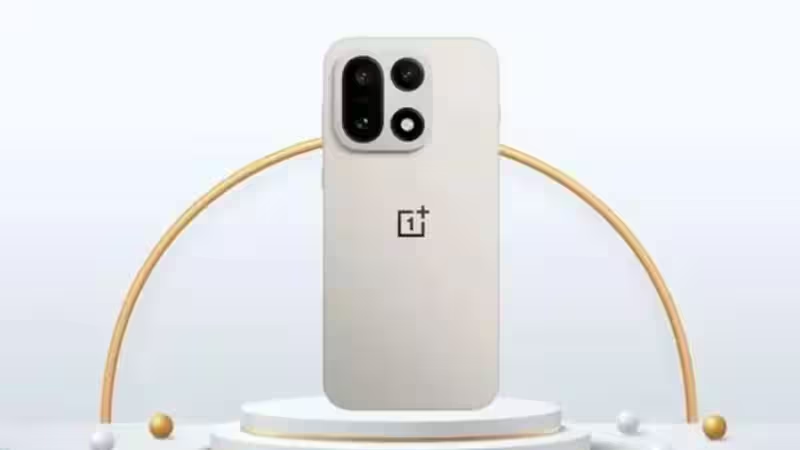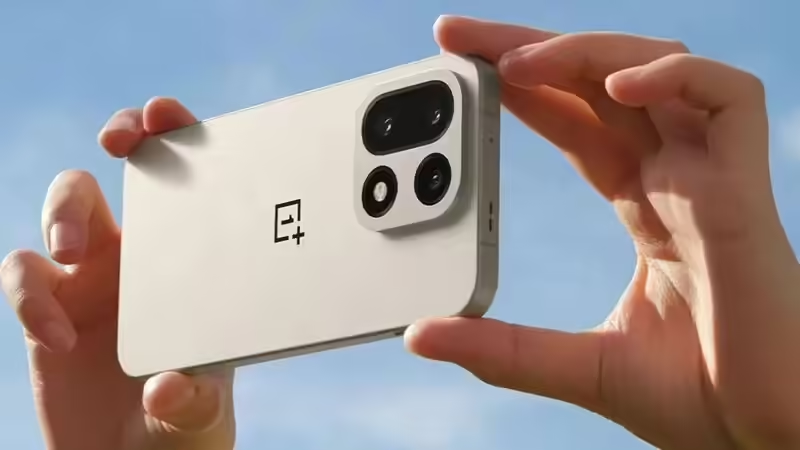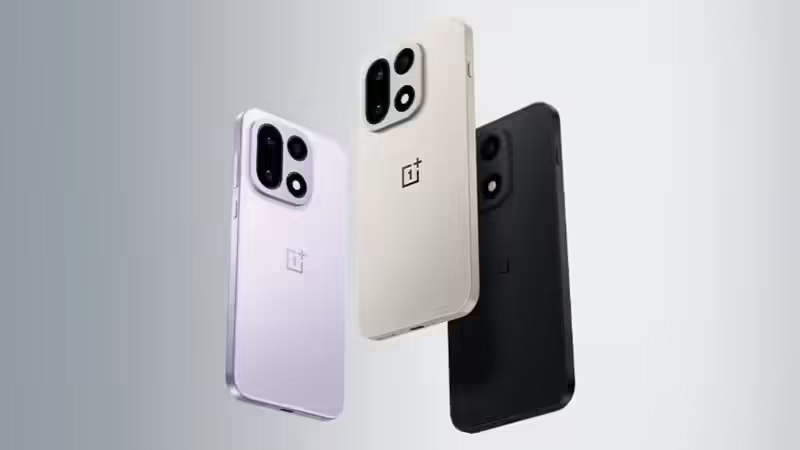
Photo credit: X/@oneplusOnePlus wants the smoothest screen on the shelf, and a fresh leak suggests how far it intends to chase that. Tipster Digital Chat Station claims on Weibo that OnePlus is climbing its refresh-rate ladder — 165Hz on today's OnePlus 15, 185Hz on the rumoured OnePlus 16, and 240Hz somewhere beyond that. The eye-catching part, a 2K panel running at 240Hz, sits much further out, and only if display suppliers crack the power problem first. For now this is a roadmap whispered through a leaker, rather than a product you can hold.Key TakeawaysTipster Digital Chat Station claims OnePlus is targeting ultra-high refresh rates, moving from the OnePlus 15's 165Hz towards 185Hz and eventually 240Hz.The leak points to OnePlus sticking with 1.5K resolution near-term; a return to 2K panels is conditional on suppliers delivering high refresh without wrecking battery life.The OnePlus 16, expected later in 2026, is rumoured at 185Hz on a 1.5K BOE OLED — not the 2K 240Hz combination some coverage implies.A 2K-plus-240Hz display, if it happens, looks like a OnePlus 17-era prospect for 2027 or later.Most 2K OLED smartphone panels today cap out around 144Hz, which is the engineering wall OnePlus would need suppliers to break.So what did the leak actually say?Strip out the noise and the claim is narrower than the headlines suggest. Digital Chat Station's Weibo post indicates OnePlus plans to keep 1.5K resolution across its next-generation flagships while prioritising refresh rate, progressing from 165Hz to 185Hz and potentially to 240Hz. The 2K question is a separate thread. The tipster adds that OnePlus could revisit 2K displays only if panel makers can support such high refresh rates without major hits to power efficiency, performance or image quality. Read carefully, OnePlus is choosing speed over pixels for now, and holding the door open to having both later. None of this carries OnePlus's confirmation, and a leaker's roadmap shifts with every supply-chain revision.Why pairing 2K with 240Hz is the hard bit Resolution and refresh rate pull against each other, and the wall is physical rather than a matter of ambition. Most 2K OLED smartphone panels today are limited to around 144Hz, because driving four million-odd pixels 240 times a second asks far more of the panel, the display driver and the processor than driving a 1.5K screen at the same speed. Each refresh costs power and throws off heat, so a 240Hz 2K phone risks emptying its battery by lunch. That is the trade OnePlus chose with the OnePlus 15 — keep the resolution at 1.5K, spend the headroom on refresh rate, and lean on LTPO panels that drop to a crawl when the screen is static. A film analogy helps: cinema settled on 24 frames a second for a century not because faster was impossible, but because the economics and the look worked. Phones are now sprinting the other way, and the engineering bill arrives in milliamp-hours.OnePlus's refresh-rate climb, and where rivals sit The leak makes more sense plotted against what already ships and what is rumoured next. The table below separates confirmed hardware from leaks, and the gaming-phone figures are approximate.Brand / modelRefresh rate todayWhat's rumoured nextOnePlus 15165Hz on 1.5K OLED (shipping)OnePlus 16 tipped at 185Hz, 240Hz under evaluationiQOOAround 144Hz on current flagshipsiQOO 16 rumoured up to 185Hz later in 2026Redmi120Hz–144Hz classRedmi K100 Pro series rumoured up to 185HzSamsung Galaxy S120Hz adaptive LTPOEfficiency and image-quality focus, no public 185Hz pushASUS ROG / gaming phones165Hz-class panels (approx)Gaming segment continuing to push higherFlagships including the Redmi K100 Pro series and the iQOO 16 line are rumoured to reach up to 185Hz later this year, so OnePlus would share the 185Hz tier rather than own it. The 240Hz milestone is where it could break clear — though 240Hz on a phone is not entirely new, since a few niche and regionally sold gaming models already advertise it. A mainstream global flagship at 240Hz, and eventually at 2K, would be the genuine first.Can your eyes even tell 120Hz from 240Hz? For most people, in most moments, the honest answer is barely. The jump from 60Hz to 120Hz was the transformative one — scrolling went from juddery to liquid, and anyone who has used a modern flagship feels it. Doubling again to 240Hz lands in the territory of diminishing returns, the same debate that greeted high-frame-rate cinema when The Hobbit ran at 48fps and half the audience called it a soap opera rather than a film. The smoothness is measurable; whether it reads as better is personal. For browsing, social media, video and messaging, most people will struggle to separate 240Hz from a standard 120Hz screen. A further catch: few apps and games render at those frame rates yet, so the panel often has nothing that fast to show.Who actually gains from 240Hz? A thin, committed slice of users. Competitive mobile gamers stand to benefit most, where extra frames cut motion blur and shave milliseconds off the gap between seeing something and reacting to it. Picture a club tennis player and a tour professional handed the same racket: the amateur enjoys it, while only the pro converts the marginal edge into results that show on the scoreboard. Esports players and performance enthusiasts live at that edge. Everyone else gets a spec they paid for and rarely taps. That is the quiet truth of the refresh-rate race it sells phones to the many on the strength of an advantage felt by the few.Where this lands for India India is among the most refresh-rate-literate markets going, with 120Hz now table stakes across flagships and upper mid-range phones, and OnePlus enjoys a loyal enthusiast following here who read spec sheets for sport. A 185Hz OnePlus 16 would slot into that appetite cleanly. The 240Hz and 2K questions, by contrast, ride on factors I can't price yet final specifications, India launch timing and pricing all stay unconfirmed, so treat any India-specific number as pending rather than fixed. Leaks point to a OnePlus 16 debut in China around Q3 to Q4 2026, with a global rollout to follow, which would set the India window after that.The framing worth keeping in mind is what 240Hz is for. It is a number that wins the spec sheet long before it becomes a sensation you notice in the hand, and OnePlus knows the bragging rights travel faster than the panel ever will. Win the headline refresh rate and you win the comparison video, the forum thread and the showroom glance the feature does its hardest work before the phone leaves the shelf.Frequently Asked QuestionsIs the OnePlus 16 going to have a 2K 240Hz display?The leaks point the other way. The OnePlus 16 is rumoured to use a 1.5K OLED at 185Hz, an increase over the OnePlus 15's 165Hz. A 2K 240Hz combination looks like a later-generation prospect, not the next phone.Who leaked the 240Hz display plan?The claim comes from Digital Chat Station, a well-known tipster on Weibo, in a post dated early June 2026. OnePlus has confirmed none of it.Do any phones already have a 240Hz display?A few niche and regionally sold gaming phones advertise 240Hz, so the number itself exists. A mainstream global flagship at 240Hz, and especially at 2K resolution, would be the first of its kind.Why has OnePlus stayed at 1.5K instead of moving to 2K?Pushing both resolution and refresh rate together drains battery and generates heat. Sticking with 1.5K frees up the power and thermal headroom to chase higher refresh rates, which is the trade-off OnePlus made on the OnePlus 15.Will I notice the difference between 120Hz and 240Hz?In everyday browsing, video and social media, most people will find the two hard to separate. The clearest gains show up in fast-paced mobile gaming, where reduced motion blur and quicker response matter.When could a 240Hz OnePlus phone launch?The 240Hz ambition is tied to future devices, with the OnePlus 17 in 2027 floated as a candidate. Treat any date as speculative until OnePlus speaks.end of article
OnePlus Plots 240Hz Phone Displays, But A 2K Version Remains Years Off
Find latest technology news, gadgets reviews & ratings. Popular & latest gadgets specifications, features, prices, photos & videos. Trending mobile phone comparisons, slideshows, how tos and videos for latest mobile phones, tablets, technology news updates.
1,320 words~6 min read