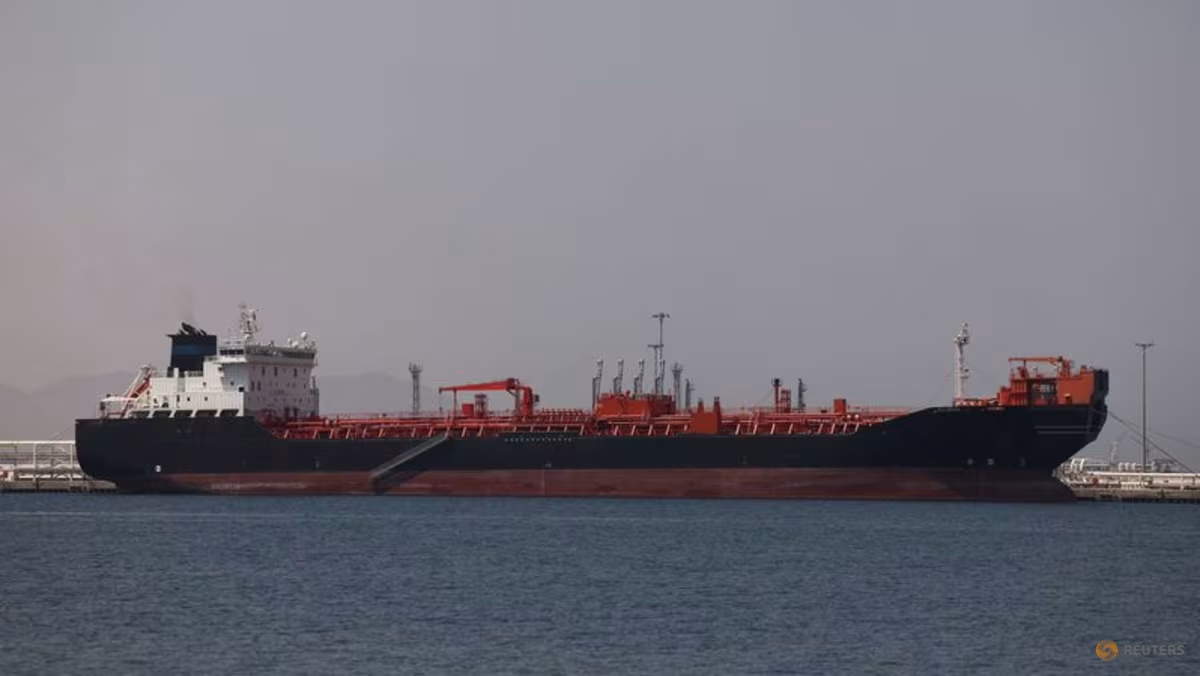
Mumbai: Global oil markets are expected to swing back into oversupply once the Strait of Hormuz reopens, despite the sharp price increases triggered by the waterway's closure, according to a new report released by Fitch Ratings.The ratings agency said the closure of the strategically important shipping route has created a temporary logistical supply shock rather than a permanent loss of oil production capacity."The disruption does not alter the longer-term direction of the market, which is expected to return to surplus conditions later this year," said Fitch Ratings.Fitch's base-case forecast assumes that the Strait of Hormuz will reopen by the end of July 2026, resulting in an effective five-month closure. Based on this scenario, the agency projects an average Brent crude oil price of $87 per barrel for 2026.Also read | OPEC+ increases production quotas for July"The current price spike reflects a temporary logistical supply shock rather than a lasting loss of production capacity," Fitch said, adding that Brent crude prices are expected to decline sharply once shipping through the strait resumes.The agency forecasts that global oil markets will return to oversupply from September 2026, supported by rapid recovery in Middle Eastern production, strong supply growth from non-OPEC producers, and the possibility of OPEC increasing output beyond pre-conflict production quotas.According to Fitch, global oil supply is expected to average approximately 2.9 million barrels per day (mmbpd) lower in 2026 compared with 2025 due to the prolonged closure of the strait.Also read | Govt hikes domestic LPG prices by Rs 29 per cylinderHowever, the market is projected to move quickly back into surplus following reopening, with oversupply potentially reaching around 4 mmbpd in the fourth quarter of 2026, depending on OPEC production decisions.The anticipated supply surplus is expected to weigh on oil prices and create significant downward pressure on the market during the latter part of the year, it said.Fitch noted that uncertainty surrounding the timing of the Strait of Hormuz reopening remains high, making the outlook for oil prices particularly sensitive to geopolitical developments in the region.The Strait of Hormuz is one of the world's most critical energy chokepoints, handling a substantial share of global oil exports. Any disruption to traffic through the passage has significant implications for international energy markets and global economic stability.
Oil market likely to return to oversupply after Hormuz reopens: Fitch Ratings
Global oil markets are set to see a surplus once the Strait of Hormuz reopens. Fitch Ratings predicts this despite current price hikes. The closure is a temporary supply shock, not a permanent production loss. Markets are expected to return to oversupply by September 2026. This will be driven by Middle Eastern production recovery and non-OPEC supply growth.
374 words~2 min read