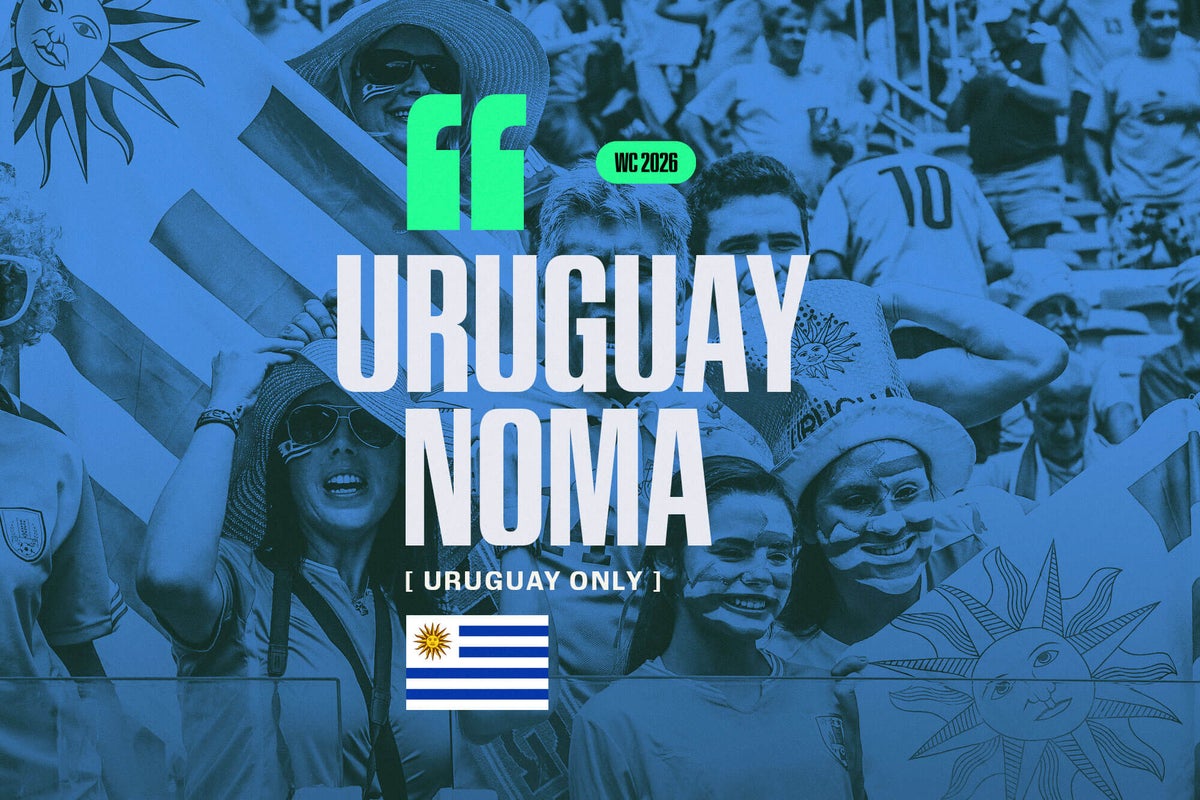
As part of our Language of Soccer World Cup series, The Athletic is speaking to supporters of all 48 nations competing at the 2026 edition to capture their unique football culture, distilled into a single phrase. You can read the articles in one place here.Uruguay noma — Uruguay onlyMore than 500 kilometres of sleepy Uruguayan countryside — sweeping plains of sloping grasslands and grazing cattle — stretch between its sunny capital, Montevideo, and the city of Rivera, tucked away in a fold of the Brazilian border in the north.But football keeps bringing two residents of these vastly different places together.“We met on our way to Miami for the Copa America in 2024,” says Hector Lara, a retired architect who lives, quite literally, across the road from Brazil. “He was sitting on the same row as my wife and I on the plane.“We talked a lot, and kept in touch. But since there are so few of us in Uruguay, we keep bumping into each other — at football games at the Estadio Centenario, even randomly one time on the beach at Punta del Este. And now here we are, chatting again.”Alvaro Martínez laughs from his apartment in Montevideo, with yerba mate — the ubiquitous Uruguayan beverage — in hand. It is a friendship that speaks to many of the key themes that underpin football fandom in Uruguay, not least the sense of close-knit community and underdog spirit that bonds the three million people spread across the country. Only Qatar, Cape Verde and Curacao will have smaller populations at the World Cup.“We’re a small country, many of us know each other and look out for one another. But when the big teams play Uruguay, they fear us, and that makes us proud,” says Alvaro.“We don’t have much; good meat and football, but that’s how we like it.”Along with that expression of solidarity and kinship, the five fans who spoke to The Athletic help to convey the intensity that seems hardwired into the Uruguayan football psyche.Alvaro is one of the founders of the Banda Celeste supporters’ group, who follow the national team home and away with percussion instruments, custom-made banners and colour. He drove more than 11,000km with three friends throughout the Copa America, and has already scheduled barbecues and banderazos — a series of supporter rallies with flags and drums — in Miami for the summer.Hector represents Uruguay internationally in over-40s football and has attended every one of the national team’s games as a fan since 2015. It took him over 30 hours to get home from friendlies in England and Algeria in March.And then there is Gonzalo Perez, something of a celebrity in Uruguay, known as the Pelado Celeste for his colourful face paints and passionate singing of the national anthem.Gonzalo Perez is one of Uruguay’s most recognisable supporters (Gonzalo Perez)Even those who live abroad — Felicia Guizzo and her father Raul in Texas, along with Miami-based Franco Cassoni — are gripped with excitement. By the end of our call, Franco has been invited to the Miami meet-up with Alvaro and friends.Uruguay has a rich footballing history, deeply embedded in the national culture since they hosted, and won, the first World Cup in 1930. But it is the ardent commitment of its people — in the stands, as well as on the pitch — that helps to explain why they continue to be such a force despite the overwhelming odds.Felicia Guizzo, centre, is a lifelong fan of the Uruguay national team (Felicia Guizzo)For most in Uruguay, the obsession starts from an early age.“Just like everyone in the interior — the inland part of Uruguay outside of Montevideo — we grew up surrounded by football,” says Alvaro. “We’re born, we grow up, now we’re adults, but everything still revolves around football. That unites us.”
‘Uruguay noma’ is a battle cry, a conviction that this small country can compete with anyone
As part of a special World Cup series, The Athletic is speaking to fans of all 48 competing nations to capture their unique football culture
1,755 words~8 min read