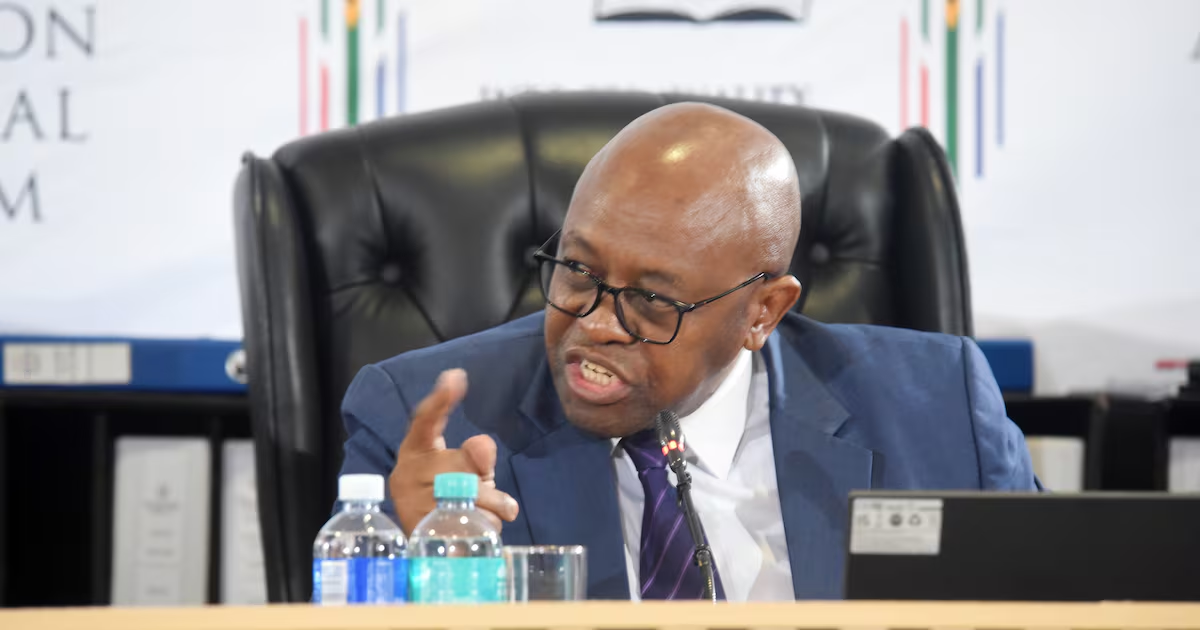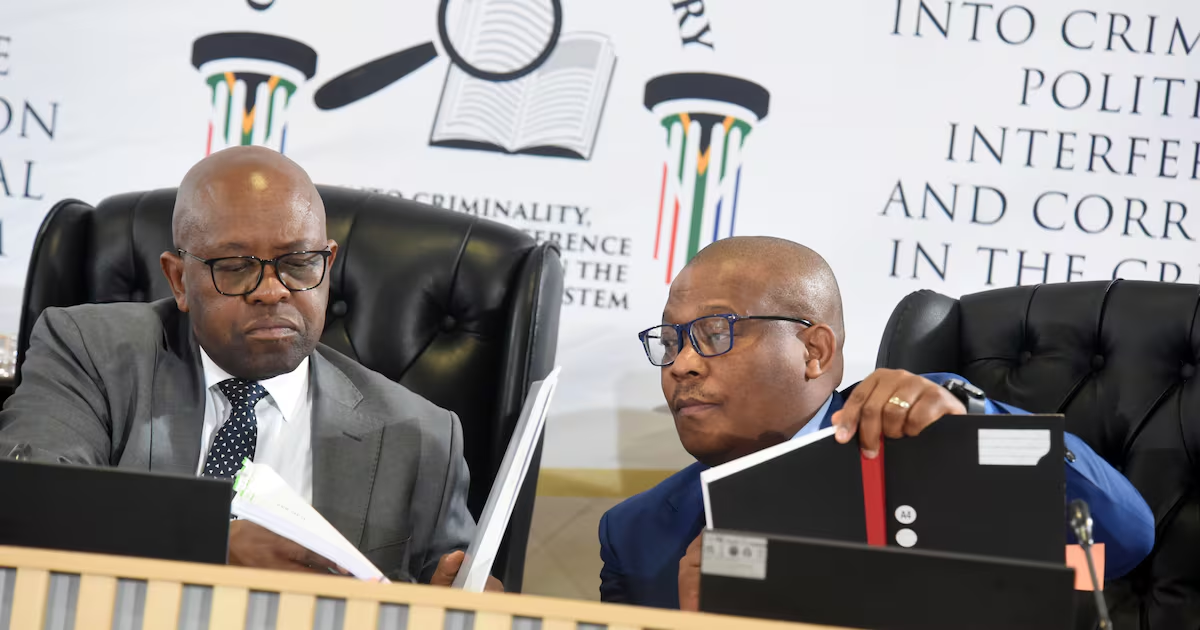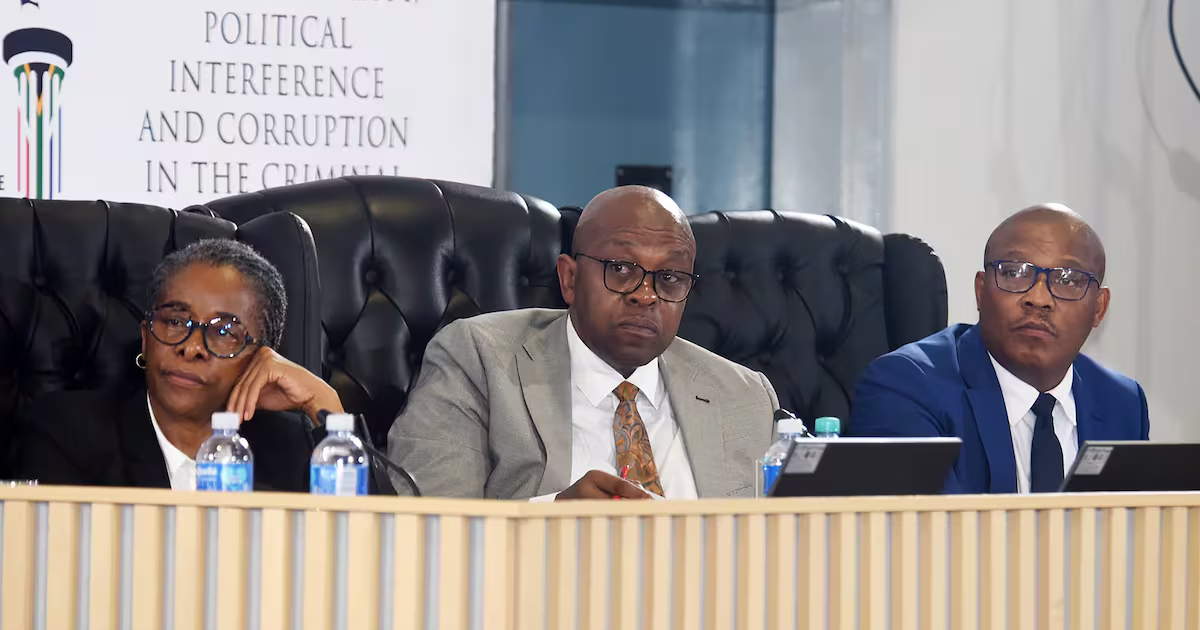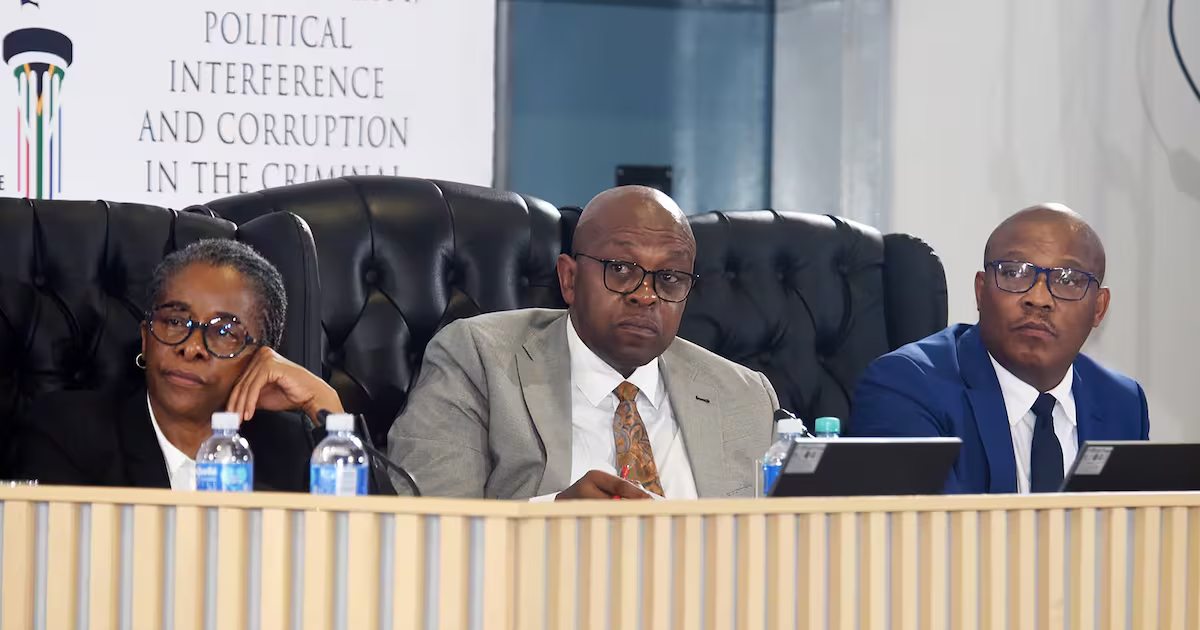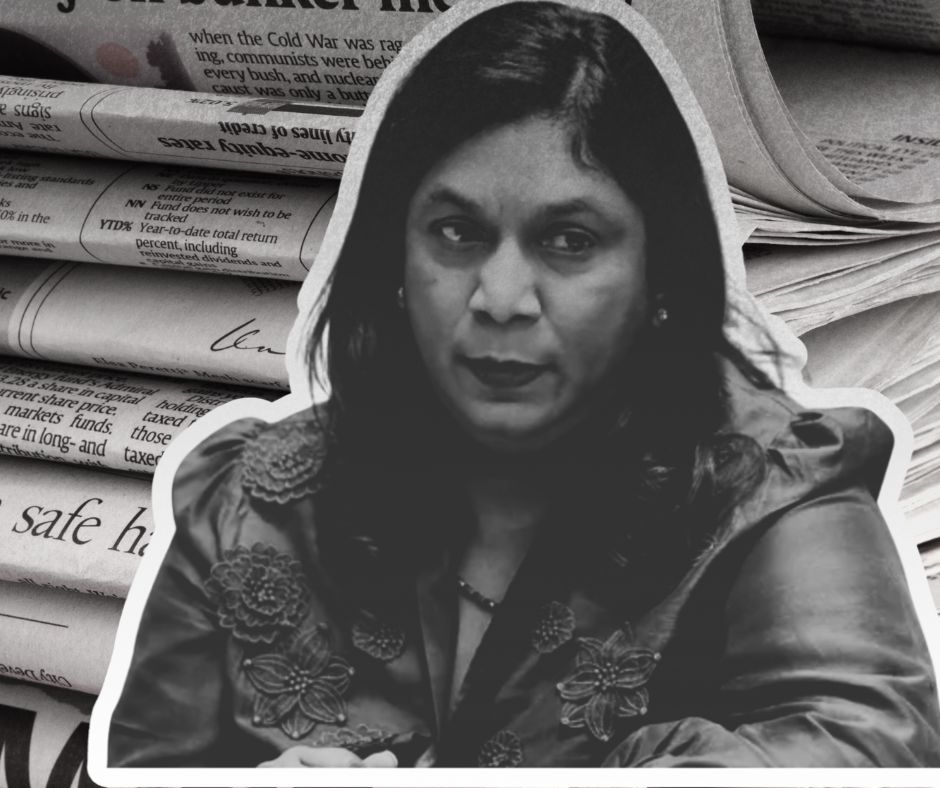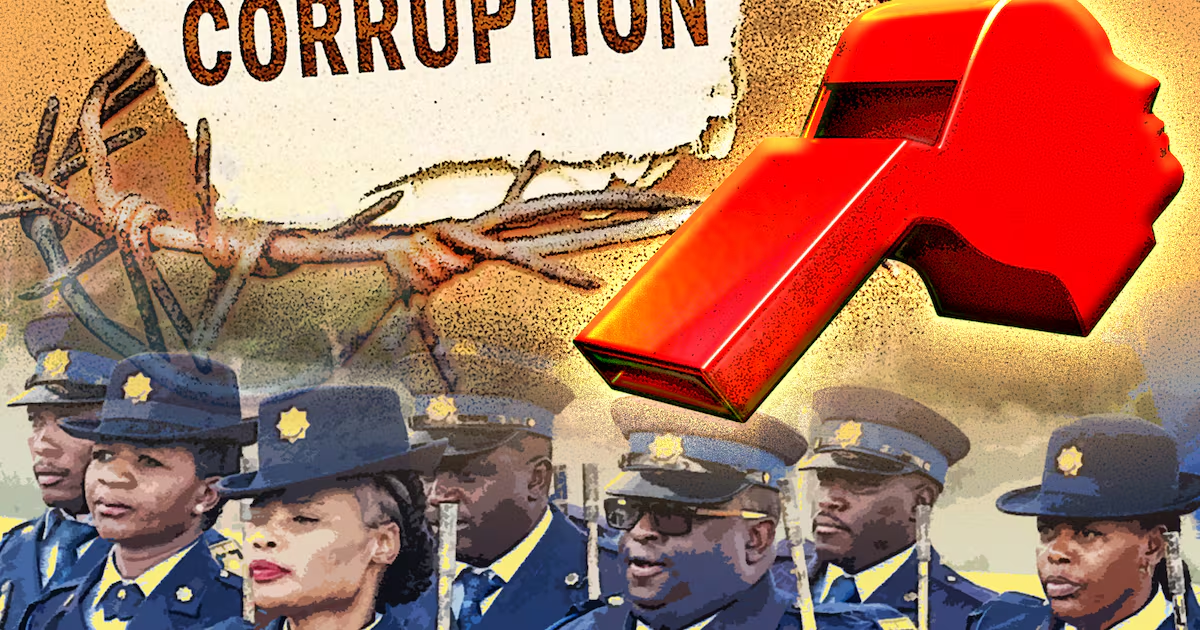
The Madlanga commission of inquiry into criminality, political interference and corruption in the criminal justice system resumed its hearings on June 1.The commission was established by President Cyril Ramaphosa in July last year after KwaZulu-Natal police commissioner Lt-Gen Nhlanhla Mkhwanazi alleged collusion between senior officers, politicians, prosecutors and intelligence operatives.Since then it has documented the infiltration of organised crime networks into senior policing, most starkly through the Big Five syndicate’s reach into Gauteng’s law-enforcement leadership. This is all too familiar a pattern; one more expression of the corruption that has riddled countless South African institutions. It surfaced again last month at the Compensation Fund, where the auditor-general has flagged R71m of losses, fraudulent bank accounts, missing documents and intercepted payments. This fund is paid for by South African employers, and it exists to protect South African workers. That it has been hollowed out so completely is a scandal. The failings the auditor-general has found regarding the Compensation Fund — weakened controls, eroded governance and the dissolution of internal accountability — will be familiar to anyone watching the Madlanga commission. These are the conditions of state capture, which occurs wherever oversight is allowed to lapse. They also explain why so much institutional damage has proved so hard to reverse. Corruption Watch received about 2,200 corruption-related complaints in 2025, with policing again topping the list at 300 reports, more than any other subsector. When the institutions meant to enforce the law are themselves captured by the people they are meant to police, the rule of law on which business and ordinary citizens depend is shown to be farcical. Business Against Crime South Africa chair Neal Froneman put it bluntly in a recent interview, calling officials who contravene the laws they are meant to uphold treasonous. The Madlanga commission also exposed the depth of the culture of impunity, and the danger faced by those trying to disrupt it, when witness Marius van der Merwe was murdered three weeks after he testified. Van der Merwe’s name will be added to South Africa’s roll of murdered whistleblowers and intimidated witnesses, investigators and prosecutors, alongside Mpho Mafole, Tracy Brown, Elona Sombulula and so many others. The list is heartbreakingly long. Corruption of this kind results in widespread disillusionment and weakened trust among the public and is a tragic betrayal of our commitment to the democratic project. Our children grow up with the coarsening sense that the rules are for some people and not for others. For business, investment decisions have to price in how reliably the rule of law will hold from one year to the next, applying a steady braking force to our economic development. Crime and corruption are near the top of concerns foreign investors cite when weighing capital deployment in South Africa. Is there cause for hope? It seems consequences may be slowly arriving. It was reported 13 senior South African Police Service (SAPS) officials have been suspended due to evidence heard by the commission, with at least 10 more expected to follow. Arrests are accelerating from commission referrals, reaching into the most senior ranks of the service. The commission has begun to function as a live roadmap for criminal investigations into the networks operating in SAPS structures. Our children grow up with the coarsening sense that the rules are for some people and not for others. For business, investment decisions have to price in how reliably the rule of law will hold from one year to the next, applying a steady braking force to our economic development. However, this momentum is not self-sustaining. News cycles move on, and the networks under scrutiny are patient. Business has a particular responsibility here. The private sector can and must do more to strengthen whistleblower protection, refuse to deal with suppliers and intermediaries that cannot demonstrate clean compliance, and back the civil society organisations that track and litigate state capture. Citizens can keep the political cost of inaction high by voting, and by refusing to normalise what the commission is exposing. Accountability is a civic muscle, and it atrophies when unused. I commend the witnesses who continue to come forward at real personal risk, the police task team, the National Prosecuting Authority (NPA) leadership under Jan Lekgoa Mothibi, and former national director of public prosecutions Shamila Batohi, whose unstinting work under difficult circumstances paved the way for what we are now seeing. What needs to follow is already clear. The NPA requires full financial and operational independence from the department of justice, with the national director of public prosecutions as accounting officer and authority over senior appointments. The Investigating Directorate Against Corruption and the Asset Forfeiture Unit must be properly resourced. Whistleblower and witness protection must be substantially strengthened. The Nugent commission was a defining moment for the South African Revenue Service (Sars), opening the way for the turnaround under Edward Kieswetter. The Madlanga commission must do the same for our police services and the wider criminal justice system, and it must empower the clean officers in the service. The appointments that follow will determine whether reform takes root. Ramaphosa cast the net wide for Sars in 2019, and the country has been better for it; he must do the same now. The Madlanga commission recommendations must be implemented, with discipline. Accountability cannot only be a fortunate byproduct of inquiries that did their job well and exposed criminal activity to public scrutiny. It must be entrenched in our institutions and treated as a routine expectation. Businesses and citizens must stand with the murdered whistleblowers, the courageous witnesses, the dogged investigators, and say, enough. The Madlanga commission is showing what is possible when the work is done, and reiterating what is at stake. The reforms that follow it will determine whether the age of impunity has begun, in earnest, to close. • Mavuso is CEO of Business Leadership South Africa.
BUSISIWE MAVUSO | Madlanga and the age of impunity
Whistleblower protection, institutional independence and accountability required
973 words~4 min read